Custom cabinet cost in Sarasota is set mostly by six variables: how many boxes the room needs, the wood species, the door style, how the boxes and drawers are built, the finish, and how complicated the installation is. Change any one of them and the total moves, which is why two kitchens with identical footprints can be priced far apart.
We price every job from working drawings and a 3D model produced before any lumber is cut, so we watch these variables line by line. Below, each one is explained the way it shows up when we estimate a kitchen at our Lewis Ave shop, followed by a published national benchmark that puts whole-kitchen figures in context.
What drives custom cabinet cost in Sarasota?
Most people expect size to dominate. It matters, but the mix inside that size matters more. A wall of tall pantry cabinets, a bank of drawers and a furniture-style island each take far more shop time per foot than a run of plain sink and door bases.
| Driver | Keeps cost down | Pushes cost up |
|---|---|---|
| Cabinet count and mix | Mostly door bases and standard uppers | Many drawers, tall pantries, islands, corner solutions |
| Wood species | Paint-grade hardwood such as maple or poplar | Walnut, cherry, quartersawn white oak, exotic species |
| Door style | Slab or simple shaker | Raised panel, beaded inset, curved or glass doors |
| Construction | Simple joinery and standard slides | Dovetail drawers, mortise-and-tenon frames, full-extension soft-close slides |
| Finish | Clear coat on a single species | Multi-coat paint, glazing, distressing, two-tone schemes |
| Installation | Square walls, level floor, open access | Scribing to wavy plaster, high ceilings, condo elevator logistics |
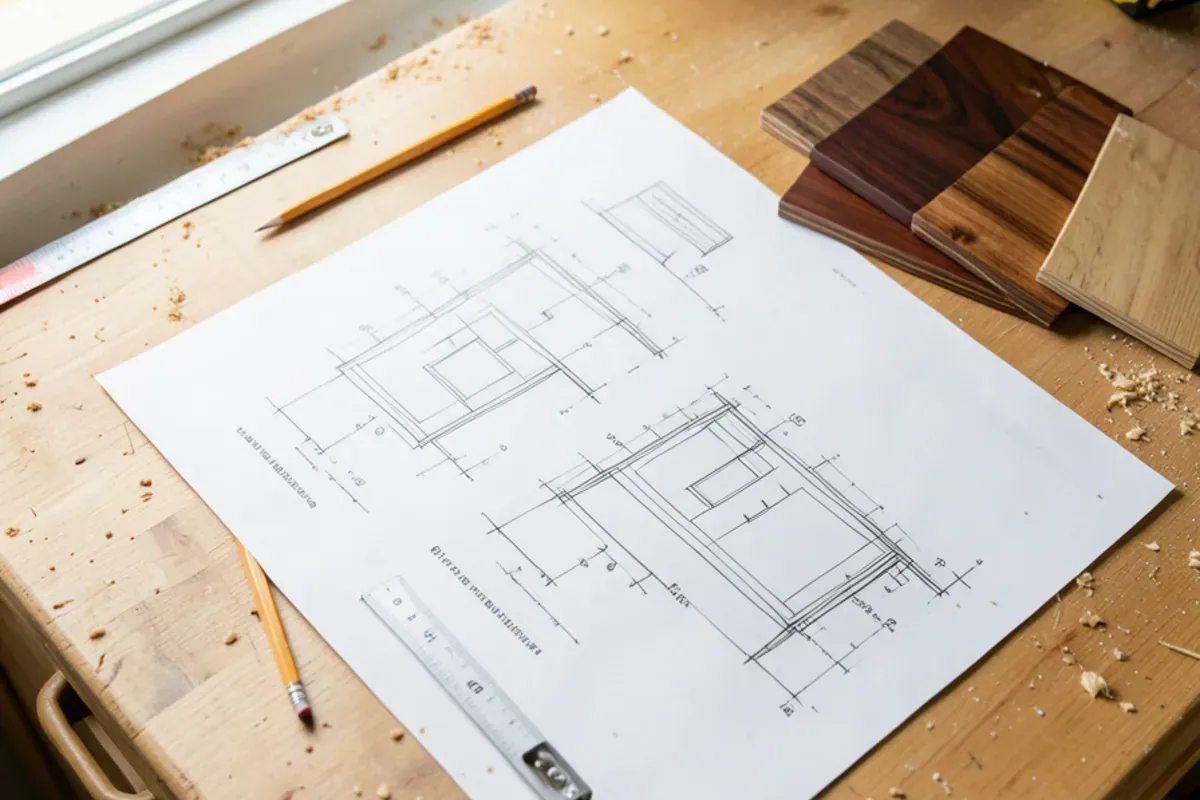
Wood species and box construction
Species affects price in two ways: the lumber itself and the yield. Walnut and cherry cost more per board foot than maple, but quartersawn or rift white oak adds a second premium because cutting for straight grain wastes more of each log. Exotic hardwoods can cost several times what domestic stock does and may need longer lead time to source.
Paint-grade work is not automatically cheaper, though. A painted kitchen still needs a stable, smooth hardwood underneath, and the finishing labor often outweighs any savings on wood.
Box construction is where custom pricing separates from catalog pricing. Our shop works in domestic and exotic hardwoods, joins drawers with dovetails and face frames with mortise and tenon, and never builds on mass-produced particleboard or MDF boxes. That joinery takes more bench time than staples and cam fittings, and it is a large part of why a custom box survives Gulf Coast humidity. Our solid wood cabinets page covers the construction in detail.
How much does door style change the price?
More than most homeowners guess. A slab door is one panel. A shaker door is five parts joined together. A raised-panel door adds profiled edges, and a beaded inset door has to be fitted into its opening with an even gap on all four sides, then hinged so that gap stays even. Inset is the most labor-hungry door style we make.
Drawers are the other surprise. Each drawer is its own box with four sides, a bottom, a pair of slides and an applied front. A thirty-inch base with four drawers can take two or three times the work of the same base with one door and a shelf.
Which cabinets cost the most to build?
Every kitchen has a few boxes that take a disproportionate share of the bench hours. When an estimate climbs higher than the footprint suggests, the time usually went into these:
- Blind and diagonal corner bases need extra internal structure plus a swing-out or pull-out mechanism so the back of the corner is reachable at all.
- Tall pantry cabinets are big panels that have to stay flat over seven or eight feet, and every roll-out tray inside runs on its own pair of slides.
- Islands with seating show finished panels on all four sides, need support for the counter overhang and often carry furniture-style end posts.
- Drawer sink bases use U-shaped drawer boxes cut to clear the trap and supply lines, which is fussier joinery than a plain two-door sink base.
- Appliance panels and appliance garages must match the surrounding doors exactly and fit the tolerances in the appliance maker’s installation instructions.
None of these is a reason to give up a feature you will reach for every day. They are where to look first when the drawings show more than the budget allows, because narrowing a pantry or dropping one corner mechanism often moves the total further than switching from walnut to maple.
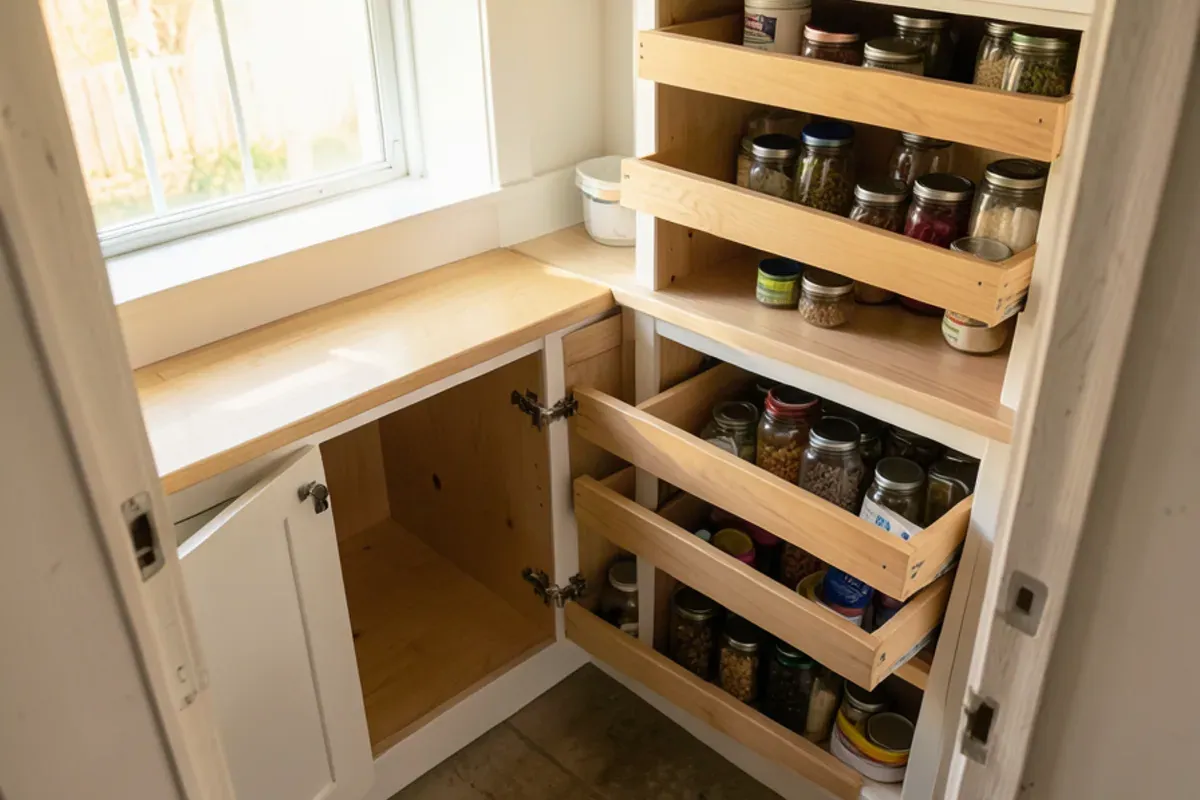
Finish, hardware and the extras that add up
Once the boxes and doors are set, these line items decide whether the estimate stays where you expected:
- Painted finishes need primer, sanding between coats and a durable topcoat, so they usually take longer than a clear finish over stained wood.
- Glazes and two-tone schemes add separate finishing passes and careful masking.
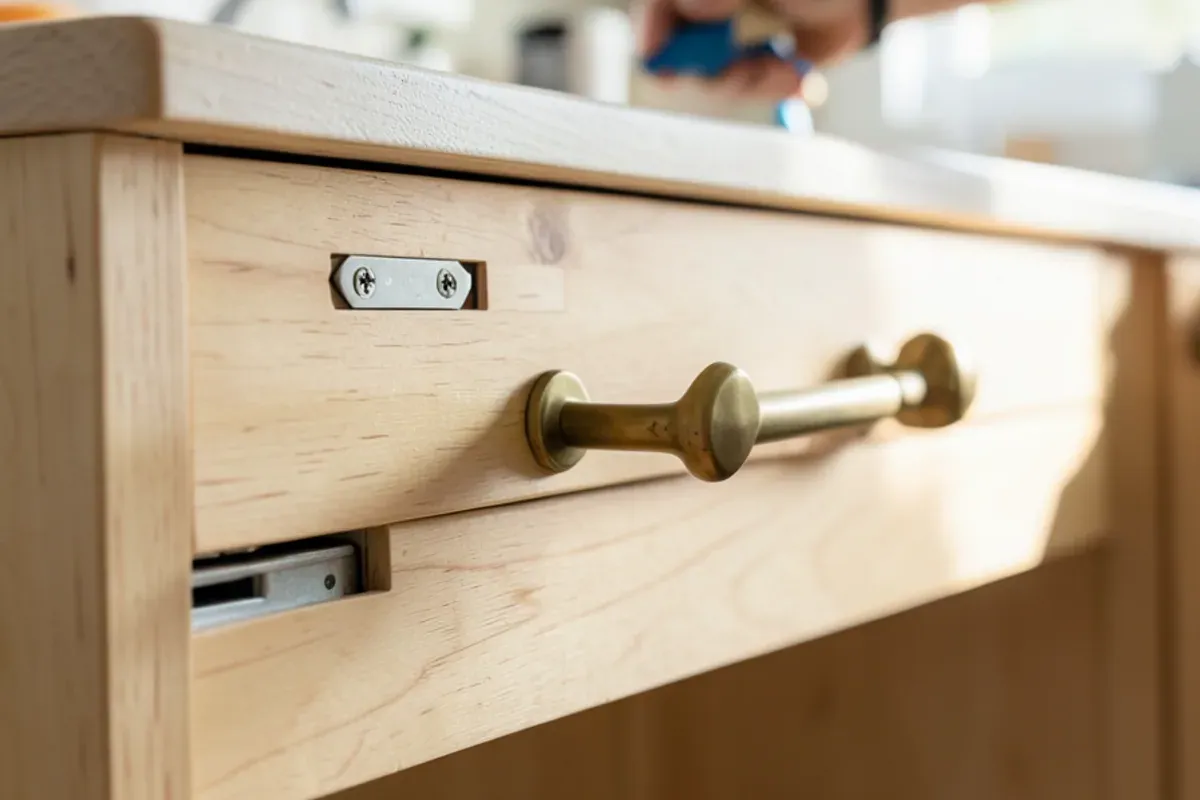
- Hardware ranges widely: soft-close hinges, full-extension undermount slides and solid brass pulls cost more than basic hinges and plated knobs.
- Interior fittings such as spice pull-outs, tray dividers, trash pull-outs and blind-corner hardware are priced per unit.
- Trim work including crown molding, light rail, finished end panels and appliance panels is all built and fitted by hand.
- Under-cabinet lighting needs a licensed electrician for any new wiring, which is a separate trade cost from the cabinetry.
Where do national remodeling figures fit in?
Published averages are useful for scale, as long as you read them for what they are. The 2025 Cost vs Value Report from the Journal of Light Construction lists a national average job cost of $28,458 for a midrange minor kitchen remodel and $82,793 for a midrange major kitchen remodel. Those totals cover an entire project, including appliances, countertops and other trades, not cabinets alone.
They are also national averages, not Sarasota quotes and not our pricing. Local labor, the cabinet mix and the house itself all shift the real figure. A bayfront house in Osprey with ten-foot ceilings and a large island will price very differently from a compact galley in a 1950s block home in Sarasota, even if both owners choose the same door.
Lifespan belongs in the comparison as well. A February 2007 study of home component life expectancy by the National Association of Home Builders and Bank of America Home Equity lists kitchen cabinets as expected to last up to 50 years, and the report asks readers to treat its figures as a general guideline. On the Gulf Coast, how close a set gets to that mark depends mostly on box material, finish on every face and how quickly leaks are dealt with.
Getting a reliable number for your own kitchen
A real estimate starts with the room, not a price list. This is the order we work in for custom kitchen cabinets:
Measure the space
We record wall lengths, ceiling height, window and door openings, plumbing and electrical locations, and how far out of square the room really is.
Set priorities
You tell us what matters most, such as drawer storage, a specific wood or a furniture-style island, and where you are flexible.
Draw and model
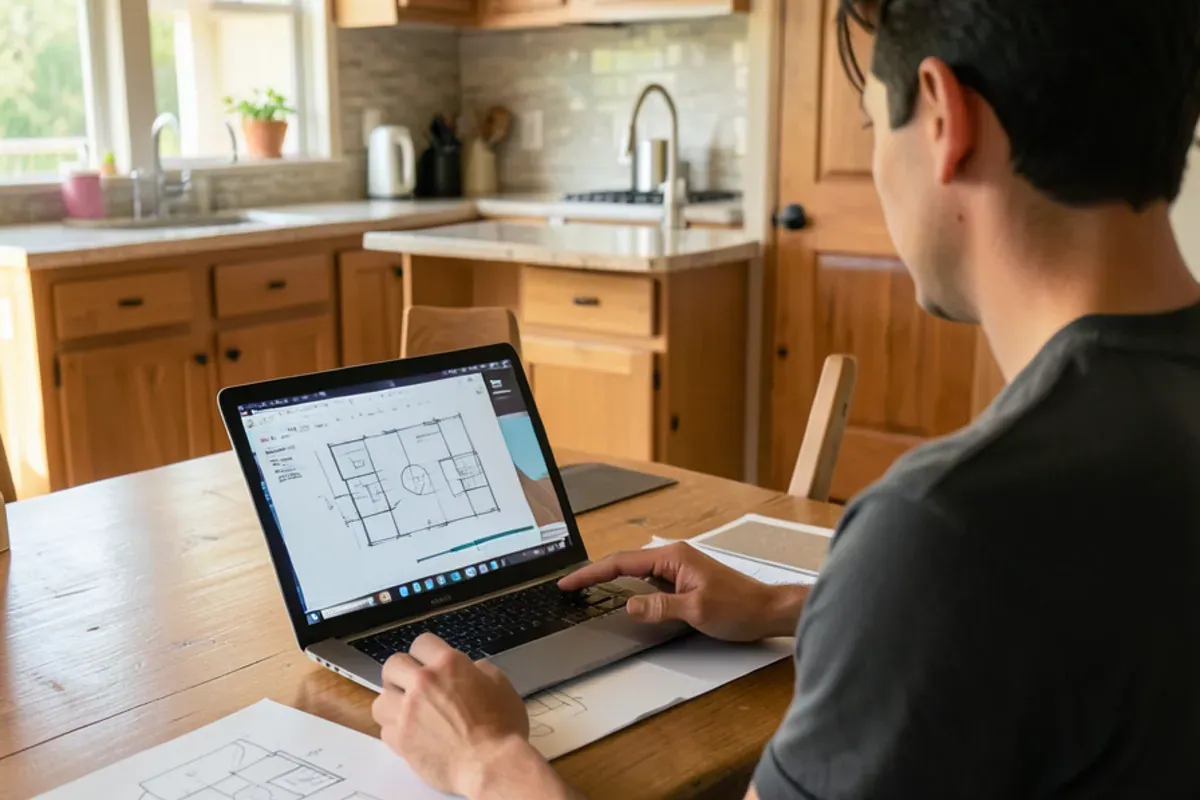
Working drawings and a 3D model show every cabinet, so the estimate is tied to things you can see.
Adjust and confirm
If the number is high, we change the drivers above one at a time until the design and budget agree.
For a broader look at what the shop builds, from kitchens to built-ins, see our custom cabinetry overview. If you are still deciding between building from scratch and ordering from a catalog, our comparison of custom vs semi-custom vs stock cabinets lays out the trade-offs.
The bottom line
There is no honest per-foot price for custom cabinets, only a set of choices that each push the total up or down. Once you know which ones matter to you, the estimate becomes something you can steer. If you would like your kitchen drawn and priced cabinet by cabinet, phone the shop or message us on the contact page and we will arrange a time to measure.
Sources
- Journal of Light Construction — Cost vs Value Report 2025, national averages
- USDA Forest Products Laboratory — Wood Handbook (FPL-GTR-282), Chapter 11: Wood-Based Composite Materials
- National Association of Home Builders / Bank of America Home Equity — Study of Life Expectancy of Home Components (February 2007)