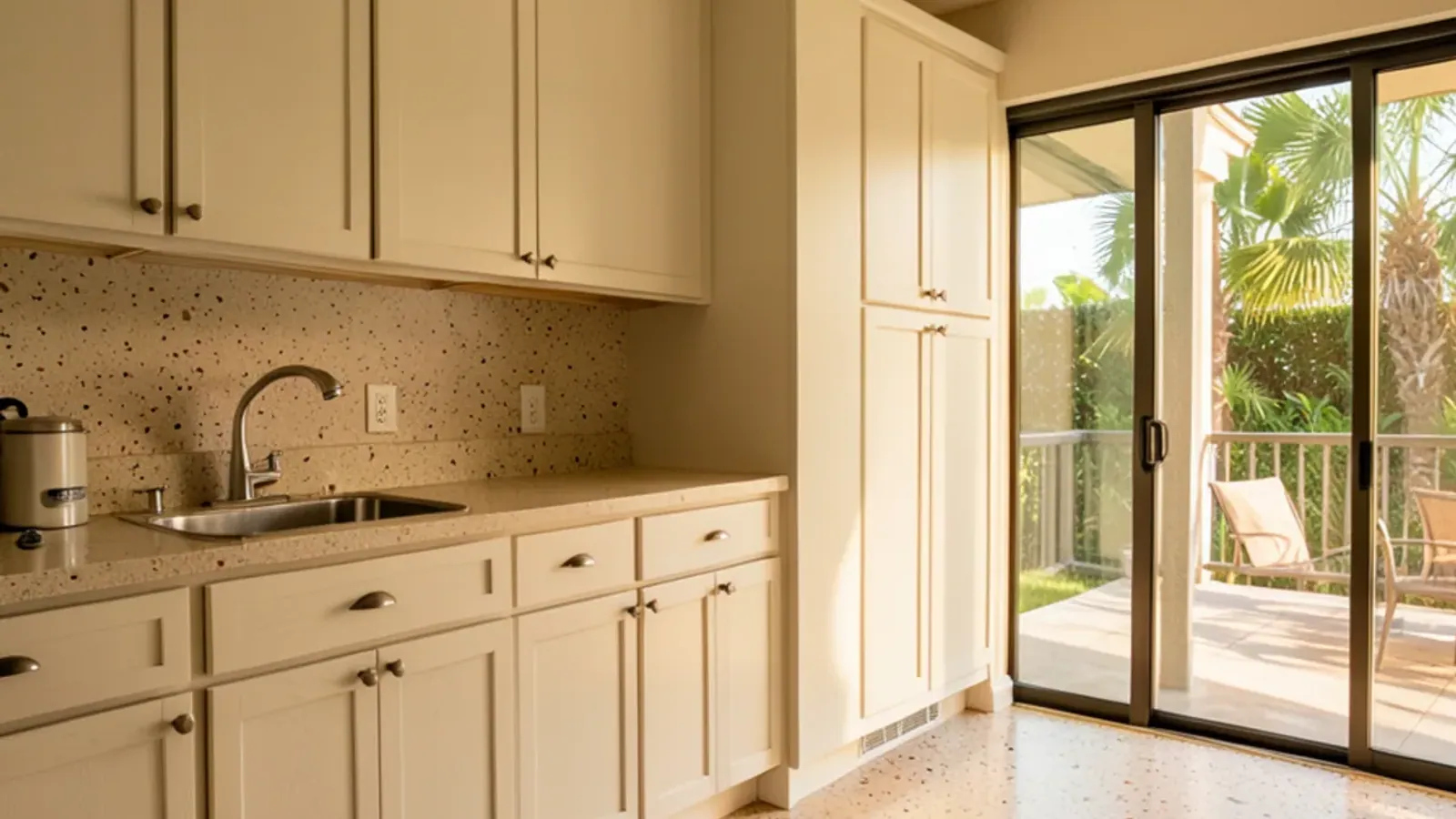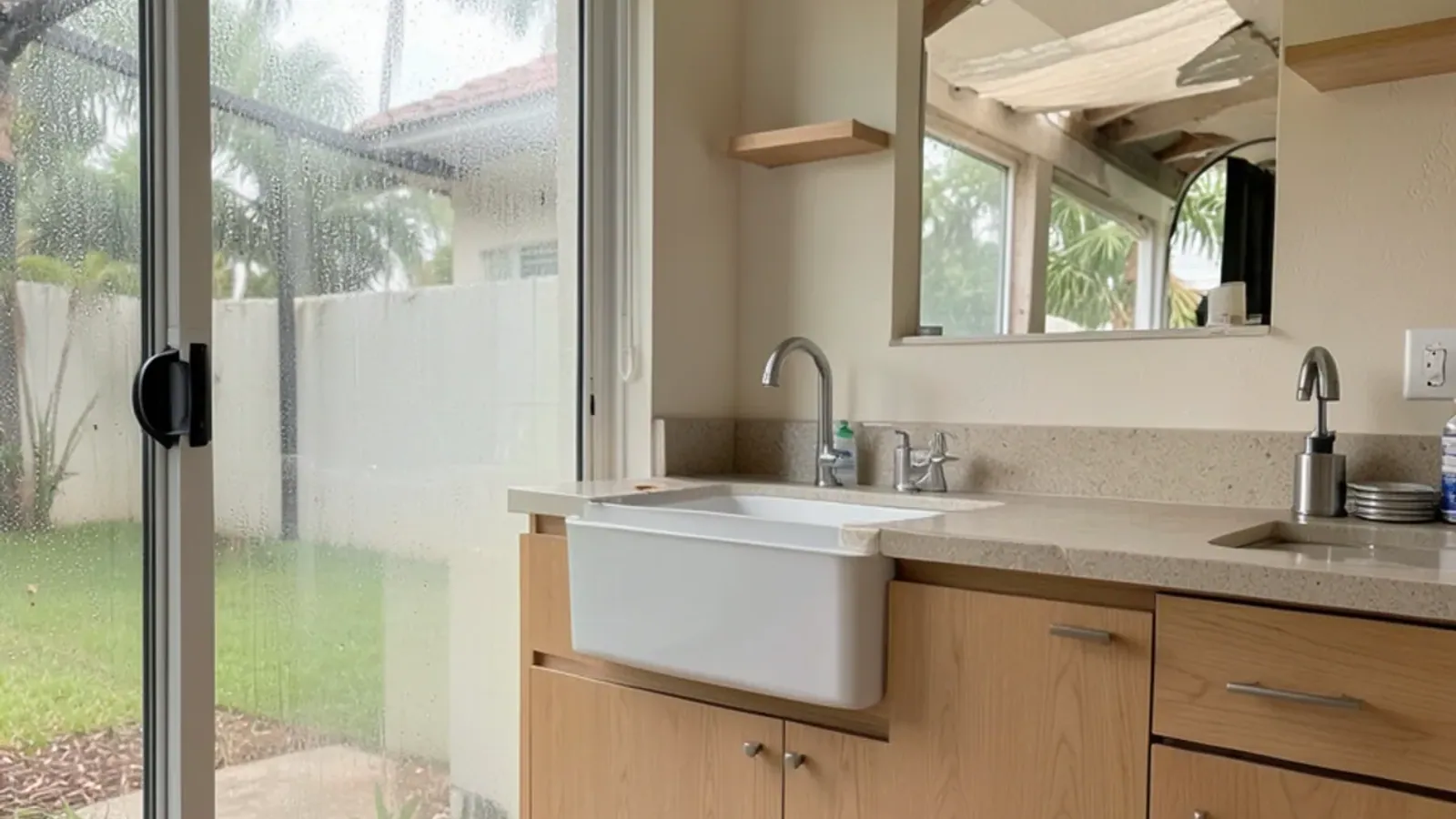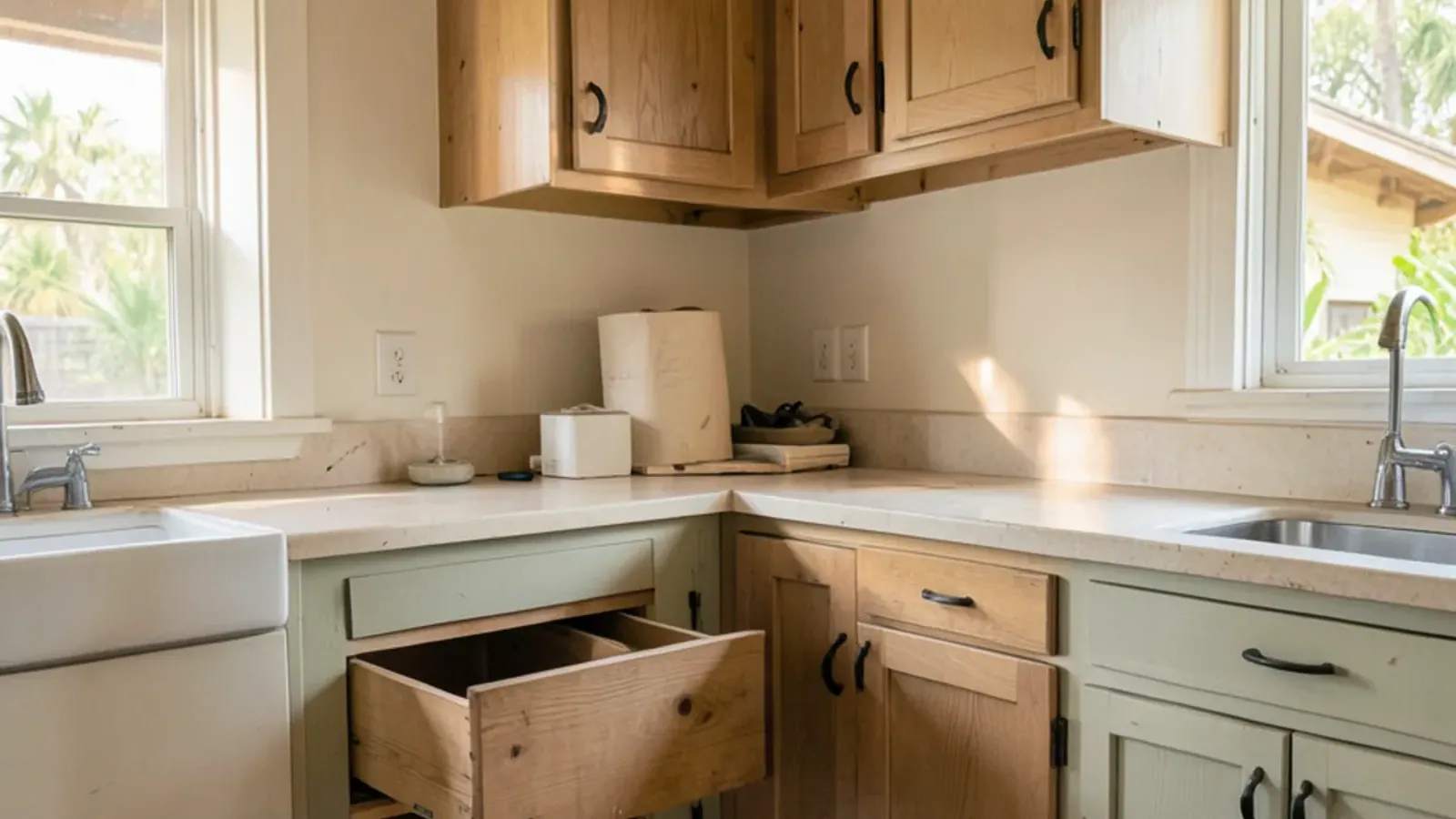
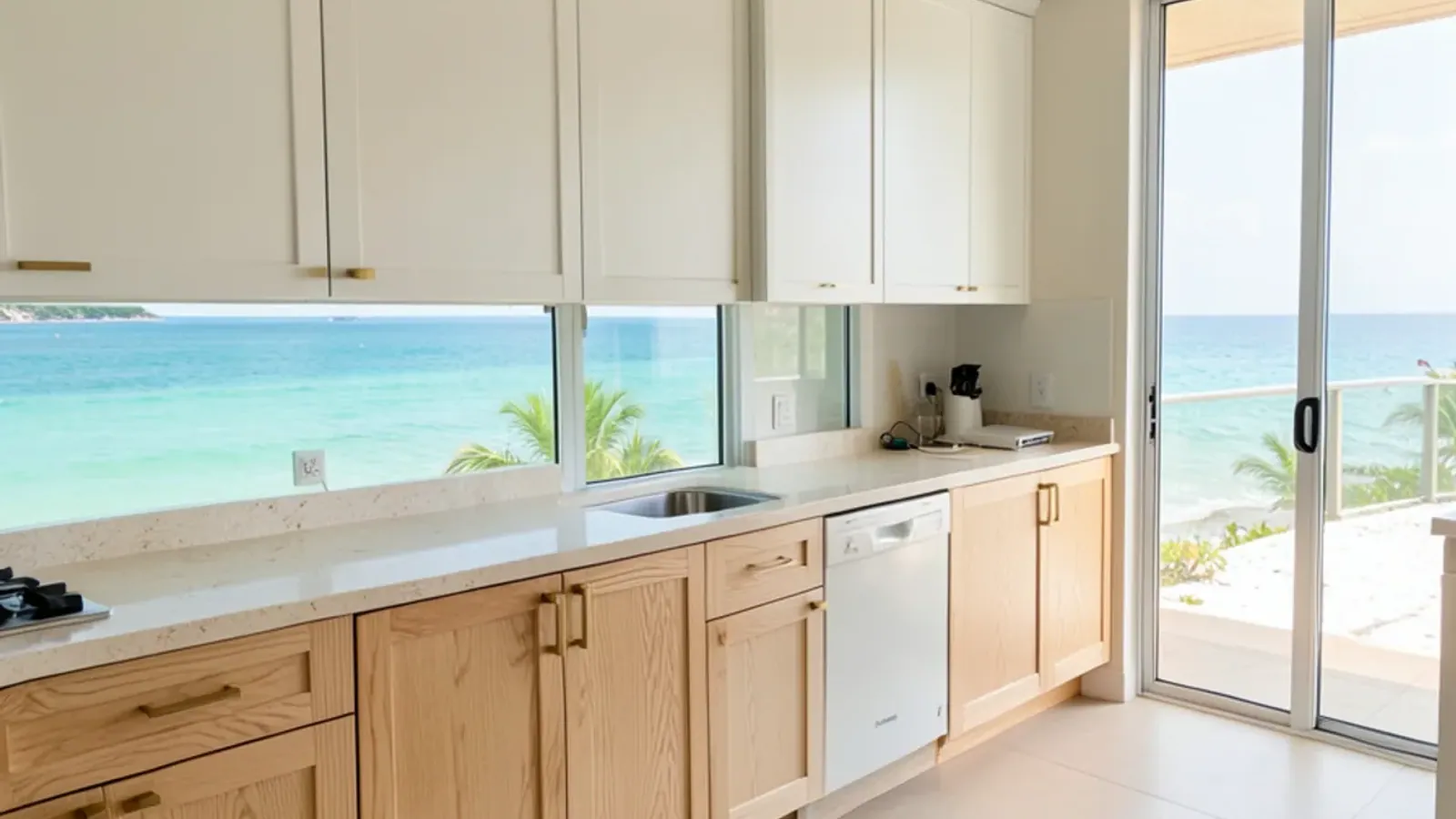
Coastal kitchen cabinets that hold up on Siesta Key combine a light, easy look with materials chosen for salt and damp: pale woods such as white oak or maple, soft painted or glazed finishes, and pulls and hinges in Type 316 stainless steel or solid brass instead of plated metal.
On a barrier island, the look gets you started, but the hardware and the box construction decide how the kitchen ages. Below are the ideas we keep coming back to when drawing kitchens for island condos and beach houses, sorted by wood, hardware, finish and layout, with a few notes on keeping a coastal kitchen from tipping into a theme.
Light woods that read as coastal
White oak is the workhorse. Rift-sawn or quartersawn boards give a straight, quiet grain that looks like weathered driftwood under a clear finish, and the wood is hard enough for a busy rental kitchen. Hard maple is paler and smoother, a good choice for painted doors or a near-white natural finish. Ash offers a bolder grain with a similar light tone.
Plan for color change. The USDA Wood Handbook notes that wood changes color indoors as it ages, mostly from visible light, and that in general dark wood gets lighter while light wood gets darker. A bright Gulf-facing kitchen will warm a pale maple toward honey over the years. Look at samples in your own light, and if you want the lightest tone to last, ask about a finish formulated to slow ambering.
Which cabinet hardware survives salt air?
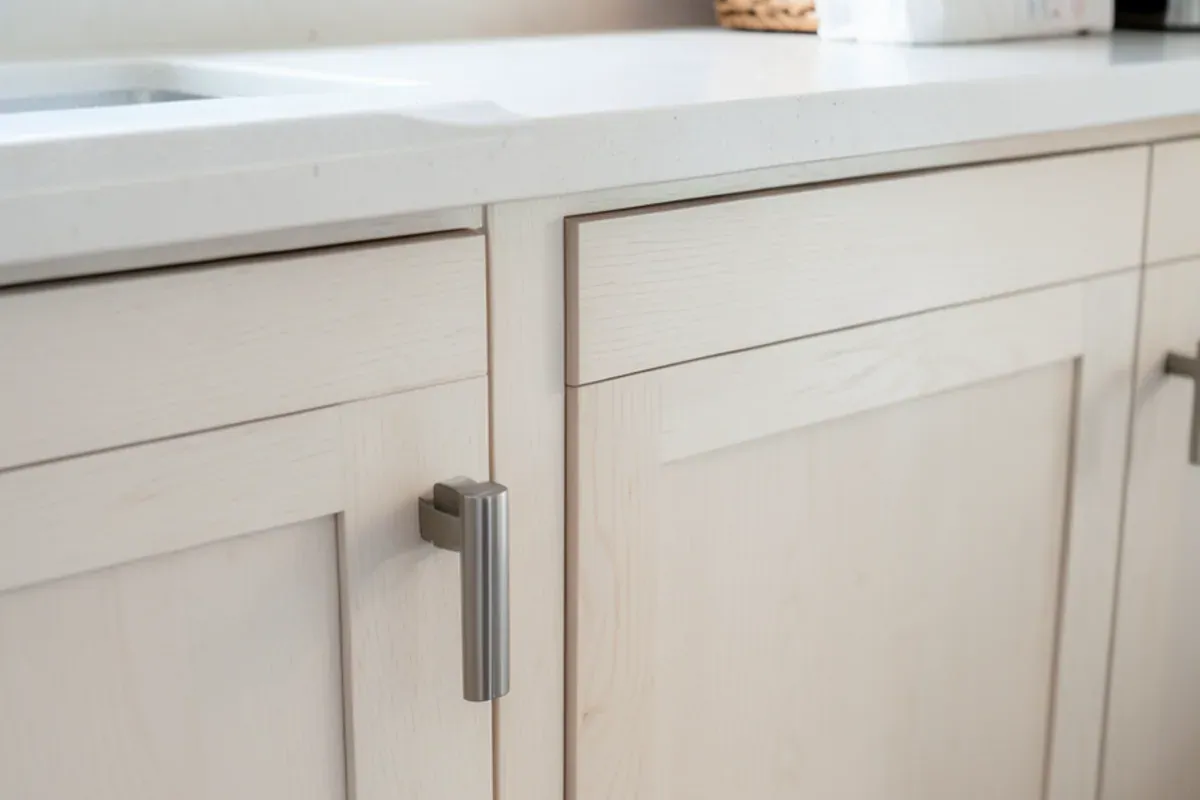
Salt air finds cheap metal fast. Plated zinc pulls blister and pit, and steel screws stain the wood around them. The International Molybdenum Association notes that where there is exposure to coastal salt, molybdenum-bearing Type 316 stainless steel, or a more resistant grade, is generally specified for architectural hardware, and it recommends regular cleaning near the ocean.
- Type 316 stainless pulls and knobs for a clean, modern look that resists pitting
- Solid brass or bronze for a warmer look; it darkens to a patina but does not rust through
- Hinges and slides with corrosion-resistant finishes, since they sit inside the box where damp air lingers
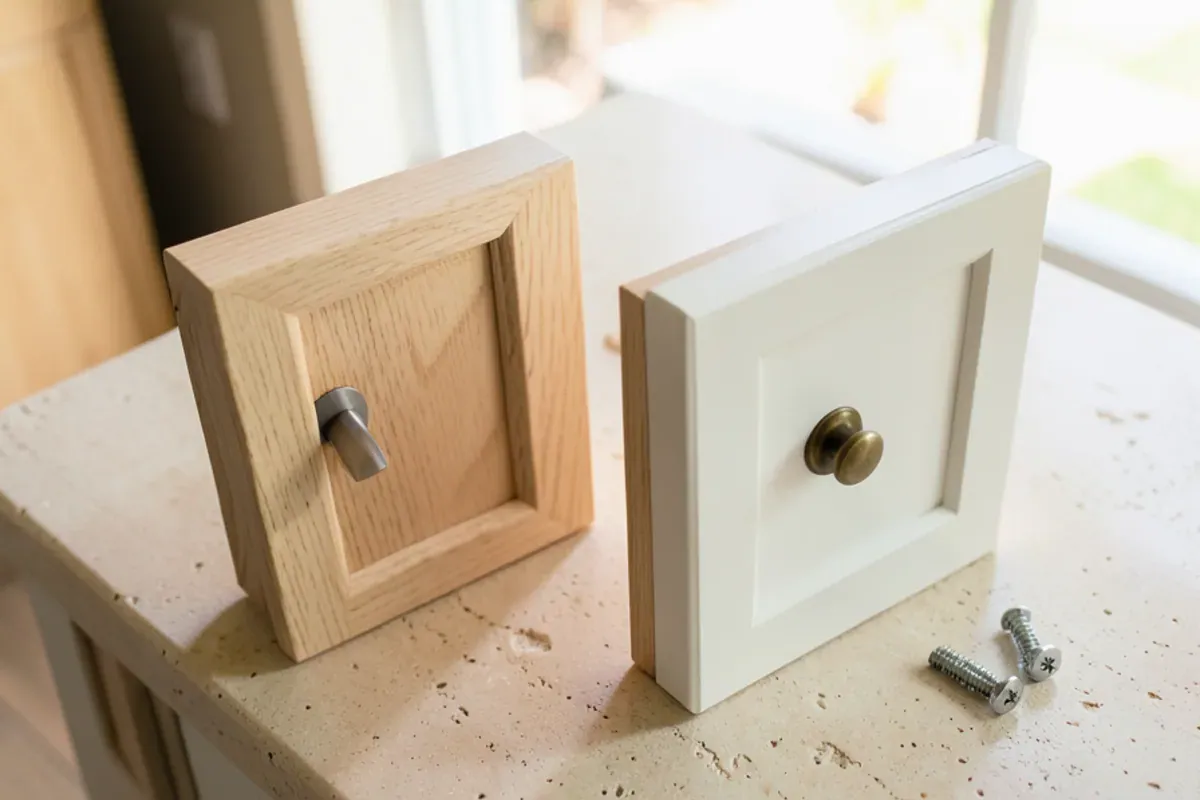
- Stainless or coated screws throughout, so fasteners do not bleed rust into the wood
- Avoid plated pot-metal hardware, which looks fine when new and fails at the beach
Rinsing pulls with a damp cloth and drying them every few weeks removes the salt film that starts corrosion, the same habit boat owners use on deck fittings.
Two more points from the same IMOA guidance carry straight into a kitchen. It singles out metal that is sheltered from rain as needing a regular cleaning program, because nothing washes the salt deposits off, and a pull beside an open balcony slider is exactly that kind of sheltered metal. It also advises matching the frame and hardware to the door’s grade, down to the whole lock mechanism rather than only the visible parts. For cabinets, that means screws, hinge arms and slide hardware deserve the same scrutiny as the pulls you pick from a sample board.
Paint, stain or glaze by the water?
Painted cabinets in soft whites, pale grays and muted greens are the classic choice and pair well with white oak on an island or open shelves. A glazed finish, where a translucent tint settles into the corners of a shaker or beaded door, adds depth and hides the fine scratches that sand leaves behind. Clear finishes on oak or maple keep the grain visible and make touch-ups simpler.
Sheen matters near the beach. Satin and matte finishes hide wear better than high gloss, which shows every scuff from a beach bag. Whatever the finish, it should cover the backs and edges of doors as well as the faces, so both sides of each panel take on moisture at the same pace.
Where to put the wood in a two-tone kitchen
Most coastal two-tone schemes put paint on the perimeter and natural wood where hands and eyes land: the island, a run of open shelves or a hood surround. That keeps the clear-finished wood away from the wettest wall, by the sink and dishwasher, and it means an oak island can be refinished on its own years later without disturbing the painted runs.
Coastal looks and the build details that make them last
Most coastal ideas are about appearance, and each one has a matching construction detail that decides whether it still looks right after a few summers on the key. Here is how each idea translates into a line on the drawings:
| Coastal idea | What to specify | Why it matters by the Gulf |
|---|---|---|
| Pale white oak doors | Rift-sawn or quartersawn boards | Wood Handbook coefficients show quartersawn white oak moving about half as much across its width as flatsawn stock |
| Soft painted finish | A cabinet-grade paint system over hardwood, on backs and edges too | Even coverage keeps doors from cupping as humidity rises and falls |
| Stainless bar pulls | Type 316 pulls fixed with stainless screws | A plain steel screw rusts and stains the wood around a pull that would otherwise be fine |
| Brass knobs | Solid brass rather than brass plating over zinc | Plating wears through at the touch points, and the base metal underneath corrodes |
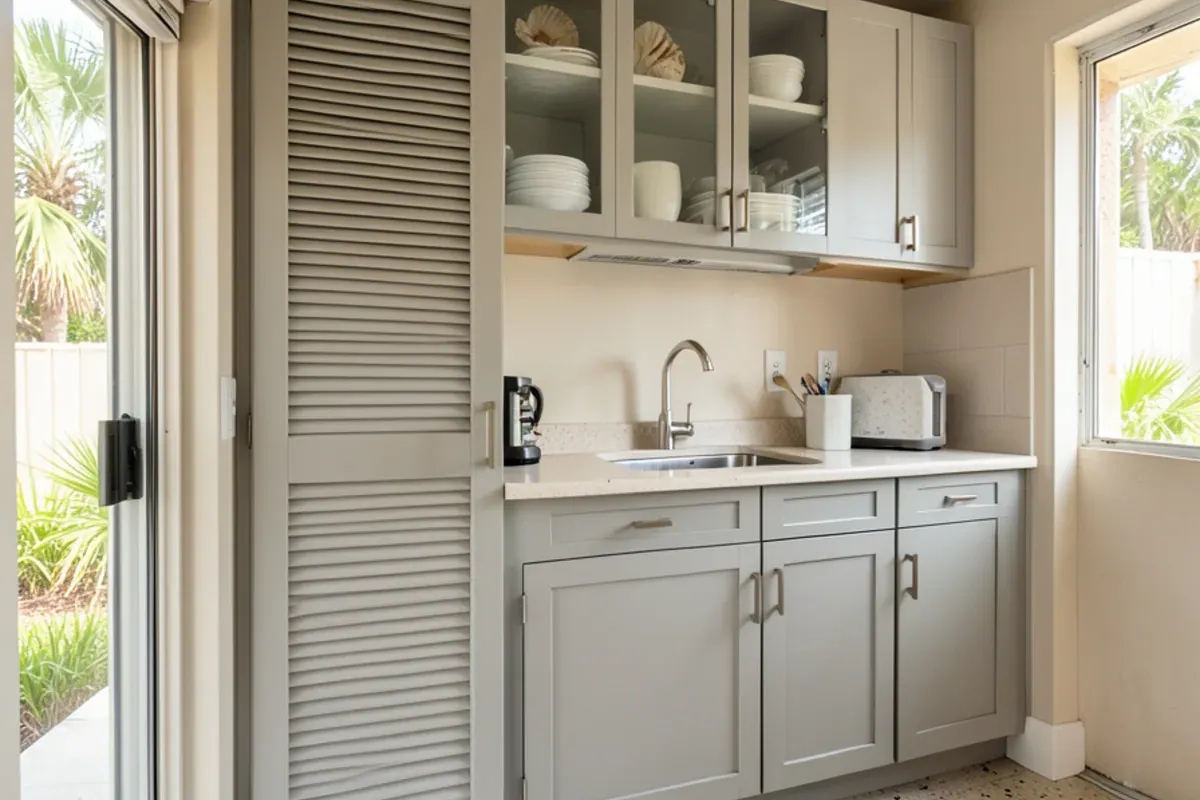
| Louvered pantry doors | Slats finished before the door is assembled | The inside faces of each slat cannot be reached with a brush afterward |
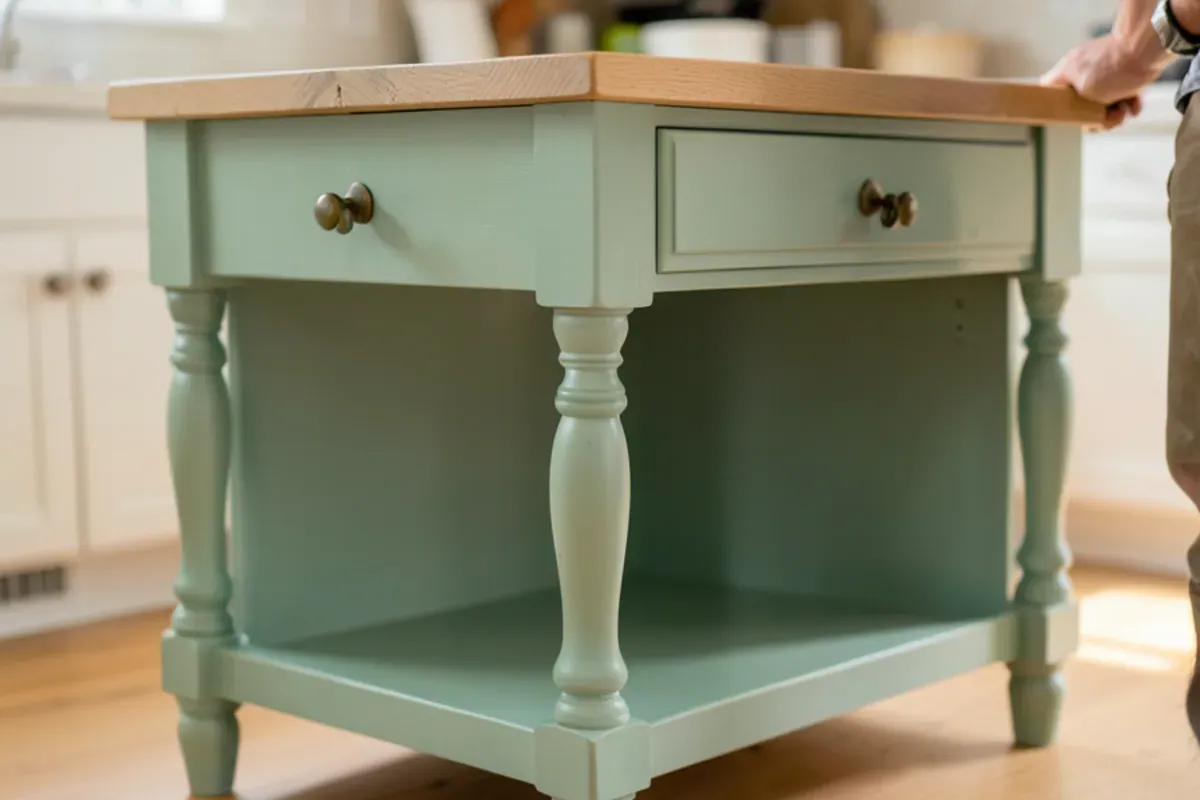
| Island on legs | End grain at the foot of each leg sealed | Legs draw up mop water through the end grain first |
| Open shelves | Thick hardwood finished on every face | Thin shelves sag under stacked plates, and bare undersides take on moisture |
Ideas for Siesta Key condos and elevated homes
The 2020 Census counted more housing units than residents on Siesta Key, a sign of how many homes are condos and seasonal residences. Those kitchens sit closed for months, then fill up with guests. After Hurricane Milton came ashore nearby in October 2024, many owners also rebuilt kitchens with storm resilience in mind. Ideas that suit that pattern:
Ventilated and glass-front storage
Louvered doors on a pantry or linen cabinet let air move through a closed-up unit. Glass-front uppers display shells and serving pieces without inviting dust onto open shelves.
A sand-and-gear drop zone
A bench cabinet near the entry with drawers for towels, sunscreen and beach toys keeps sand out of the kitchen proper.
Island bases built to be cleaned
A furniture-style island raised on legs or a recessed toe kick is easier to mop and dries out faster than a solid plinth sitting on tile. On Anna Maria, where Old Florida cottages sit beside newer elevated rentals, the same detail suits kitchens that see wet feet every afternoon.
How do you keep coastal kitchen cabinets from looking themed?
Lean on material and texture rather than motifs. Wood grain, a beaded inset door, woven baskets and natural stone do the coastal work quietly, while anchors and rope pulls date a kitchen quickly. Pick one color moment, perhaps a sea-glass island or a painted hutch, and let the rest stay calm.
Our custom kitchen cabinets are drawn as working plans and a 3D model first, so you can test a palette and hardware before anything is built. The broader custom cabinetry page covers baths, bars and built-ins in the same materials, and our wood cabinet care guide for Florida homes covers upkeep once the kitchen is in.
The bottom line
A good coastal kitchen should feel light and easy and still look right after a decade of salt air and summer guests. Choose woods that age gracefully, hardware that will not rust, and details that suit how island homes are actually used. To start drawing a kitchen for your Siesta Key condo or beach house, call us or send a message through the contact page.
Sources
- International Molybdenum Association — Molybdenum-grade stainless steels in architecture: Doors
- USDA Forest Products Laboratory — Wood Handbook (FPL-GTR-282), Chapter 16: Finishing Wood
- USDA Forest Products Laboratory — Wood Handbook (FPL-GTR-282), Chapter 13: Drying and Control of Moisture Content and Dimensional Changes (Table 13-5)