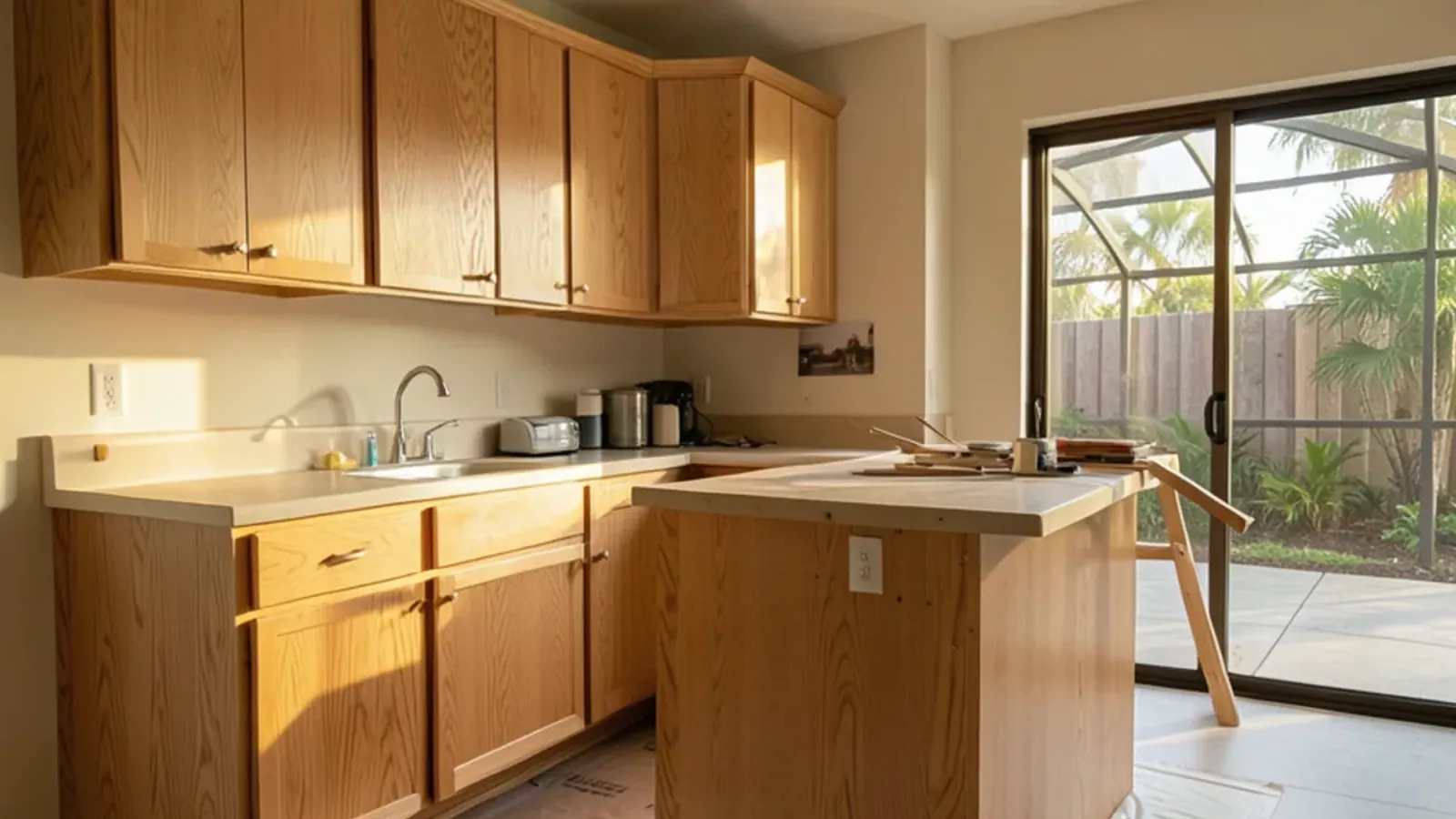
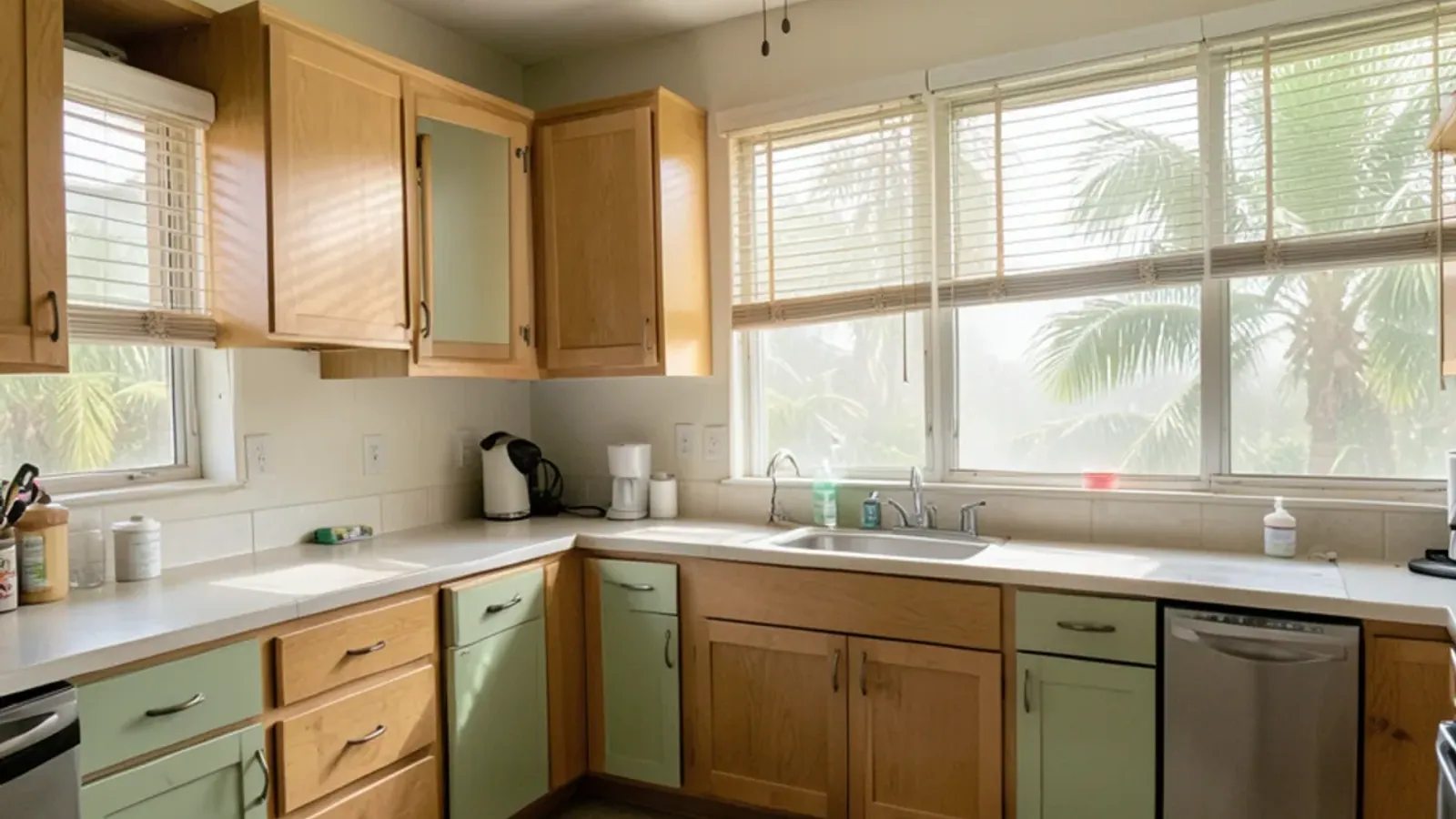
A snowbird home checklist for the kitchen comes down to three jobs: keep water from getting loose, keep indoor humidity low enough that wood and food stay sound, and make it easy for someone to notice trouble while you are away.
Handle those before you lock up in spring, and the cabinets you return to in the fall should open, close and smell the way you left them. We build and repair cabinetry for homes and condos all along the coast, and the summer-closed kitchen is where we see the most avoidable damage: a slow drip under a sink, a door that swelled shut, a musty pantry. The list below is what we would do in our own kitchen.
Why Does an Empty Florida Kitchen Need a Plan?
Summer air on the Gulf Coast carries a lot of moisture. A Florida Solar Energy Center study for Florida Power & Light, published in 2005, measured outdoor relative humidity averaging about 77 percent from June through October and noted that mold and mildew grow when indoor humidity stays above roughly 70 percent for long stretches. A closed house with the air conditioning barely running can drift into that range.
Kitchens collect the risk. They hold the most water connections in the house: sink supply lines, the dishwasher, the refrigerator's ice maker line. They also hold the most wood in one room. A leak that would be caught in a day when you are home can run for weeks when you are not.
Snowbird Home Checklist: What to Shut Off and Set Before You Leave
Close the water
Shut the main valve if your home has one you can reach, or at least the angle stops under the sink, behind the dishwasher and on the ice maker line. Condo owners should check whether the building requires the unit valve to stay open for sprinkler or shared systems.
Empty and prop the dishwasher
Run it empty with the water still on, then leave the door slightly ajar so the tub and gasket dry out.
Decide on the refrigerator
Either leave it running with the ice maker off and the bin empty, or empty it, unplug it and prop both doors open with a towel to catch condensation.
Clear the sink base
Remove cleaning products and paper goods so a leak shows on the cabinet floor and nothing soaks it up unseen.
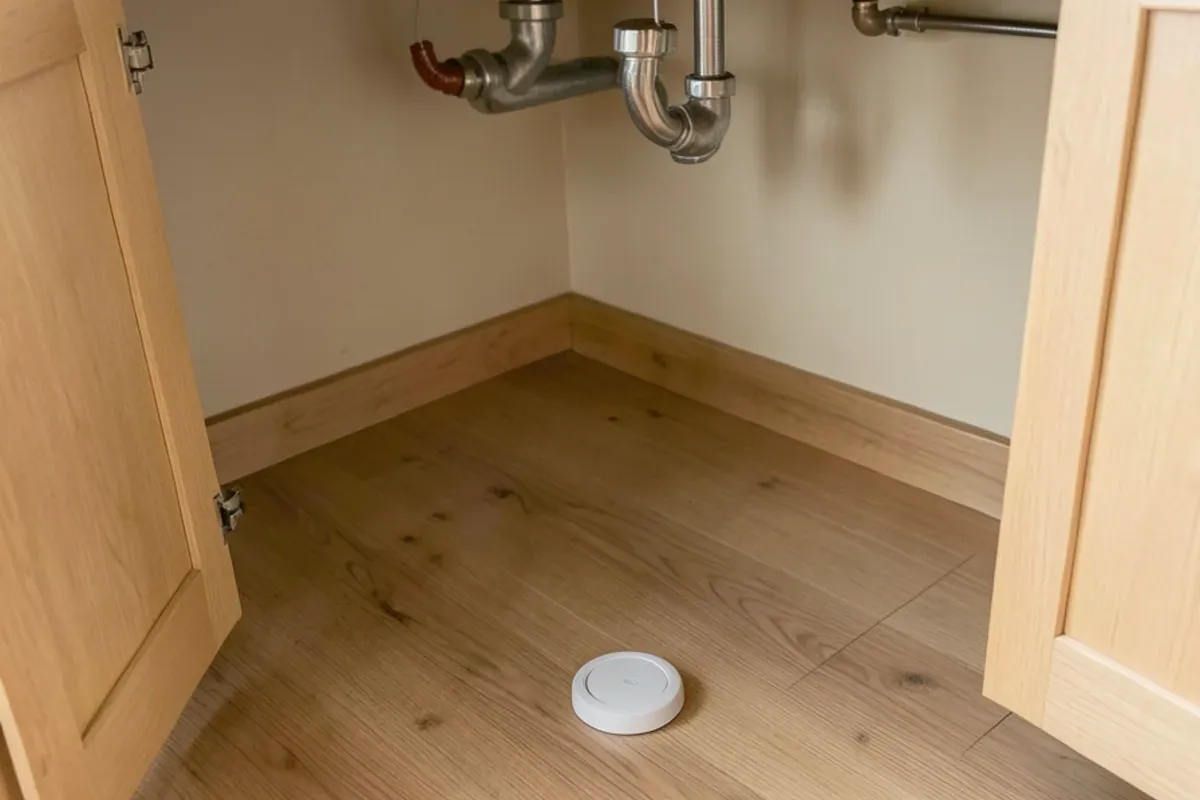
Set leak sensors
Place battery or Wi-Fi sensors under the sink, beside the dishwasher and behind the refrigerator, and confirm the alerts reach your phone and your house checker.
Unplug small appliances
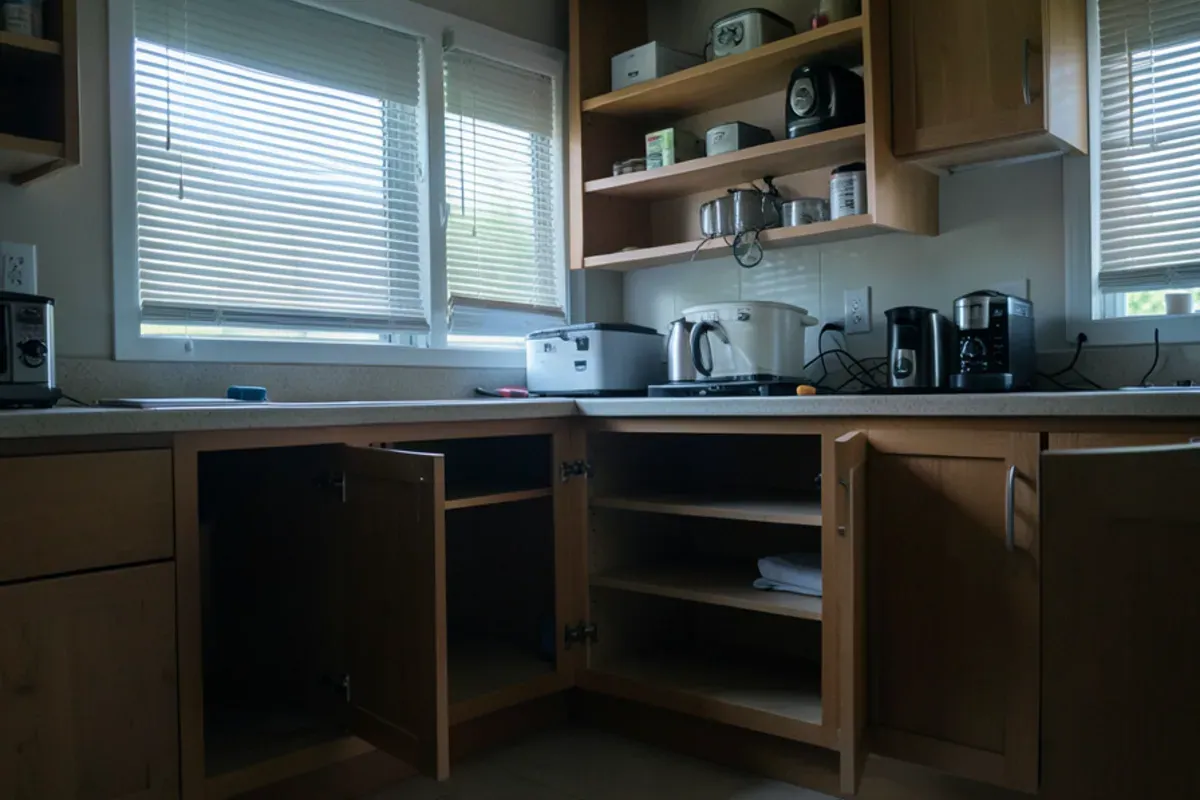
Coffee makers, toasters and countertop microwaves come off the wall; it removes a small fire and surge risk.
Pack the pantry
Take or donate opened dry goods. Flour, cereal and pet food draw pests in a quiet house.
Automatic shut-off valves, which close the main when a sensor detects water, are worth considering for long absences. They are installed on the supply line by a licensed plumber.
What Humidity Setting Protects Cabinets While You're Gone?
The EPA recommends keeping indoor relative humidity below 60 percent, ideally between 30 and 50 percent. Getting there in an empty house is less obvious than it sounds, because a high thermostat setting may barely run the air conditioner. The same Florida Solar Energy Center study compared several approaches in vacant Florida homes.
| Strategy tested | What the study found |
|---|---|
| Air conditioning off | Indoor humidity stayed acceptable in only one of three test houses |
| Thermostat at 85 or 83 degrees | Generally poor; the system ran too little to remove enough moisture, especially on cooler, cloudy days |
| Air conditioning at 74 degrees for a few early-morning hours | Promising but mixed; leakier houses needed longer run times |
| Dehumidifier with a fan, on a timer | Effective in all three houses when run time matched the house's leakiness |
Houses differ in how much outside air leaks in, so there is no single right setting. A thermostat with humidity control or a dehumidifier sized for the space, set up by a licensed HVAC contractor, plus a cheap hygrometer your house checker can read, gives you real numbers instead of guesses.
Storm Season Steps for a Closed Kitchen
Atlantic hurricane season runs from June through November, which covers most of a snowbird's time away. On Siesta Key, where Milton made its October 2024 landfall close by, owners learned how quickly a closed unit can take on water. In Venice, many seasonal homes sit close enough to the Gulf or the Intracoastal to share the same concern.
- Photograph the kitchen, inside the cabinets included, before you leave; it documents condition for any insurance claim.
- Move valuables and small appliances off the lowest shelves in ground-floor homes in flood zones.
- Give your house checker the valve locations and a list of what to look at after a storm passes.
- Keep receipts and model numbers for appliances in a folder you can reach from up north.
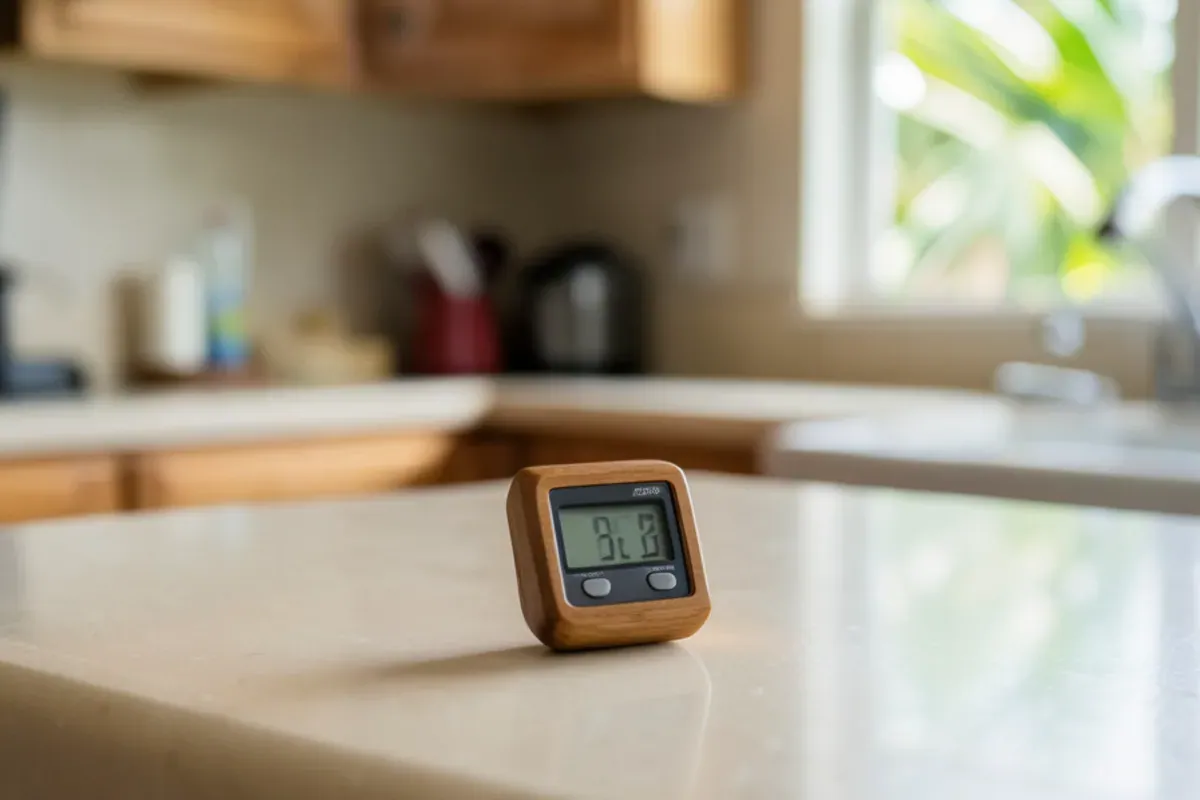
- Put appliance thermometers in the refrigerator and freezer if they stay running, so a checker can tell after an outage whether the food is still good.
What Should Your House Checker Look at in the Kitchen?
A house checker is only as useful as the list they work from. The EPA advises drying water-damaged areas and items within 24 to 48 hours to prevent mold, which is a good argument for visits close enough together that a leak is found while the cabinet is still worth saving. Leave a written kitchen routine taped inside a cabinet door.
- Read the hygrometer and write the number down, so a slow climb shows up before mustiness does.
- Open the sink base, press the cabinet floor, and test the leak sensor's battery.
- Look along the dishwasher and refrigerator toe kicks for staining or lifted finish.
- Check the refrigerator and freezer thermometers, if those appliances are running.
- Confirm the air conditioner or dehumidifier is running and its condensate line is draining.
- Open the pantry and smell it; look for droppings or insects near anything left behind.
- After any storm or outage, repeat the whole list and send photos.
Give the checker the valve locations, the name of a licensed plumber who knows the house, and permission to call them. A leak found on a Tuesday should not wait for your approval from another time zone.
What to Check When You Return
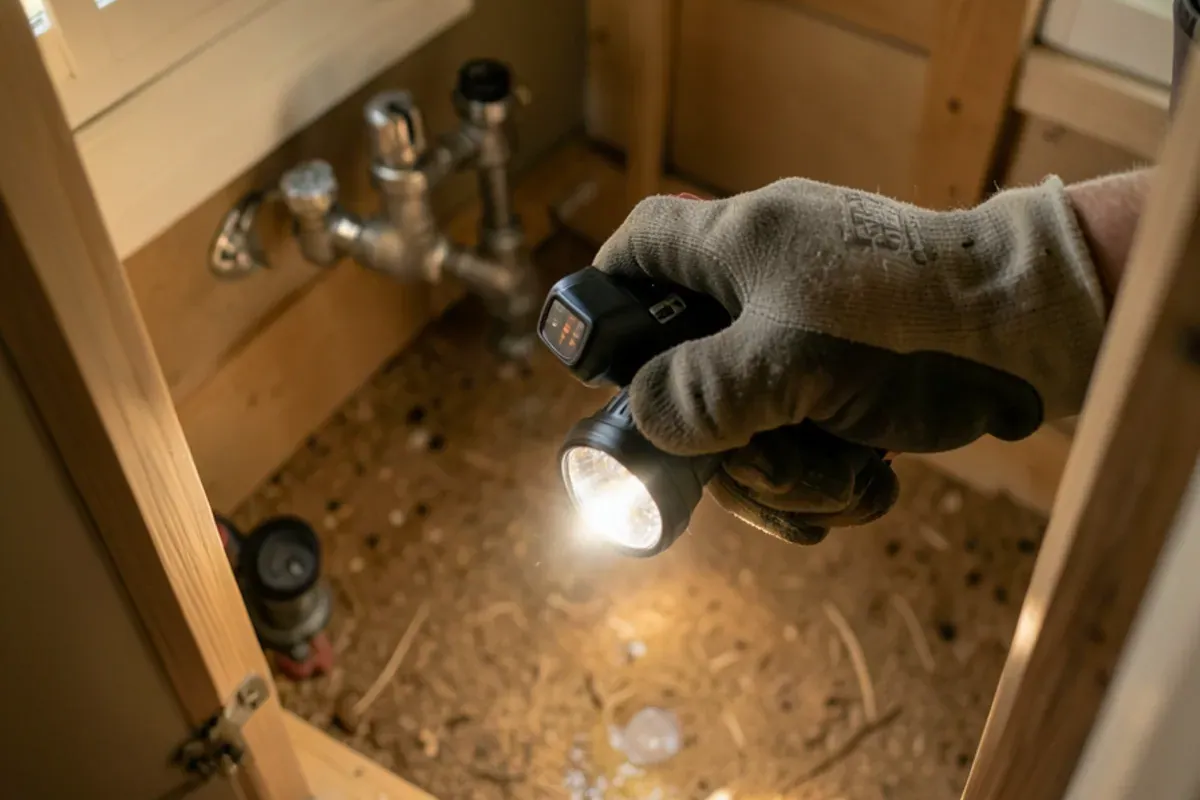
Open the house, turn the water back on slowly and stay in the kitchen for the first few minutes. Look at every supply connection while it pressurizes. Then run through the rest: sniff the sink base and pantry for mustiness, press the cabinet floor under the sink for softness, open every door and drawer to feel for swelling or sticking, run the dishwasher empty, and discard the first few batches of ice. Wipe any surface mold with a mild detergent and dry it; EPA guidance says mold usually will not take hold if wet materials dry out within a day or two.
If you find water under the sink
- Close the fixture valve or the main, and leave the electrical outlets in that area alone until they are dry.
- Photograph the cabinet floor, the back panel and the toe kick before moving anything.
- Empty the cabinet, remove the toe kick if it lifts out, and run fans so air moves under and behind the box.
- Call a licensed plumber to repair the connection that failed.
- If visible mold covers more than about 10 square feet, the EPA points to its professional remediation guidance rather than a do-it-yourself cleanup.
If a cabinet floor is swollen or a finish has lifted, it is usually repairable when caught early. If you are thinking about replacing the kitchen anyway, our guide to kitchen remodeling in Sarasota explains how we design for homes that sit empty part of the year.
The bottom line
Ten minutes with the valves, the sensors and the thermostat in spring saves a lot of work in the fall. If you come back to a kitchen that needs attention, or you want cabinets built to tolerate a closed-up Florida summer, phone the shop, or book a visit through our contact page.
Sources
- Florida Solar Energy Center — Executive Summary: Evaluation of the Impact of Vacant Home Space Conditioning Strategies on Summer Relative Humidity, Energy, and Peak Load (FSEC-CR-1487-04, 2005)
- U.S. Environmental Protection Agency — A Brief Guide to Mold, Moisture and Your Home
- Centers for Disease Control and Prevention — Keep Food Safe After a Disaster or Emergency