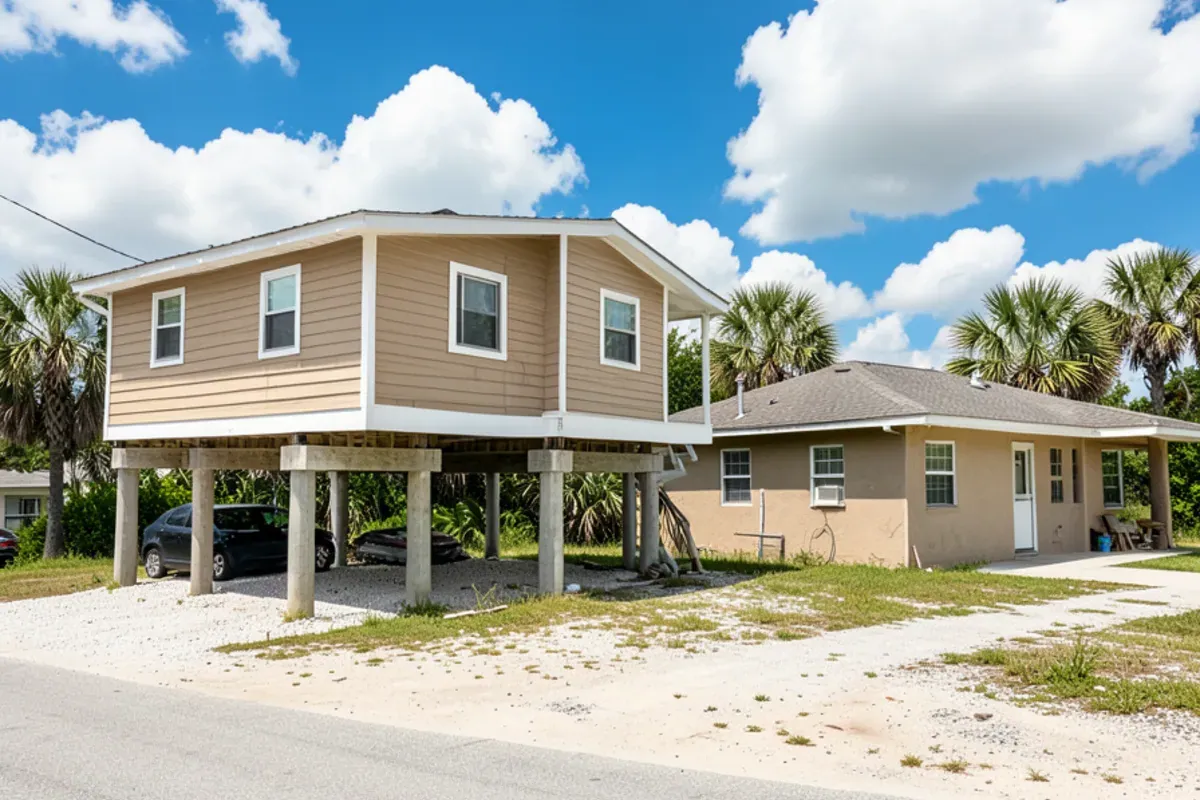
The FEMA 50 percent rule says that if a structure inside a Special Flood Hazard Area is improved or repaired at a cost equal to or greater than half of the structure's market value, it must be brought into compliance with current floodplain requirements, which can mean elevating it.
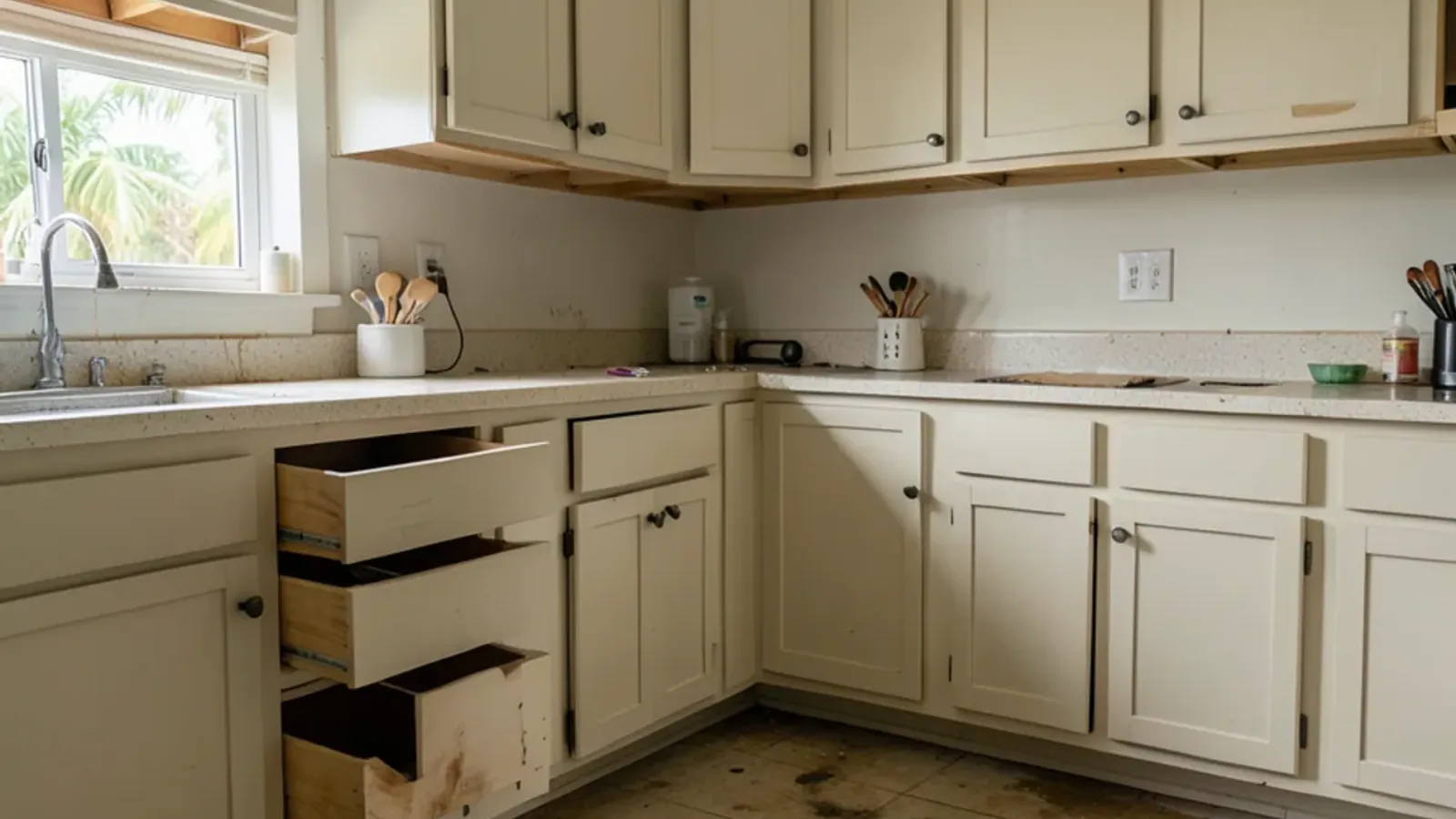
Kitchen work counts toward that cost, and because cabinets, countertops, appliances, plumbing and wiring all land in one room, a kitchen can push a project over the line faster than owners expect.
We are a cabinet shop, not a floodplain official, so this is a plain-language orientation rather than a determination. The decision belongs to your local building department. Here is what the rule is, how it treats kitchen costs and how to plan a rebuild with it in mind.
What is the FEMA 50 percent rule?
The rule comes from the National Flood Insurance Program and appears in two forms. Substantial improvement covers any reconstruction, addition or other improvement whose cost equals or exceeds 50 percent of the structure's market value before the work starts. Substantial damage covers a building whose cost to restore to its pre-damage condition equals or exceeds 50 percent of its market value before the damage, whatever caused it.
Communities that participate in the NFIP enforce the rule through their floodplain ordinances. If a home is found substantially improved or substantially damaged, FEMA guidance says it must meet the same floodplain requirements as new construction. For many older Gulf Coast homes built on slab below today's required elevation, that is the expensive part.
Two terms trip people up. Market value refers to the structure alone, not the land, landscaping, driveway or detached outbuildings. And the cost side is the full cost to do the work, including labor valued at market rates, even when a homeowner does some of the work or uses donated materials.
Who decides whether your kitchen crosses the line?
Your community's floodplain administrator or building official makes the call. FEMA does not, and neither does your insurance company. On Siesta Key, which is unincorporated, that means Sarasota County's building and floodplain staff. On Treasure Island, a city in Pinellas County, the city's own building department handles it.
Local rules can be stricter than the federal minimum. FEMA notes that communities may adopt a lower percentage or track improvements cumulatively, adding up permitted work over a set number of years. Ask your local office which method applies before you finalize a scope, and ask what valuation they accept, since some use the property appraiser's building value and others allow an independent appraisal.
How kitchen costs are counted
FEMA's substantial improvement guidance, which many Florida communities reproduce in their permit worksheets, separates costs that count from costs that generally do not. Your local list governs, but kitchen items typically fall like this:
| Usually counted | Usually excluded |
|---|---|
| Built-in cabinets and vanities | Freestanding furniture and rugs |
| Countertops and backsplashes | Portable or countertop appliances |
| Built-in appliances such as a dishwasher or wall oven | Plans, permits and survey fees |
| Plumbing and electrical work, fixtures and lighting | Debris removal and cleanup |
| Drywall, flooring, trim and paint | Landscaping, driveways and detached structures |
| Labor and contractor overhead, at full market value | Work required only to correct a cited code violation, where the community allows |
Because cabinets and countertops are both on the counted side, a full custom kitchen alone can be a substantial share of a modest home's structure value. Pair it with flooring, drywall and electrical repairs after a flood, and the total climbs quickly.
What does the City of Sarasota's 50 percent packet ask for?
The City of Sarasota Building Department publishes a substantial improvement and substantial damage packet, updated in August 2024, that shows how one local office applies the rule. Sarasota County, which covers unincorporated areas such as Siesta Key, and other towns and cities use their own forms, but the city's version is a useful preview of what an official will want:
- Structure value comes from the Sarasota County Property Appraiser's assessed value of the building, excluding land; an owner who disagrees can submit a comparable appraisal of the structure from a Florida appraiser
- The cost estimate must cover all damage or all improvements, not only structural work, and be prepared and signed by a licensed general contractor, or by an owner acting as their own contractor
- For storm repairs, the city reviews costs at pre-storm prices and rates
- Built-in cabinets have their own line on the city's cost worksheet, alongside built-in appliances, plumbing, electrical, and overhead and profit
- Building dry-out, debris removal, plans, surveys and permit fees are excluded
That pairing is worth noticing in a flooded kitchen. The drying crew's invoice stays off the ledger, but every cabinet, countertop and built-in appliance that goes back in is on it.
Why does a kitchen tip the balance after a flood?
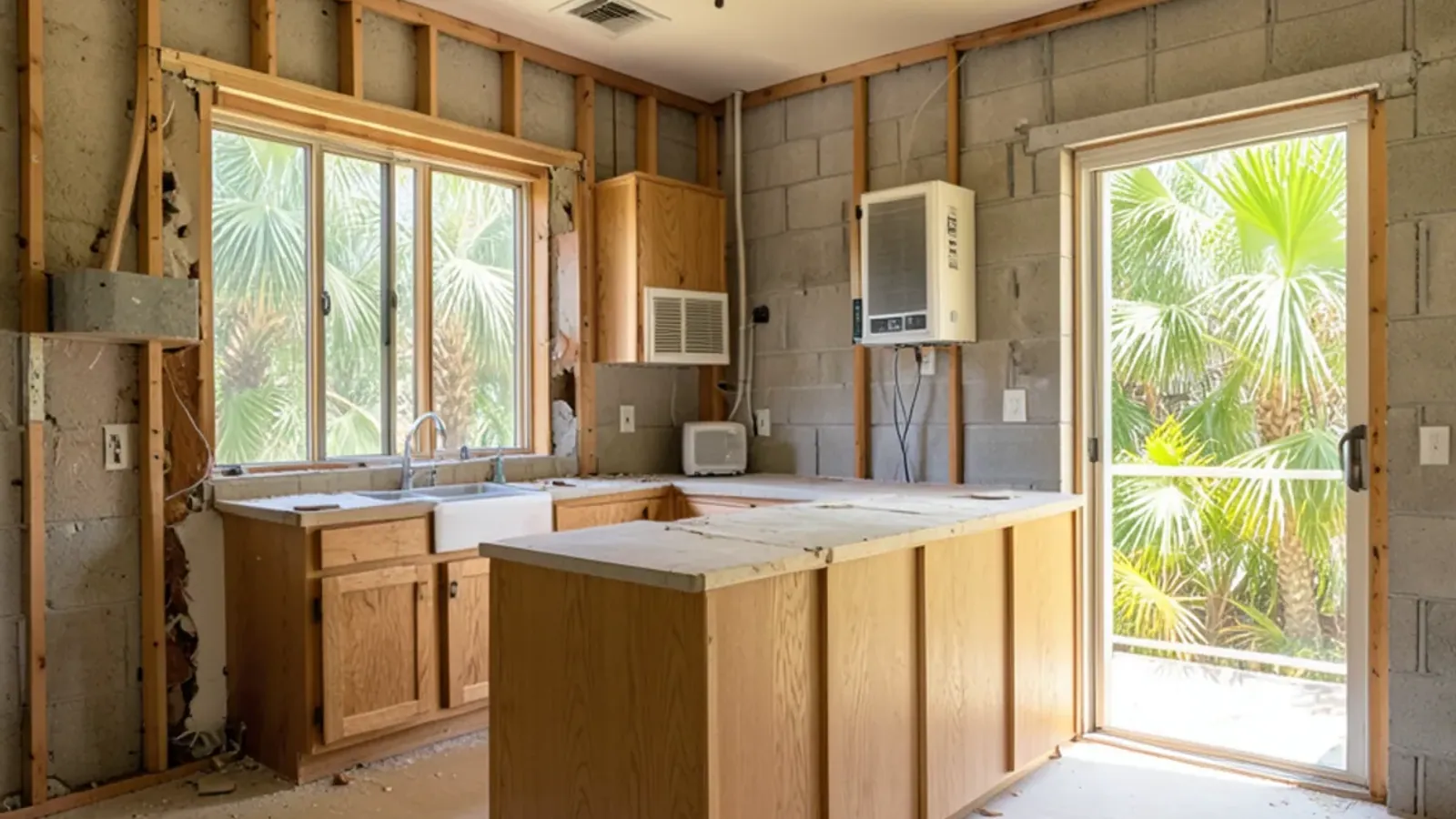
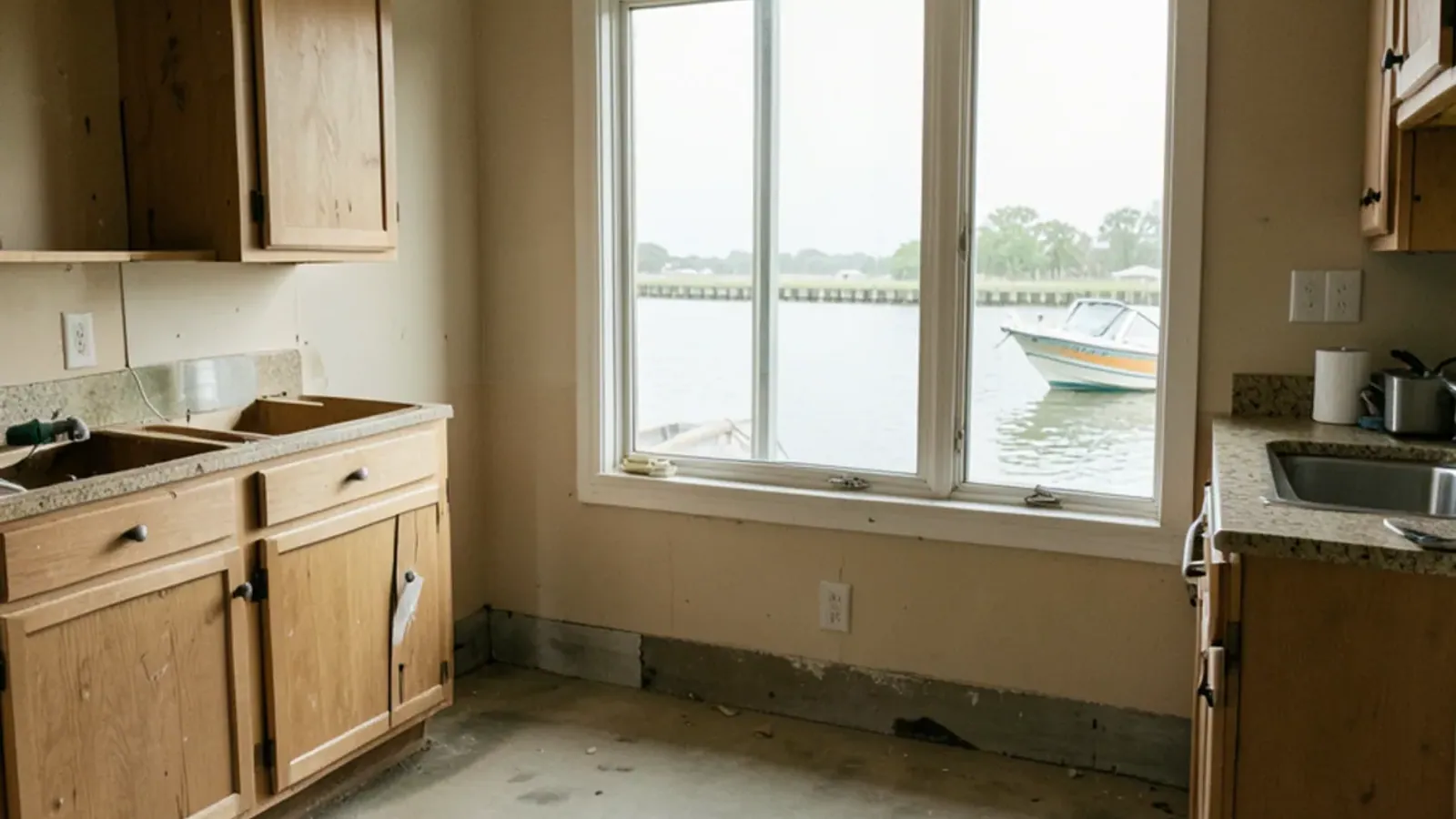
After surge or flooding, the kitchen is rarely the only room affected. The local official looks at the whole repair: every wet wall, floor and door, the HVAC, the water heater and the kitchen together. A homeowner who budgets the kitchen as a separate project can be surprised to learn it is being added to everything else.
There is a second trap. Substantial damage is measured by the cost to restore the home to its pre-flood condition, not by what you choose to spend. Upgrading from stock cabinets to custom cabinetry raises the improvement side of the ledger, while choosing cheaper replacements does not lower the damage estimate below what full restoration would cost.
What does compliance mean for the kitchen itself?
If the official finds the home substantially damaged or improved, the kitchen has to end up at or above the required flood elevation. The City of Sarasota's notice says the lowest floor must be raised to or above the 100-year flood elevation, along with electrical and mechanical equipment, bathrooms and laundry rooms; garages and carports are not treated as the lowest floor.
Federal rules then limit what may sit below. Under 44 CFR 60.3, fully enclosed areas below the lowest floor of new or substantially improved buildings must be usable solely for parking, building access or storage, with openings that let floodwater in and out, and the city allows only limited, incidental storage there. A kitchen cannot simply be rebuilt in the enclosure under an elevated home, so ask the floodplain office before planning any cabinetry, wet bar or outdoor kitchen for that space.
Planning a kitchen under the fema 50 percent rule
- Call the local floodplain office early and ask which threshold, valuation method and look-back period apply to your address.
- Find your elevation certificate, or ask whether one is on file; it shows how far the lowest floor sits relative to the required elevation.
- Get itemized estimates from each trade so the official can review a clear breakdown instead of a lump sum.
- If your home is found substantially damaged and you carry NFIP flood coverage, ask about Increased Cost of Compliance, which FloodSmart says can provide up to $30,000 toward elevation, floodproofing, relocation or demolition.
- Settle the kitchen design while the determination is pending, so cabinetry can move once the path forward is clear.
Our hurricane kitchen rebuild page covers how we work alongside the licensed general contractor and other trades on a post-storm project, and the storm-damaged kitchen repair overview explains the rest of our storm work.

The bottom line
The 50 percent rule is not a reason to avoid rebuilding a kitchen, but it is a reason to talk to your floodplain office before the design is final. Get clear itemized estimates, understand your local threshold and valuation, and plan the cabinetry so it is ready when the permit is. To start an itemized cabinetry estimate, call us or use the contact page.
Sources
- FEMA — Substantial Damage Quick Guide
- FEMA — Frequently Asked Questions: Substantial Damage
- FEMA — Glossary: Substantial Improvement
- FEMA — NFIP Floodplain Management Requirements, Unit 8: Substantial Improvement and Substantial Damage
- FloodSmart (NFIP) — Increased Cost of Compliance Coverage
- Florida Division of Emergency Management — Sample SI/SD Notice Packet from FEMA P-758
- City of Sarasota Building Department — Substantial Improvement or Substantial Damage packet (updated August 2024)
- Legal Information Institute — 44 CFR 60.3, Flood plain management criteria for flood-prone areas