If you are standing in front of flooded kitchen cabinets, the order matters: make the room electrically safe, get water out and air moving within the first day or two, and photograph everything before a single box leaves the house.
Cabinets that sat in storm surge or sewage-tainted water almost always need to be replaced; cabinets soaked by a clean supply-line break sometimes can be dried and repaired.
Our shop on Lewis Ave in Sarasota builds custom cabinets, and in a storm rebuild our role is measuring, documenting and rebuilding the cabinetry once the drying crews, licensed plumbers and electricians have done their part. This guide walks through what to do before you call anyone like us, so the decisions you make in the first week help your claim and your rebuild instead of complicating them.
Is it safe to walk into a flooded kitchen?
Not until the power is handled. The CDC advises shutting off electricity at the main breaker when circuits or equipment are wet or near water, but only if you can reach the panel from a dry spot. If reaching it means stepping into standing water, call an electrician instead, and leave the power off until a qualified electrician has inspected the system.
Kitchens concentrate the risk: a dishwasher, a range, a refrigerator, a disposal and a row of countertop outlets all sit within a few feet of the floor. Treat any appliance that took on water as unsafe until a licensed electrician or the manufacturer's service tech says otherwise.
Floodwater itself is the second hazard. The CDC warns it can carry sewage, chemicals and debris, so wear rubber boots and waterproof gloves, keep children and pets out, and wash up before you eat. On barrier islands such as Siesta Key, surge water also carries sand and salt that keep working into joints after the water recedes.
The first 48 hours with flooded kitchen cabinets
EPA guidance is blunt about timing: dry water-damaged areas within 24 to 48 hours, and if you could not, assume mold is already growing. That window shapes everything you do on day one and day two.
Hours 0–6: stop the water and document the scene
Close the main water valve if a pipe failed. Take wide photos and video of the room before you move anything, including the waterline on cabinet sides and walls.
Hours 6–24: empty and open everything
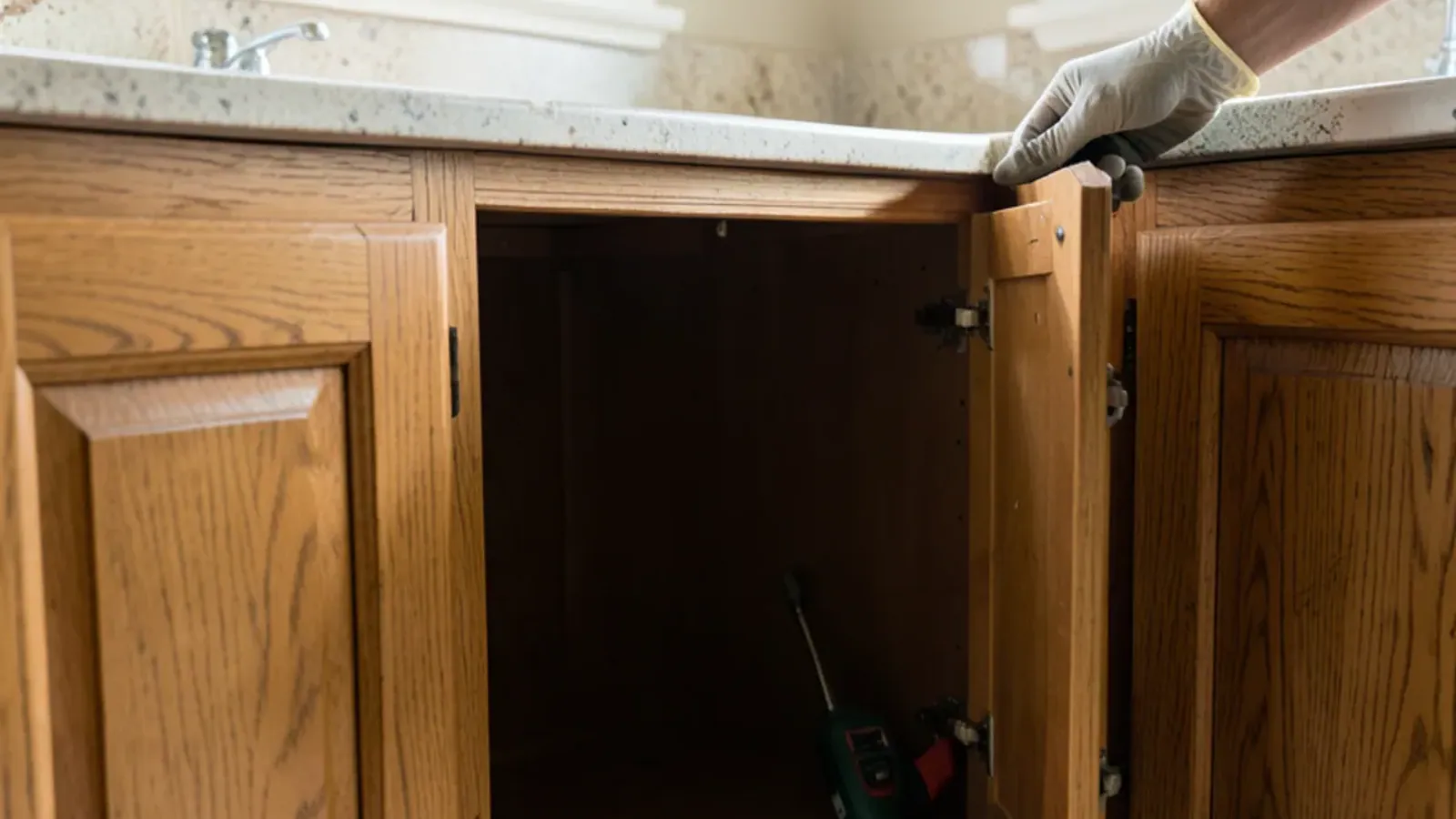
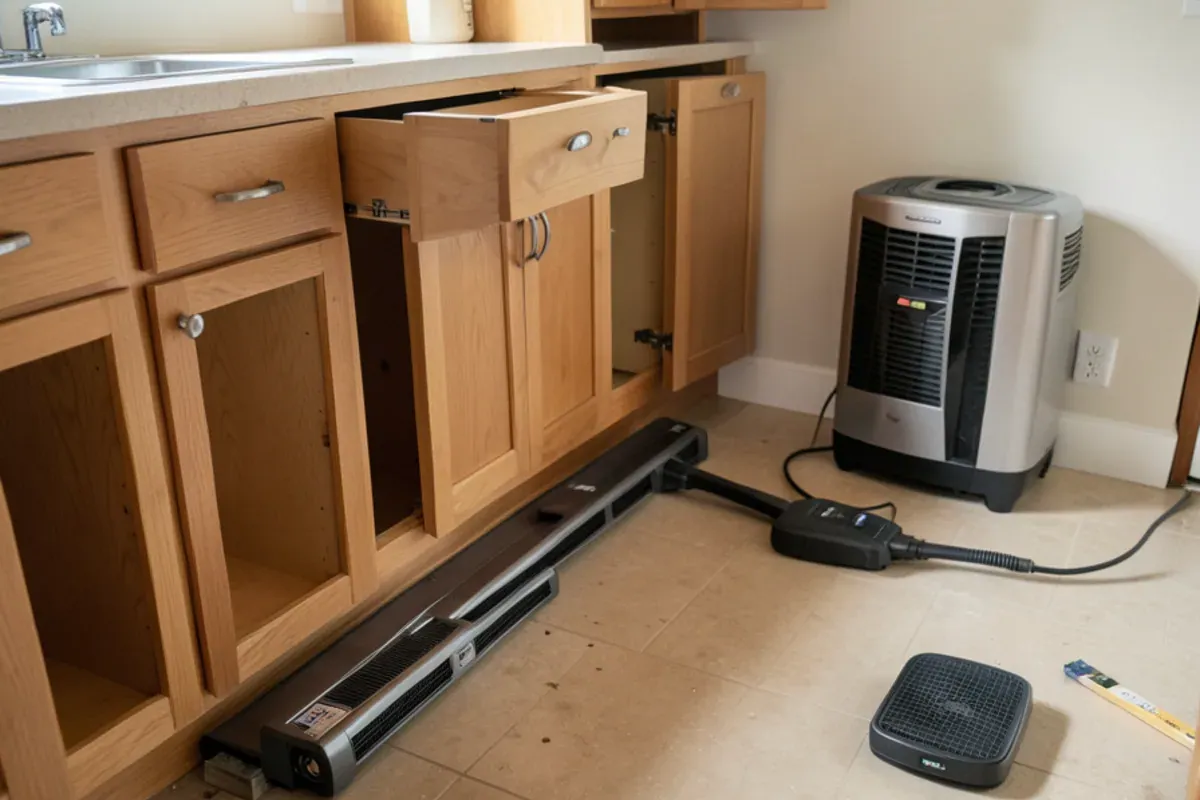
Pull out dishes, food and small appliances. Remove drawers, open every door and lift out loose shelves so air reaches the inside faces of each box.
Hours 24–48: bring in drying help
A water-mitigation company can set dehumidifiers and air movers and pull toe kicks to check the cavity underneath. Ask for their moisture readings in writing.
Day 3 onward: decide what stays
Once readings stabilize, you, your adjuster and a cabinet maker can judge which boxes survived. Do not rush to reinstall doors or caulk anything while the wood is still wet.
What should you photograph before anything comes out?
FloodSmart, the National Flood Insurance Program's consumer site, tells policyholders to photograph and video damage before cleaning, repairing or discarding it, and to keep material samples for the adjuster. For a kitchen, that means a shot list most people would not think of:
- The waterline on every cabinet side, the dishwasher panel and the wall, with a tape measure held against it
- Each cabinet box opened up, showing swelling at the bottom edge and the condition of the floor panel
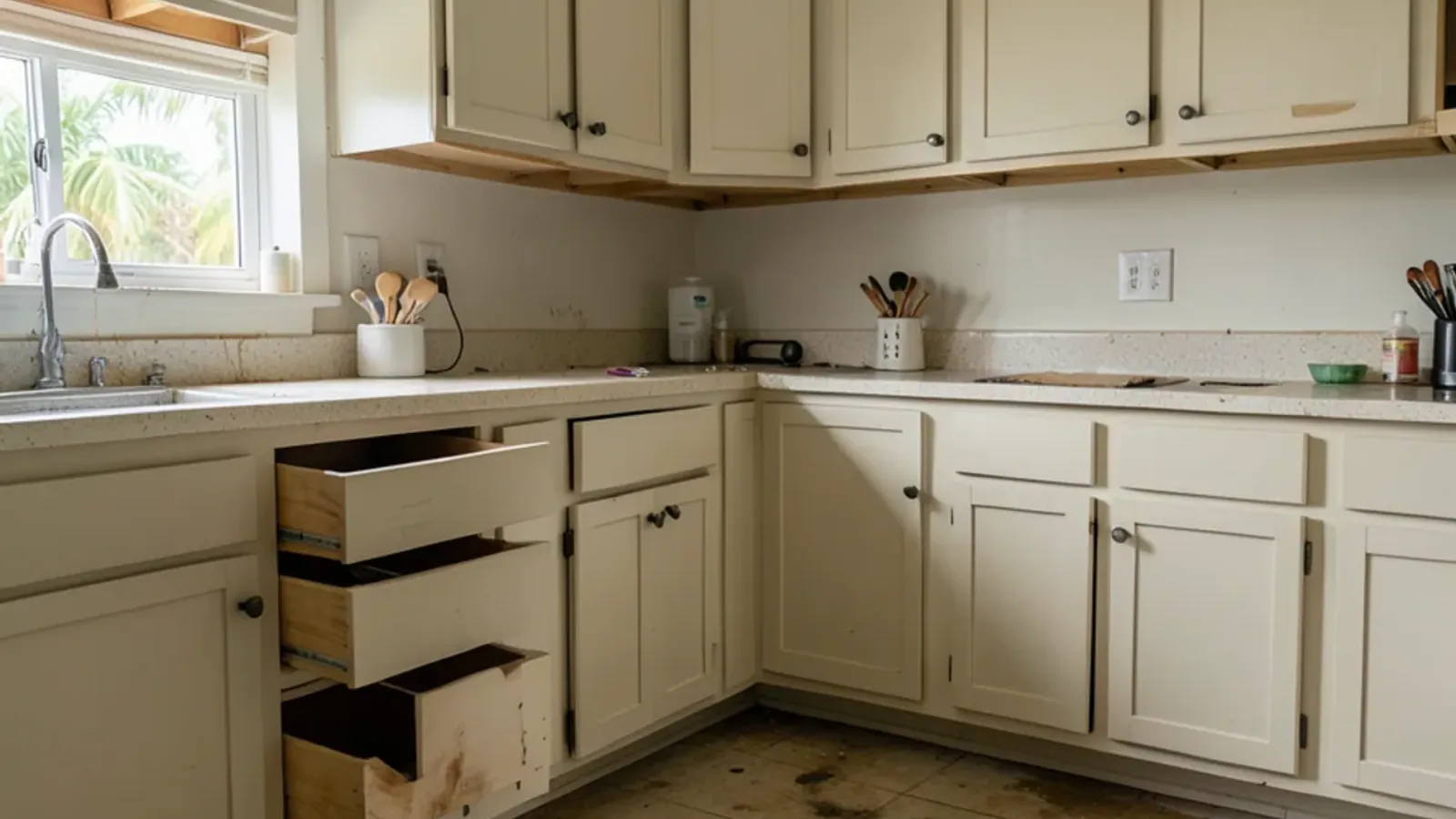
- Door and drawer construction: a close-up of a drawer corner and a door edge, so the original build quality is on record
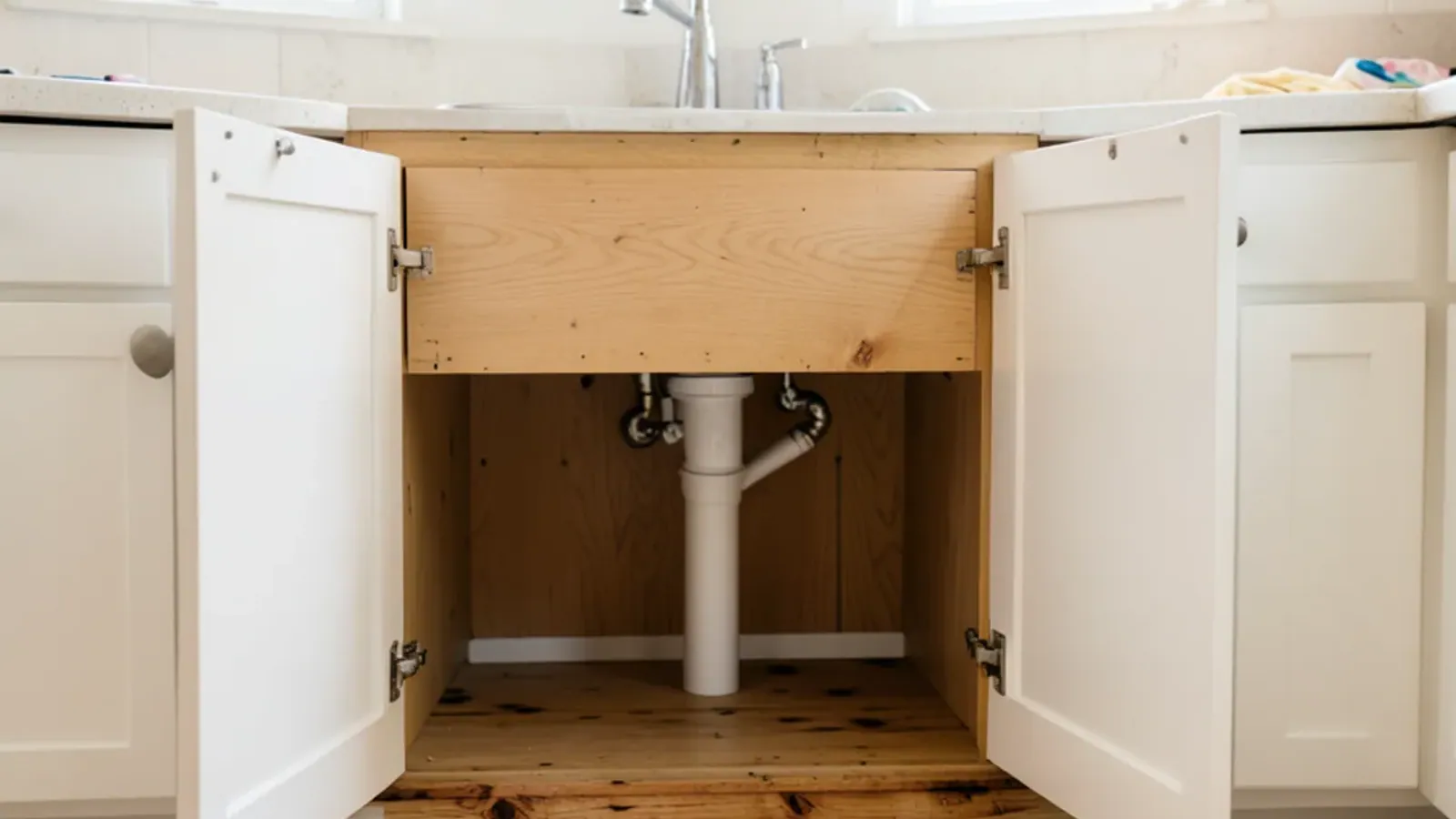
- Brand stamps, labels or model numbers inside the sink base and on appliances
- Countertop seams and the underside of the top where it meets the cabinets
- A cut-off piece of a door or side panel bagged as a sample before the rest goes to the curb
Those close-ups do double duty. They help the adjuster value what was lost, and they let a cabinet shop see the wood species, profile and finish you had, which matters if you want the new kitchen to look like the old one.
What can you keep from inside flooded cabinets?
Emptying the boxes raises a second question: what inside them is worth saving? The CDC's food-safety guidance after a disaster draws firm lines for anything that touched floodwater, and they apply whether the water came over a seawall or up through a storm drain.
| Item | Keep or discard | What to do |
|---|---|---|
| Food in cardboard boxes, and jars or bottles with screw caps, snap lids or twist caps | Discard | Throw out, along with any home-canned food |
| Commercial cans that are bulging, open or damaged | Discard | Also discard any can that spurts liquid or foam when opened |
| Undamaged commercial cans | Keep after cleaning | Peel labels, wash, then sanitize in a bleach solution for 15 minutes or boil for 2 minutes; relabel with the expiration date |
| Dishes, glassware and metal utensils | Keep after cleaning | Wash in hot soapy water, rinse, soak 1 minute in 1 cup of unscented bleach per 5 gallons of clean water, air dry |
| Wooden cutting boards, baby bottle nipples, pacifiers | Discard | CDC says sanitizing cannot remove floodwater contaminants from them |
The same bleach solution can be wiped across a countertop with a cloth. That makes the surface safe to prepare food on again, but it tells you nothing about the particleboard or plywood underneath it, which is the harder call.
When flooded cabinets cannot be saved
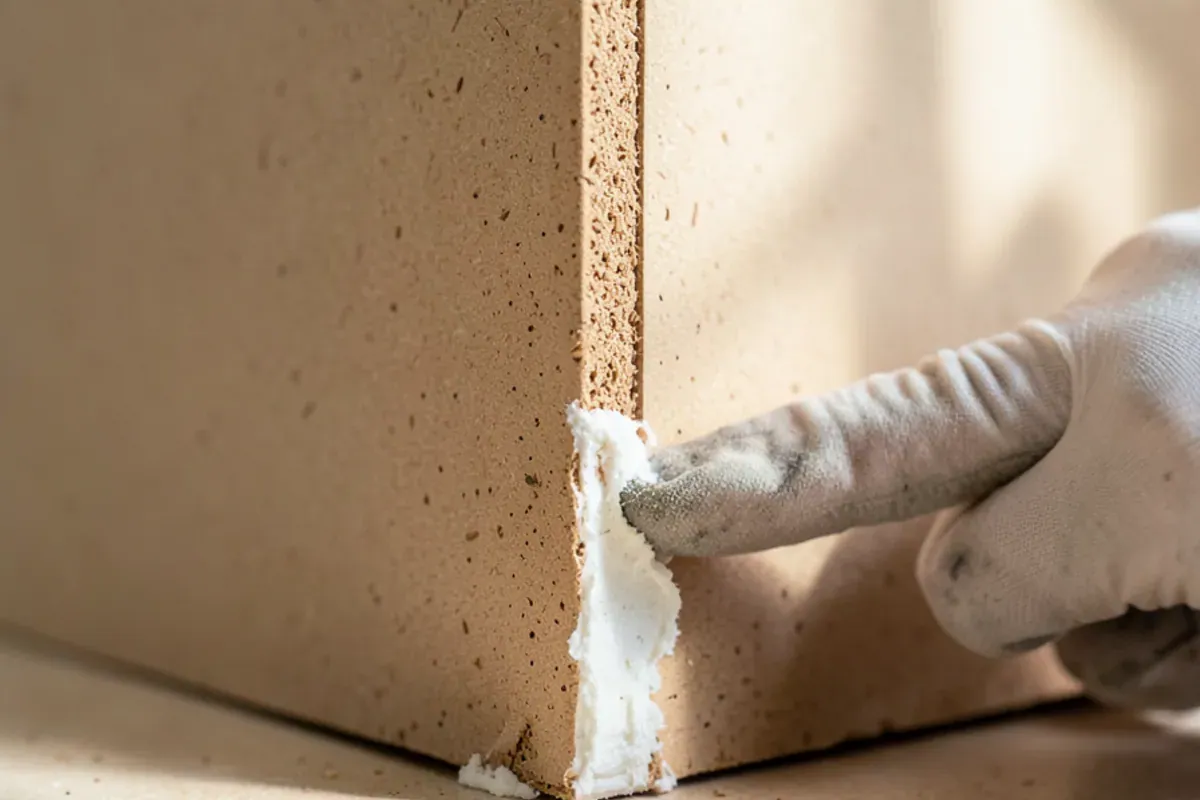
Three conditions usually end the conversation. Surge or rising floodwater is contaminated, and porous materials it soaked are hard to sanitize. Particleboard and MDF boxes swell at the edges and lose their screw-holding strength, and they do not shrink back. And any box that stayed wet past the EPA drying window is a mold candidate, especially behind the back panel where you cannot see.
Solid wood doors and face frames sometimes come through a clean-water event with nothing worse than raised grain. Even then, the boxes behind them may be the weak link. When the uppers are still sound, the flood-damaged cabinet replacement service covers rebuilding just the lower run.
Salt water leaves something behind
Gulf surge adds a problem a burst pipe does not. As the wood dries, salt stays in the fibers and the joints and keeps drawing moisture from humid air, so a box can read dry one week and damp the next. Steel hinges and drawer slides that sat in salt water corrode inside the mechanism. A borderline box from a clean supply-line leak may still suit a water-damaged cabinet repair; after surge, we rarely reuse the old hardware even when the doors survive.
Planning the rebuild from what is left
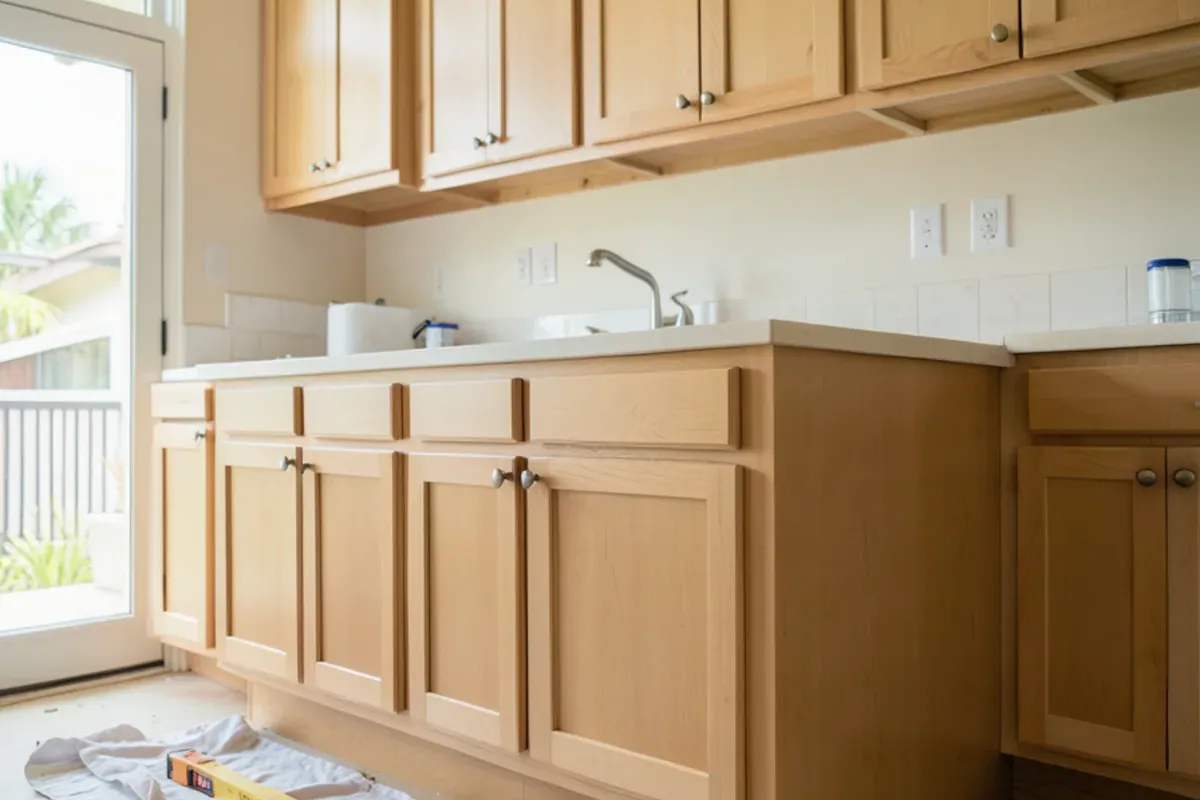
Once the room is dry and cleared by the trades, the cabinetry can be designed. Wall cabinets that stayed above the waterline are valuable evidence: their face-frame width, door profile and finish tell us what the lower run should match.
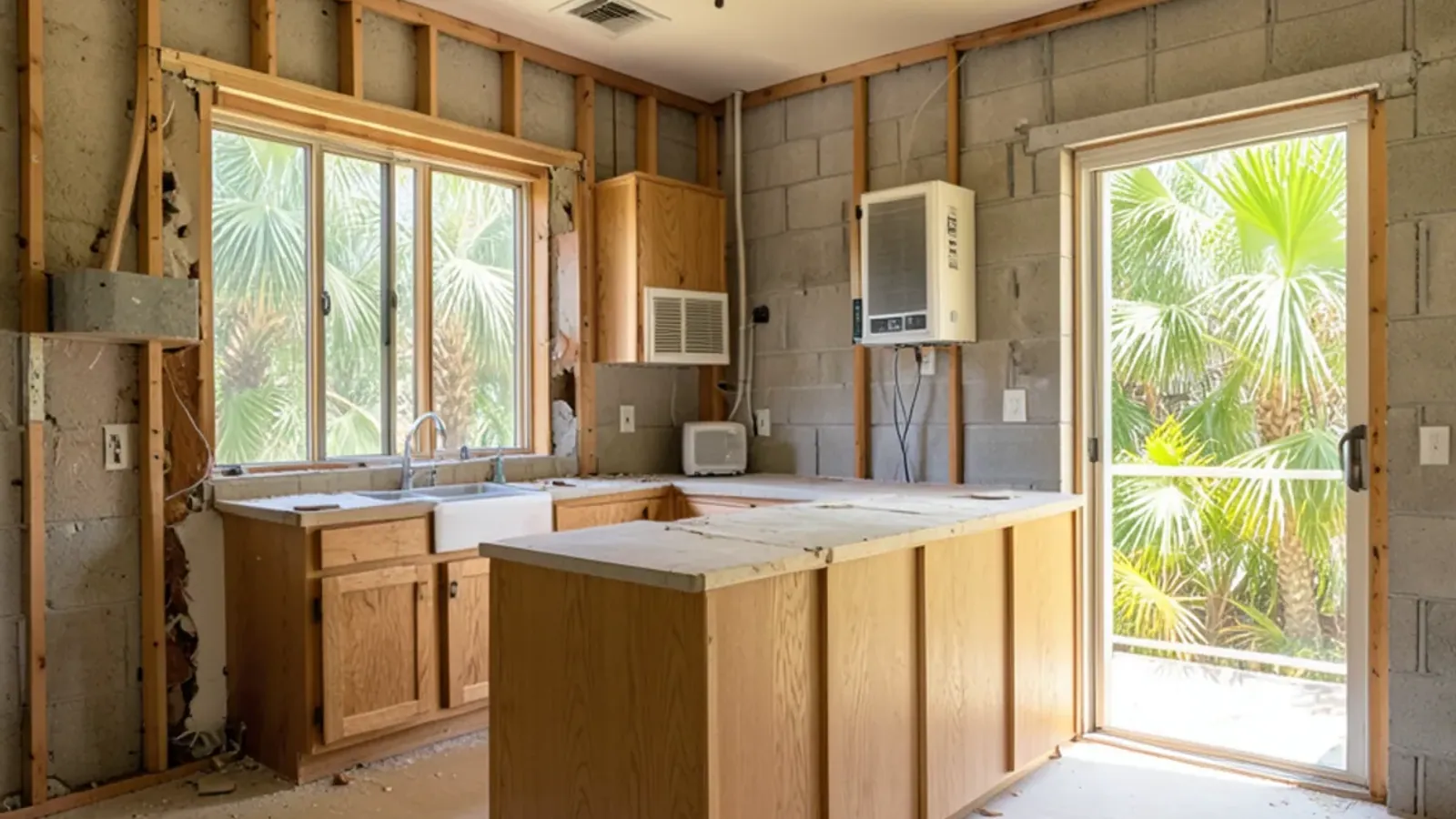
Ask the trades who are drying the house to leave the walls open long enough for the plumber and electrician to finish rough work. Cabinets go in after drywall, not before. Homes on Bradenton Beach and other low-lying islands may also face a floodplain review before rebuilding, which our storm-damaged kitchen repair overview covers.
The bottom line
Flooded cabinets are a sequence problem: safety, drying, documentation, then decisions. Get those first steps right and the rebuild becomes a design project rather than a scramble. When the drying crews and trades are finished and you are ready to talk about new cabinetry, phone the shop or send a message from the contact page to set up a measuring visit.
Sources
- CDC — What to Do to Protect Yourself From Electrical Hazards
- CDC — Keep Food Safe After a Disaster or Emergency
- CDC — Safety Guidelines: Floodwater
- EPA — A Brief Guide to Mold, Moisture and Your Home
- EPA — Homeowner's and Renter's Guide to Mold Cleanup After Disasters
- FloodSmart (NFIP) — Document Flood Damage
- Florida DBPR — Mold-Related Services FAQs