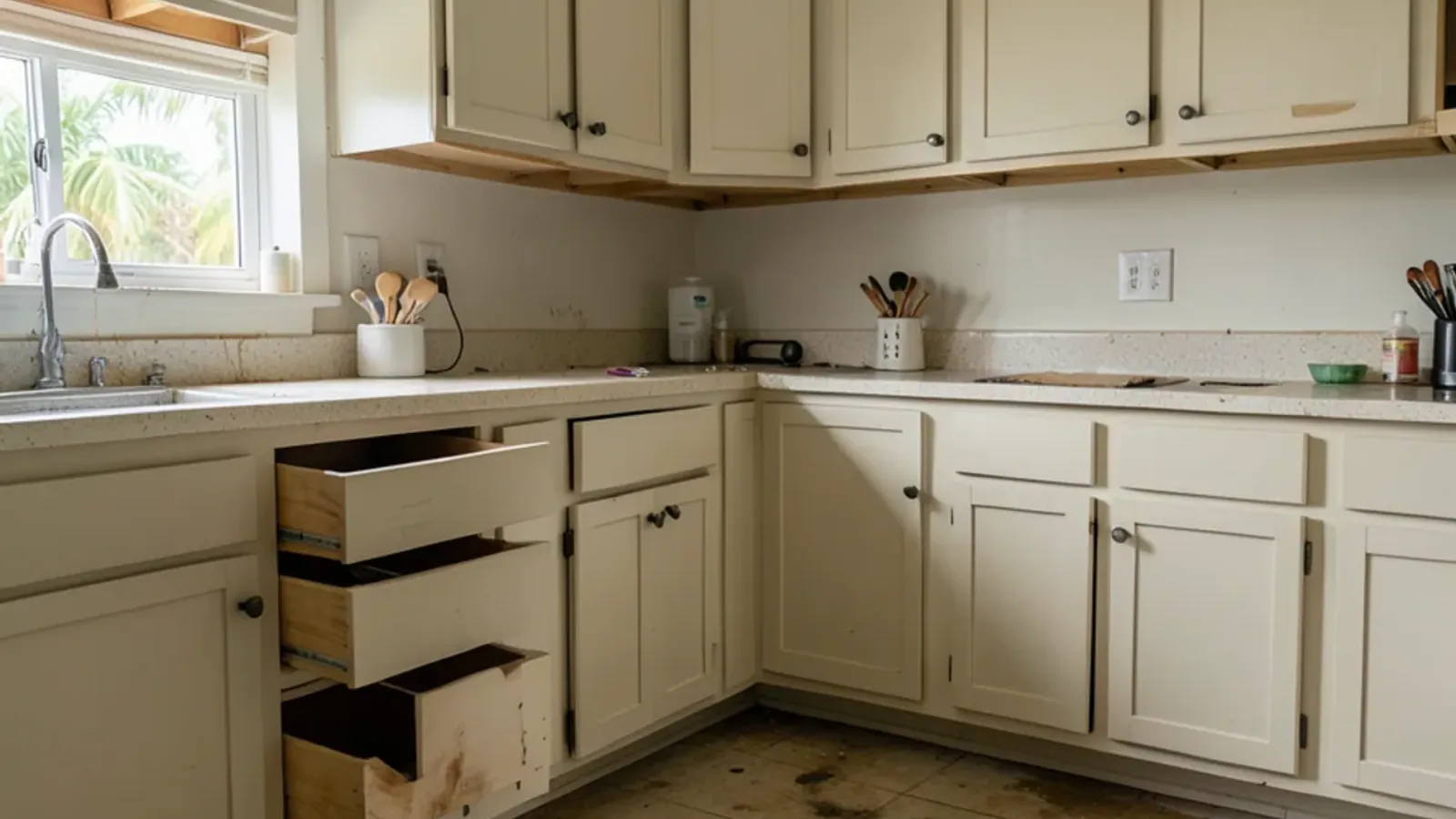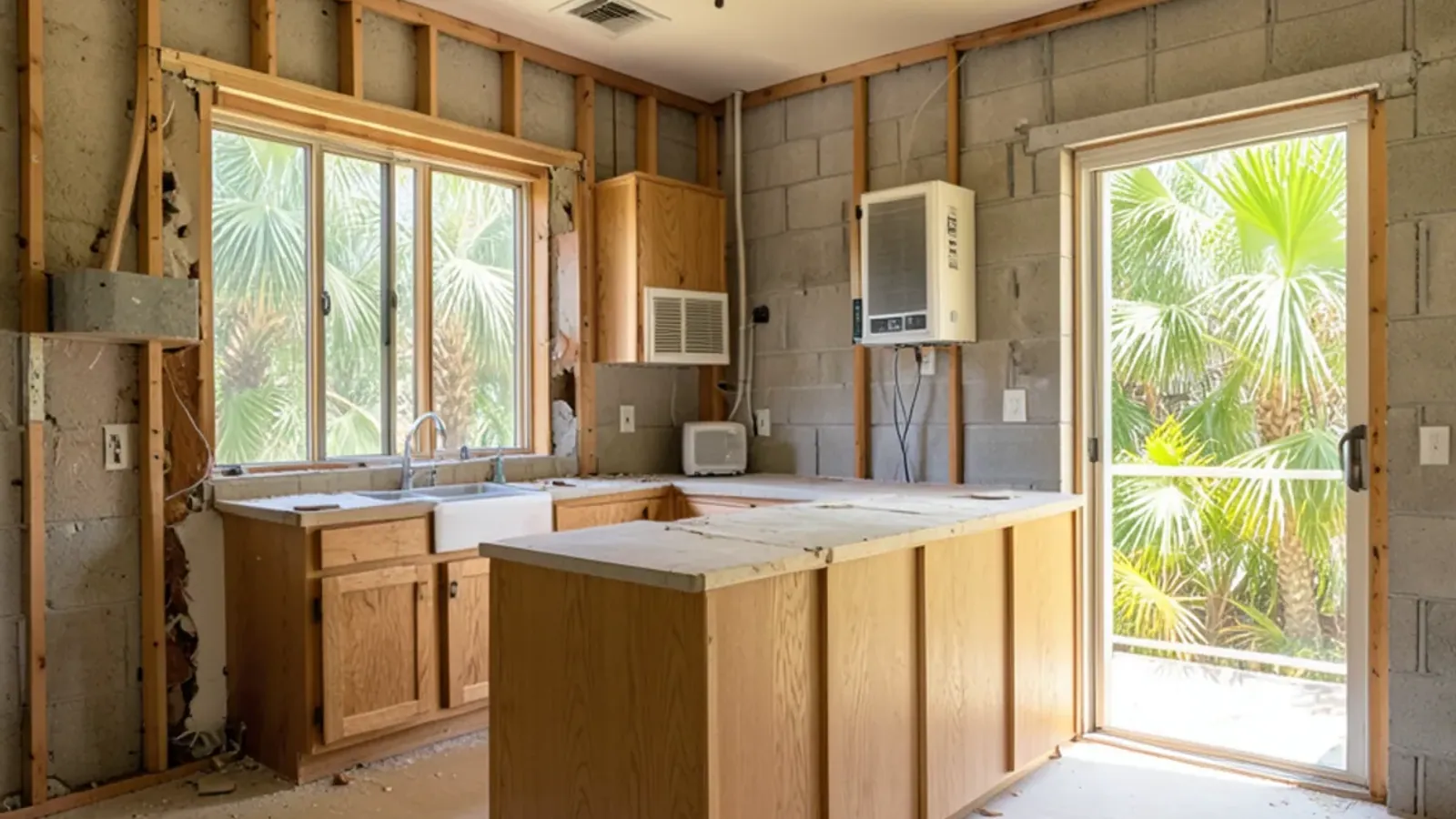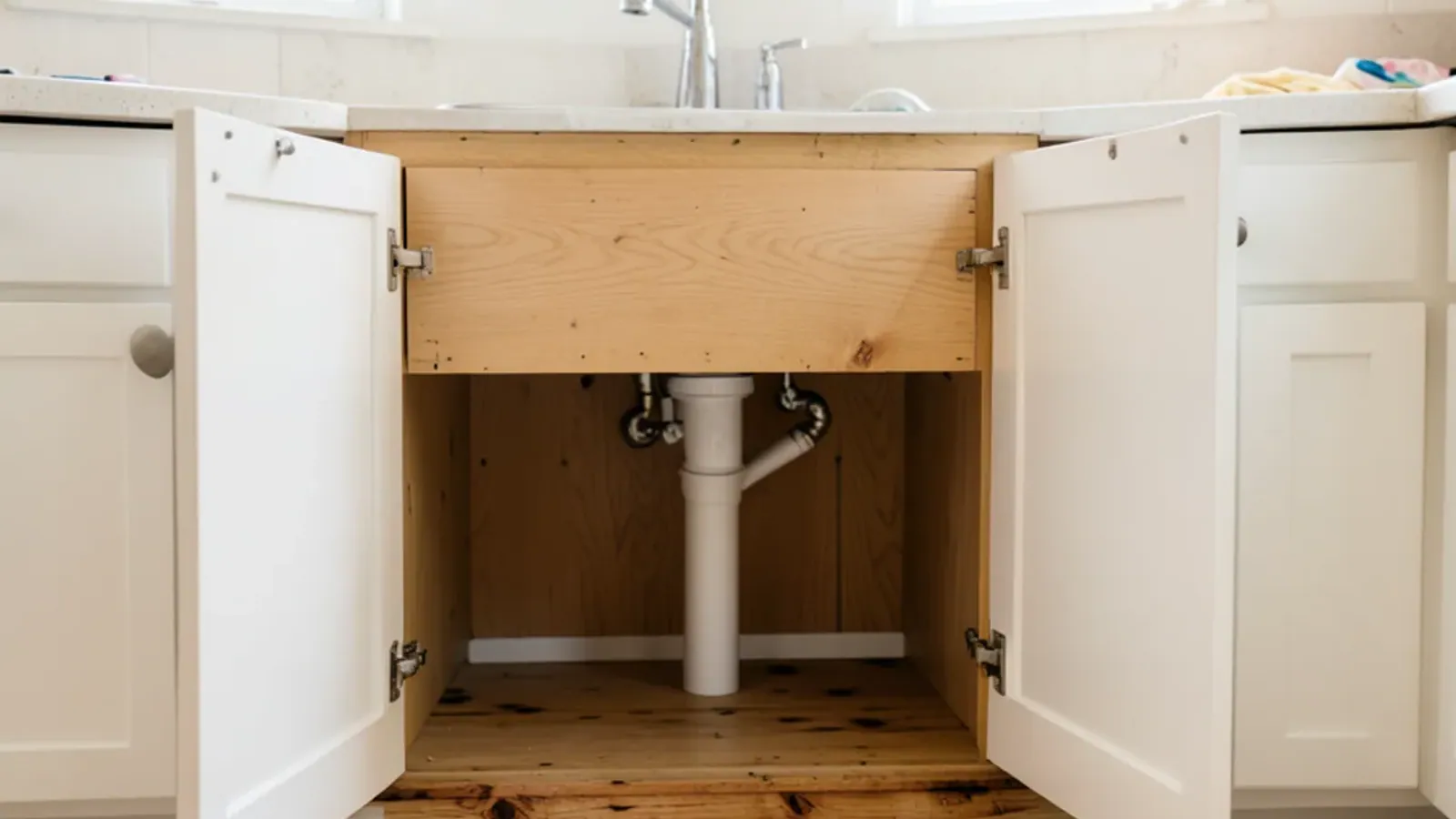
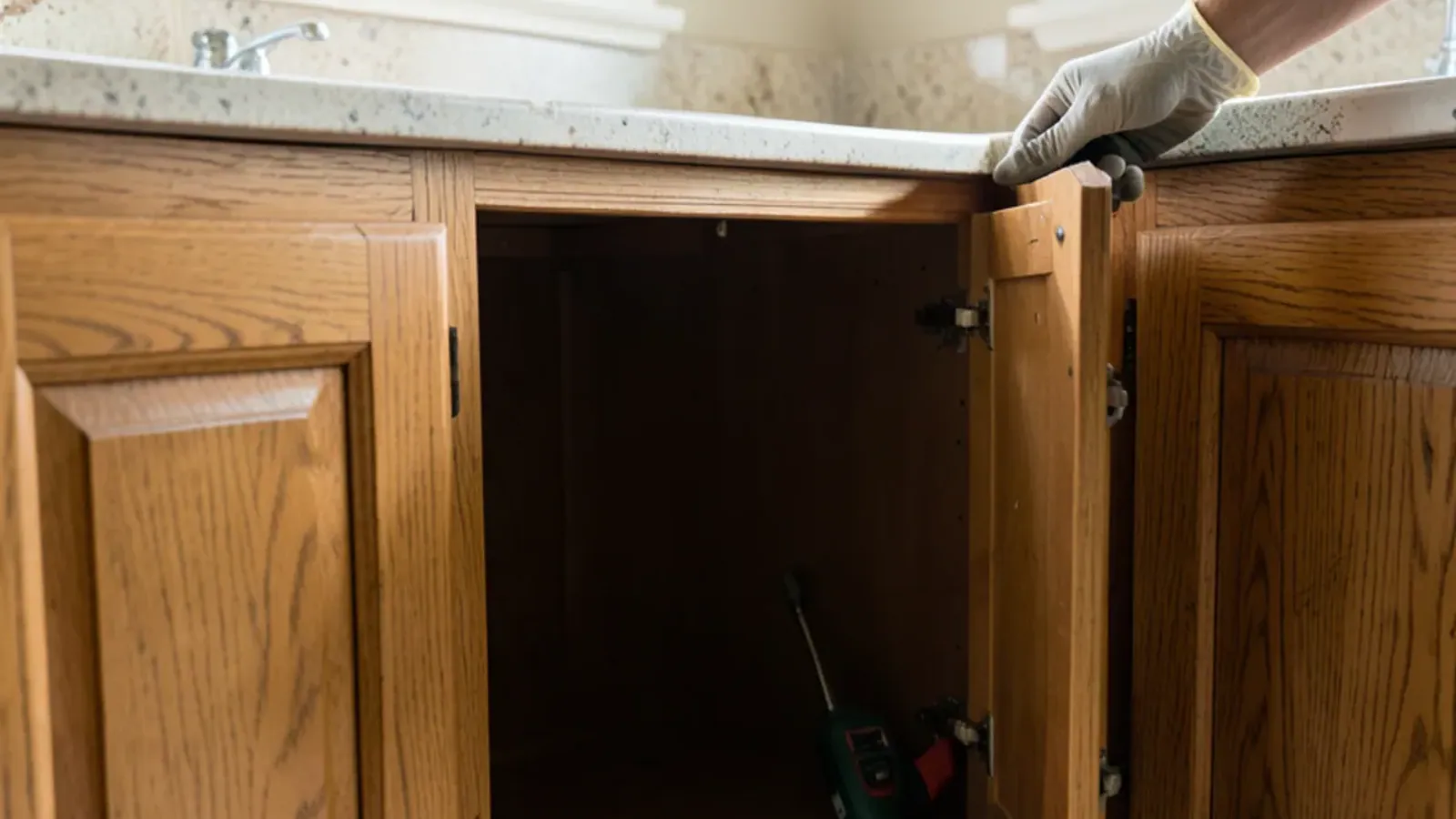
Can water damaged cabinets be saved? Often they can, when the water was clean, the cabinet is solid wood or good plywood, and it was dried out within a couple of days. Particleboard boxes that have swollen, cabinets soaked by floodwater, and anything with mold growing inside the box are usually better replaced.
That three-part test, material plus water source plus time wet, is the framework we use in our Sarasota shop when a homeowner sends photos of a soggy sink base or a run of lowers after a storm. Below we break each factor down, show what common symptoms mean, and explain what a repair actually looks like on the bench.
Material, water and time: the three questions that decide it
Material. Solid hardwood and furniture-grade plywood tolerate a soaking far better than particleboard or MDF. Wood fibers in solid stock swell and then give the moisture back as they dry. The glued wood chips in particleboard swell permanently, and the boards lose their grip on screws and hinges.
Water source. A burst supply line delivers clean water. A leaking dishwasher drain or a backed-up sink carries food waste and detergent. Storm surge and rising floodwater are contaminated, and the CDC warns they may hold sewage and chemicals. The dirtier the water, the fewer porous parts are worth keeping.
Time wet. EPA's mold guidance says that materials dried within 24 to 48 hours usually will not grow mold. Past that point, every hour shifts the odds toward replacement, especially in a humid Gulf Coast house where the air never helps the drying along.
Reading the damage, symptom by symptom
Once the cabinets are emptied and dry to the touch, look closely at each one. The table below is how we sort what we see in photos or on a measuring visit.
| What you see | Likely cause | Usual verdict |
|---|---|---|
| Raised grain or a white haze on a solid wood door | Brief surface wetting | Repairable: sand and refinish the part |
| Bubbled or peeling laminate on a box side | Water got under a thin face layer | Often replace the panel or box |
| Bottom edge of a side panel swollen and crumbly | Particleboard soaked from below | Replace the box |
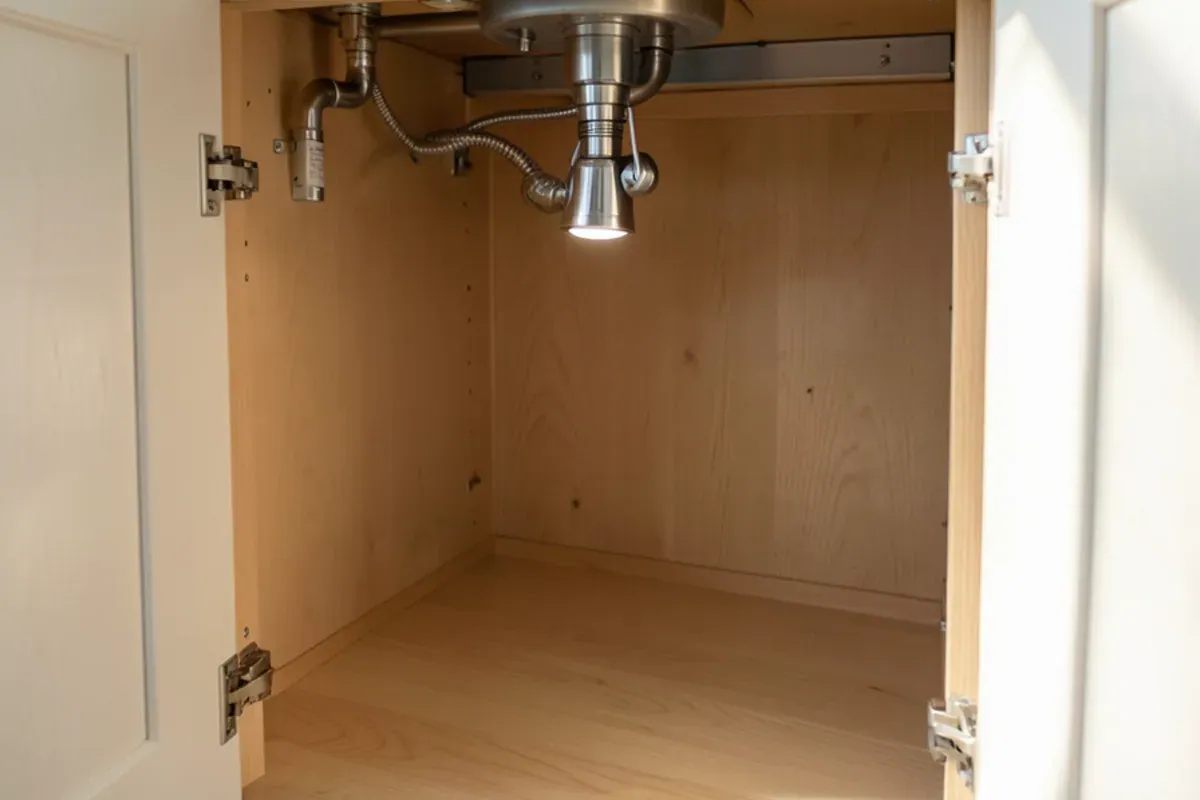
| Sagging or soft sink-base floor | Slow leak over weeks or months | Repairable if sides are sound: new floor panel |
| Delaminating plywood plies on the back panel | Long soak or repeated wetting | Replace the back; check the wall behind it |
| Black or green spotting inside the box, musty smell | Mold growth | Remediate first, then usually replace |
| Face frame joints opened up, doors no longer align | Wood movement after soaking | Often repairable once fully dry |
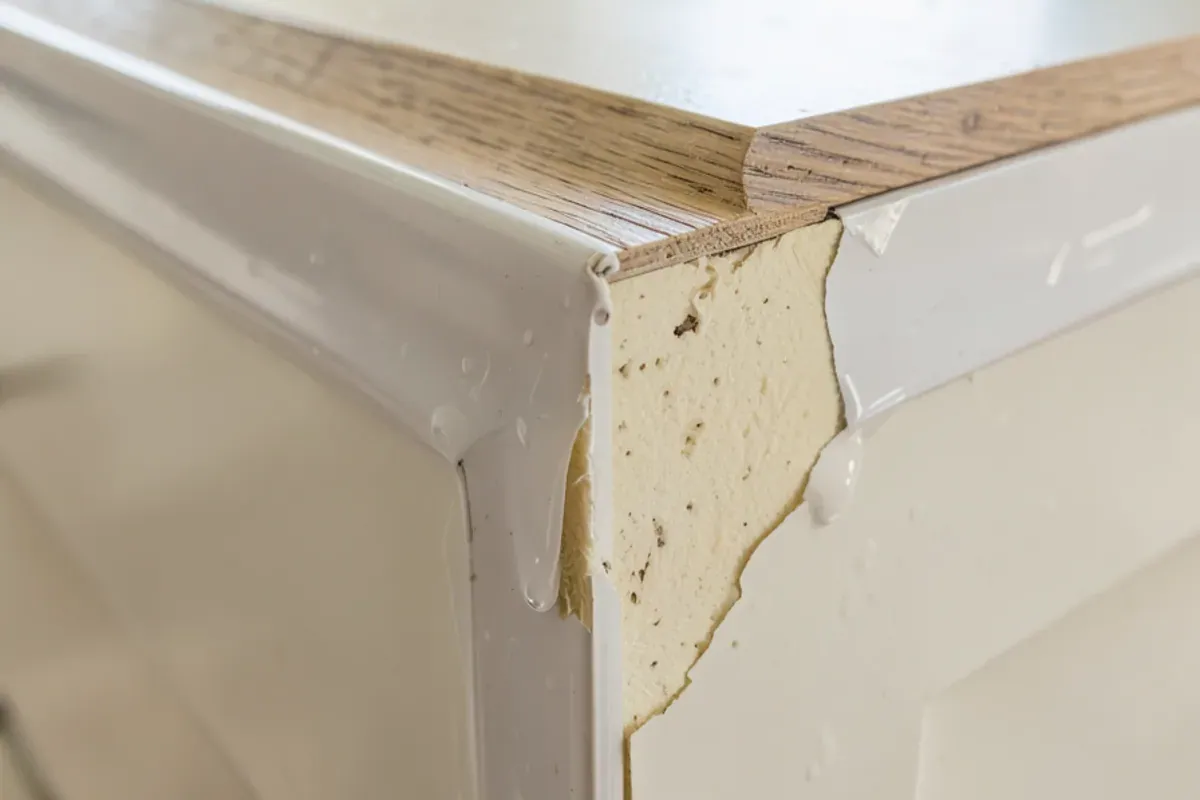
| Paint cracked along the edge of a painted door, edge feels puffy | MDF door core swollen at the edge | Replace the door; build a new one to the same profile and paint |
How do you dry a wet cabinet without making it worse?
Drying is where a lot of salvageable cabinets are lost. Wood that dries too fast on one face cups, checks and opens its joints; wood left in a closed-up summer house grows mold. The goal is steady, even drying that you measure rather than guess.
Stop the source and strip the box
Have a licensed plumber stop the leak, then lift doors off their hinges and pull every drawer so both faces of each panel see air. A strip of painter's tape on each door records where it goes back.
Get under the cabinet
Pull the toe kick. Water that ran beneath the box sits on the slab or subfloor out of sight and keeps feeding the bottom edges of the sides until it is gone.
Dehumidify instead of heating
Once the power is safe, keep the air conditioning on and add a dehumidifier. Space heaters and heat guns dry the surface ahead of the core, which splits solid wood and blisters finishes.
Measure against a dry neighbor
A pin moisture meter reading means little on its own. Compare the wet box with a cabinet across the room that stayed dry, and hold off on repairs until the two numbers are close.
Watch for growth while you wait
Spotting or a musty smell means cleanup comes before carpentry. EPA's guidance on mold cleanup in the home covers patches small enough for a homeowner to handle.
Why does solid wood recover when particleboard will not?
It comes down to structure. A solid maple or oak side panel is a continuous web of long fibers. Water pushes those fibers apart, the panel swells across its width, and as it dries it moves most of the way back. You may need to flatten a slightly cupped door or re-glue a joint, but the material is still sound.
Particleboard is chips and resin pressed together. When water reaches the chips, they swell and break the resin bonds between them. The board puffs up, especially at cut edges, and never returns to its original thickness. Hinge screws pull out, shelves sag and the edge banding lets go. That is why builder-grade boxes with melamine faces are the first casualties of a sink leak or a few inches of floodwater.
What does a water-damage repair actually involve?
When the verdict is repair, the work is more surgical than most people expect. Typical jobs on a water-damaged cabinet repair visit include:
- Cutting out a ruined sink-base floor and fitting a new panel sealed on both faces
- Replacing a swollen toe kick or bottom rail while leaving the face frame in place
- Building a replacement side panel or end panel to the original dimensions
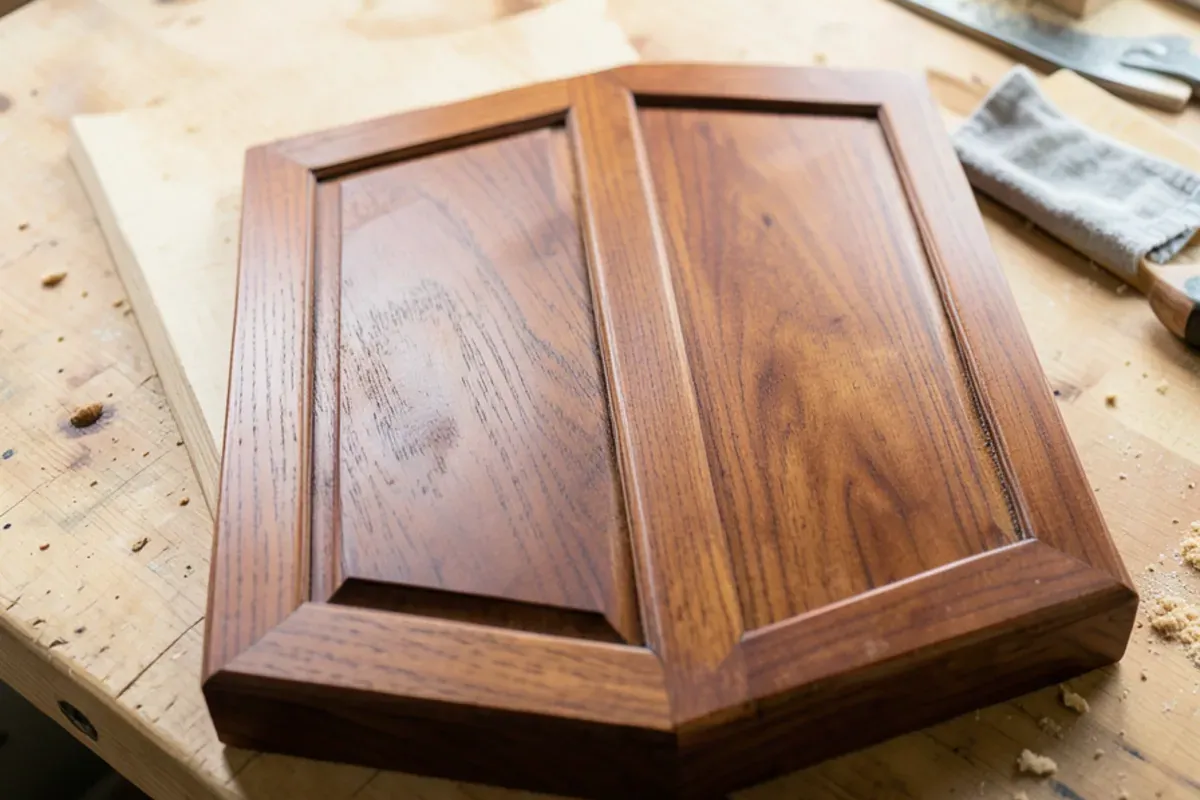
- Making one or two new doors or drawer fronts that match the profile of the rest
- Re-gluing face frame joints that opened as the wood dried
- Refinishing a door that clouded or raised its grain, then blending the sheen to its neighbors
Any leak that caused the damage has to be fixed by a licensed plumber first. Rebuilding a cabinet floor under a dripping trap only resets the clock.
When is replacement the smarter call?
Replacement makes sense when more than one or two boxes in a run are compromised, when floodwater soaked the whole lower half of the kitchen, or when mold has reached inside the boxes or the wall behind them. It also makes sense when the existing cabinets were particleboard to begin with; patching a single box leaves its neighbors waiting for the next leak.
In older homes around Sarasota and on the Venice island, original solid wood cabinets are sometimes worth saving even after a soaking, while cheaper boxes added in later remodels have already failed. Homeowners in Venice and the rest of the county can read our storm-damaged kitchen repair overview for how a full lower-run rebuild is planned.
Check what is behind and beneath the box
A sink base that sat wet for weeks has usually shared that water with the drywall behind it and the floor under it. When we pull a damaged box, the wall and subfloor get photographed and checked before a new cabinet covers them again. Soft or stained subfloor and wet drywall go back to the drying crew or a licensed contractor first, because a new cabinet set over them inherits the problem.
The bottom line
Water damage is not automatically a death sentence for a kitchen, but it is rarely as simple as letting things dry and hoping. Judge the material, the water and the time, fix the source, and save what is worth saving. If you want a cabinet maker's eye on the damage, send photos through the contact page or call to book a visit.