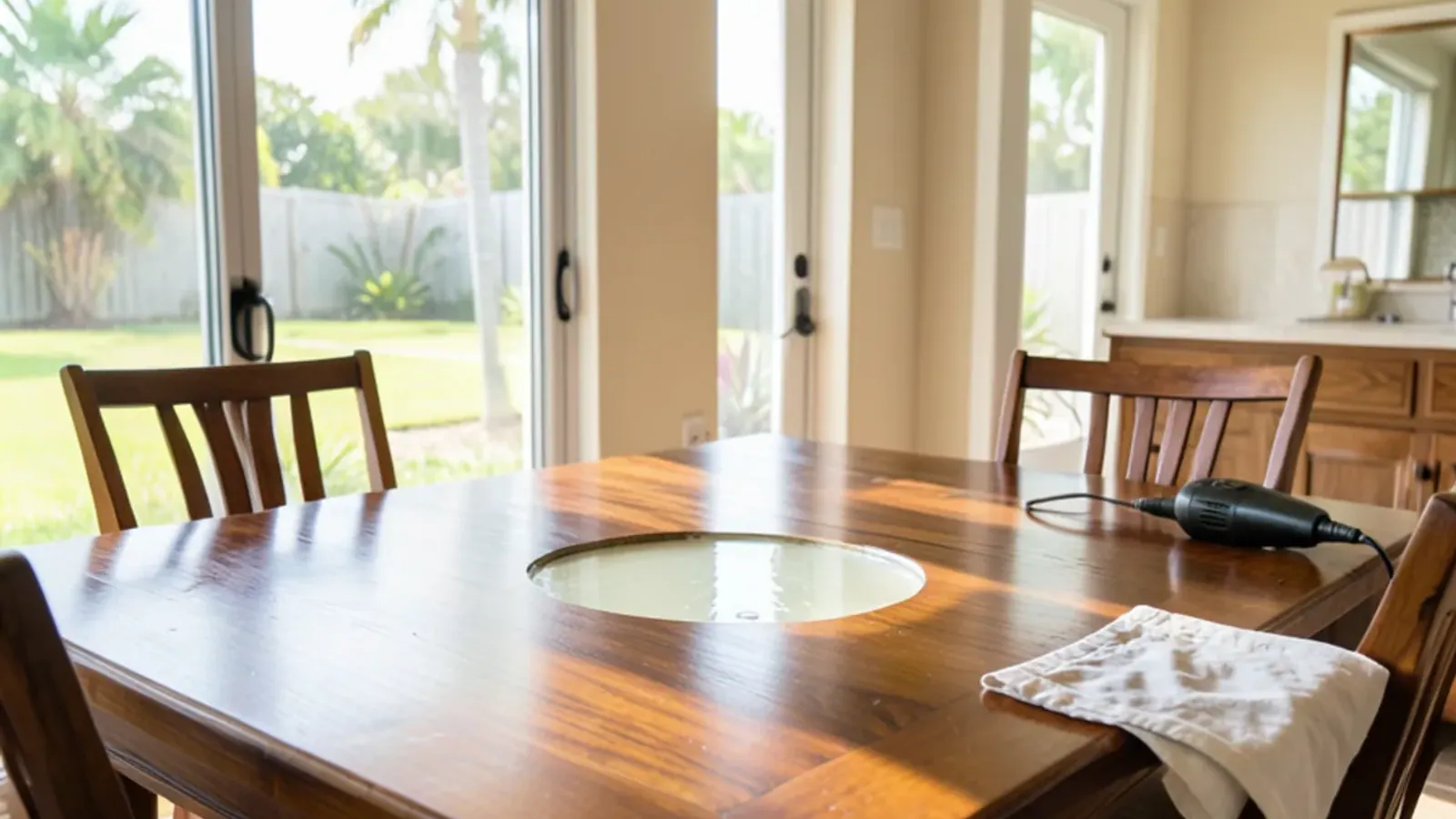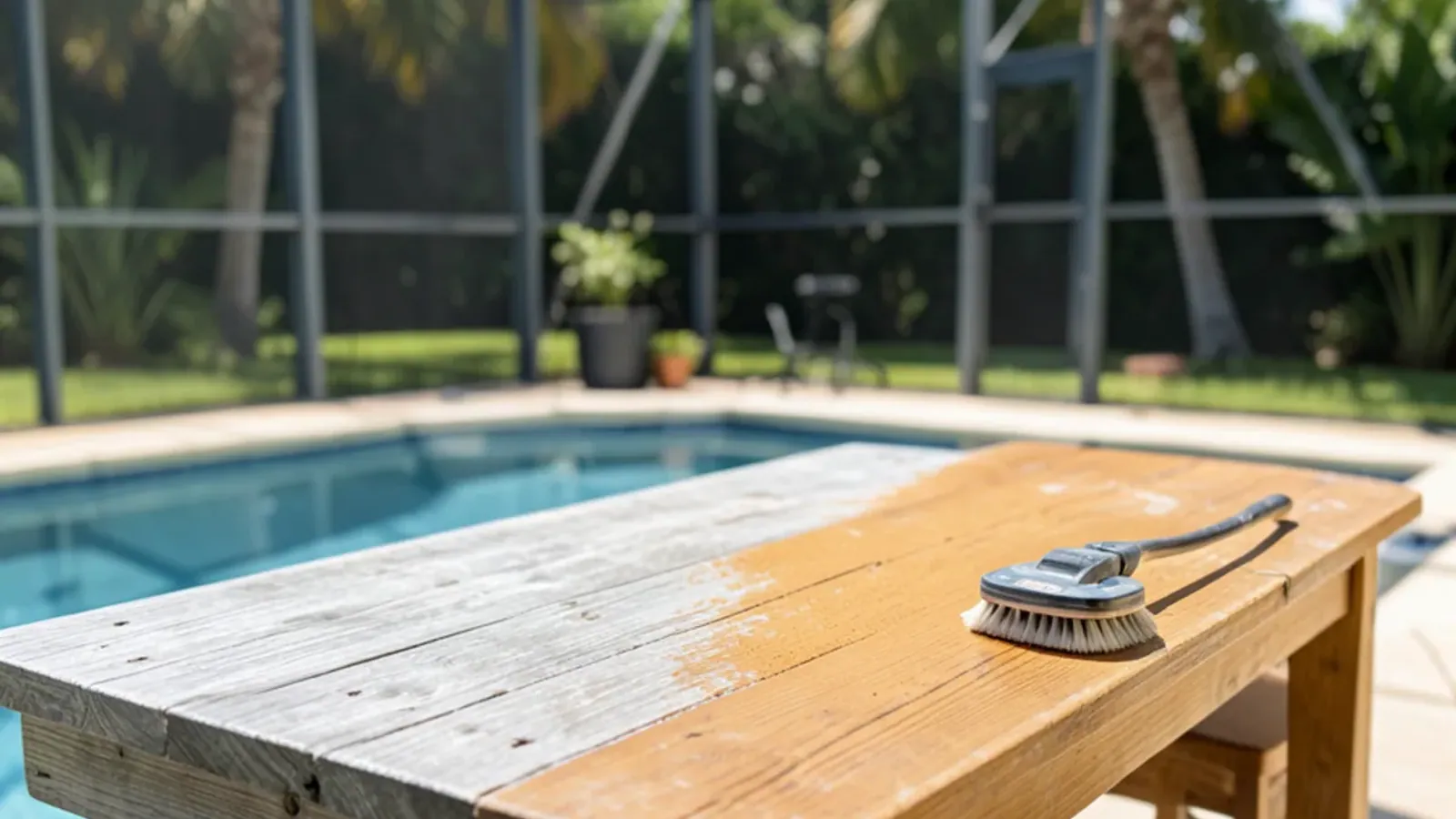

Good wood furniture care near the Gulf comes down to three habits: wipe away the salt film before it holds moisture against the finish, keep direct sun off the tops, and hold indoor humidity steady instead of letting it swing. Done consistently, that routine takes a few minutes a week and keeps finishes clear and joints tight for years.
Beach condos, island cottages and seasonal homes add their own twists, from open sliders on breezy days to air conditioning set back for months at a time. Below is how each factor works on wood, a care calendar you can follow, and the signs that a piece needs a finisher rather than a dust cloth.
How salt, sun and air conditioning work on wood
Salt. Onshore breezes deposit fine salt on every surface near the water, indoors as well as out. Salt draws moisture from humid air, so a dusty, salty film on a tabletop stays slightly damp against the finish. Over time it dulls the sheen and works into scratches and worn edges.
Metal. Brass, steel and iron hardware corrode faster in coastal air. In the Forest Products Laboratory's Wood Handbook, iron reacting with moisture and wood extractives is listed as a cause of dark stains, which is why black halos sometimes appear around pulls and hinges in island homes.
Humidity swings. Wood gains and loses moisture with the air around it and swells or shrinks as it does, a relationship the Wood Handbook covers in detail. Opening sliders for a breezy afternoon and then running the AC hard all night moves the wood back and forth, which loosens joints and lifts veneer at the edges.
A coastal care calendar for wood furniture
Keep it simple and regular. Most of the protection comes from the small weekly tasks, not from occasional heavy cleaning.
| How often | Task | Why it matters near salt water |
|---|---|---|
| Weekly | Dust with a soft, dry or barely damp cotton cloth | Removes salt and grit before they hold moisture or scratch |
| Weekly | Check coasters, placemats and plant saucers | Prevents rings from glasses and sweating pots |
| Monthly | Wipe hardware and dry it; look for green or black corrosion | Stops metal stains spreading into the wood |
| Each season | Rotate pieces or accessories that sit in window light | Spreads fading evenly instead of leaving shadows |
| Each season | Tighten loose pulls and check chair joints | Catches small problems before a joint breaks |
| Yearly | Clean with a mild soap solution and renew paste wax if used | Lifts built-up film and restores a protective layer |
When a pull has already left a dark halo
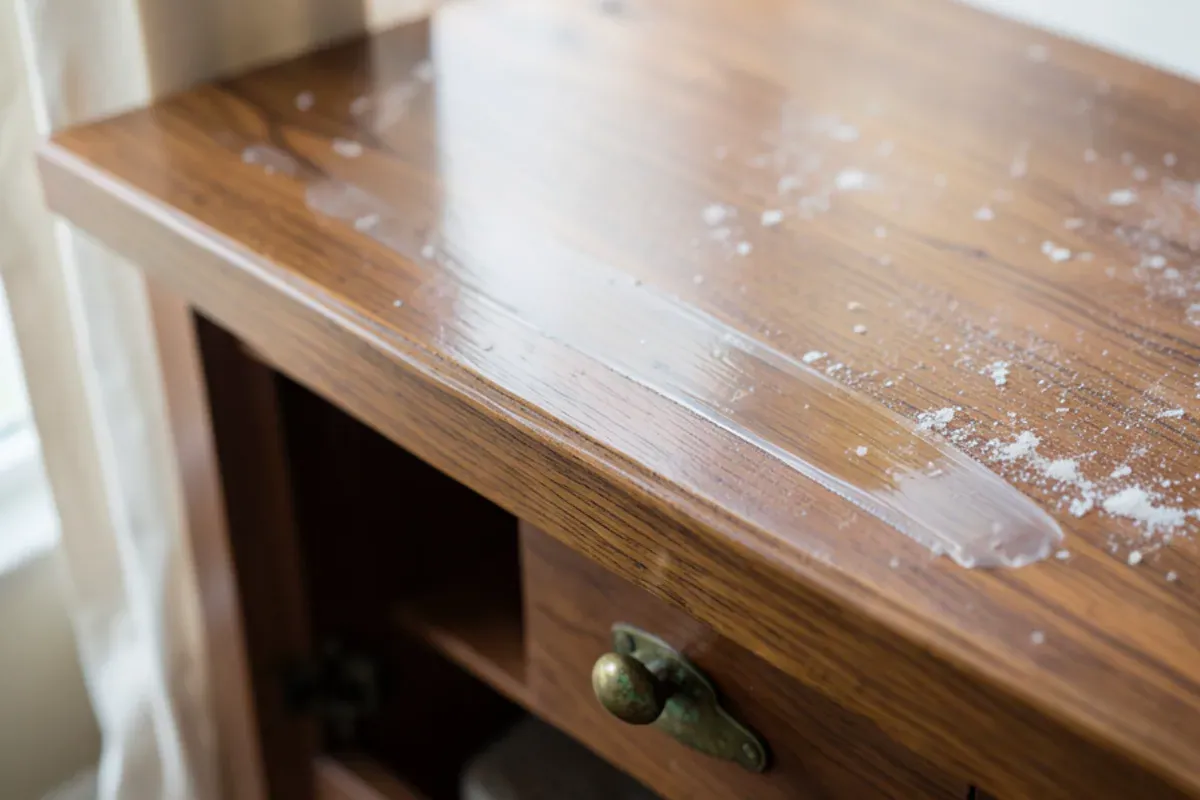
Wiping hardware stops new corrosion, but it will not erase a stain that is already there. The Forest Products Laboratory's note on iron stain explains that the discoloration can form under a water-repellent finish when moisture reaches the iron, and that the finish then has to come off before the stain can be tested and treated. On a dresser front, that means removing the pull, stripping the small area around it, clearing the stain, and blending new finish into the old. We also swap corroded screws for stainless ones so the halo does not return. That is bench work for our furniture repair service rather than a job for a polish.
Which cleaners and polishes are safe on finished wood?
Less is more. National Park Service guidance on cleaning wood furniture advises removing dust first with a soft cloth, cleaning only when dusting no longer does the job, and using a mild soap solution on a well-wrung cloth rather than detergents, which can leave a film and harm some finishes. Water should be used sparingly on veneered or inlaid pieces.
- Avoid all-purpose sprays and glass cleaners; ammonia and solvents can cloud lacquer and shellac.
- Skip silicone-based polishes. They shine at first but build a slick layer that makes future touch-ups and refinishing far harder.
- A thin coat of paste wax once or twice a year gives a renewable barrier on a sound finish.
- Dry any spill immediately, especially on window-side tables where the sun has already thinned the finish.
What should the thermostat do while you are away for the summer?
Keep the air conditioning running and steady. Shutting it off in a closed condo lets humidity climb for months, and long stretches of damp air invite mold on furniture backs and drawer bottoms. Many owners on Longboat Key set a moderate temperature and use a dehumidistat or a thermostat with a humidity setting, then ask a neighbor or manager to check in after storms or power outages.
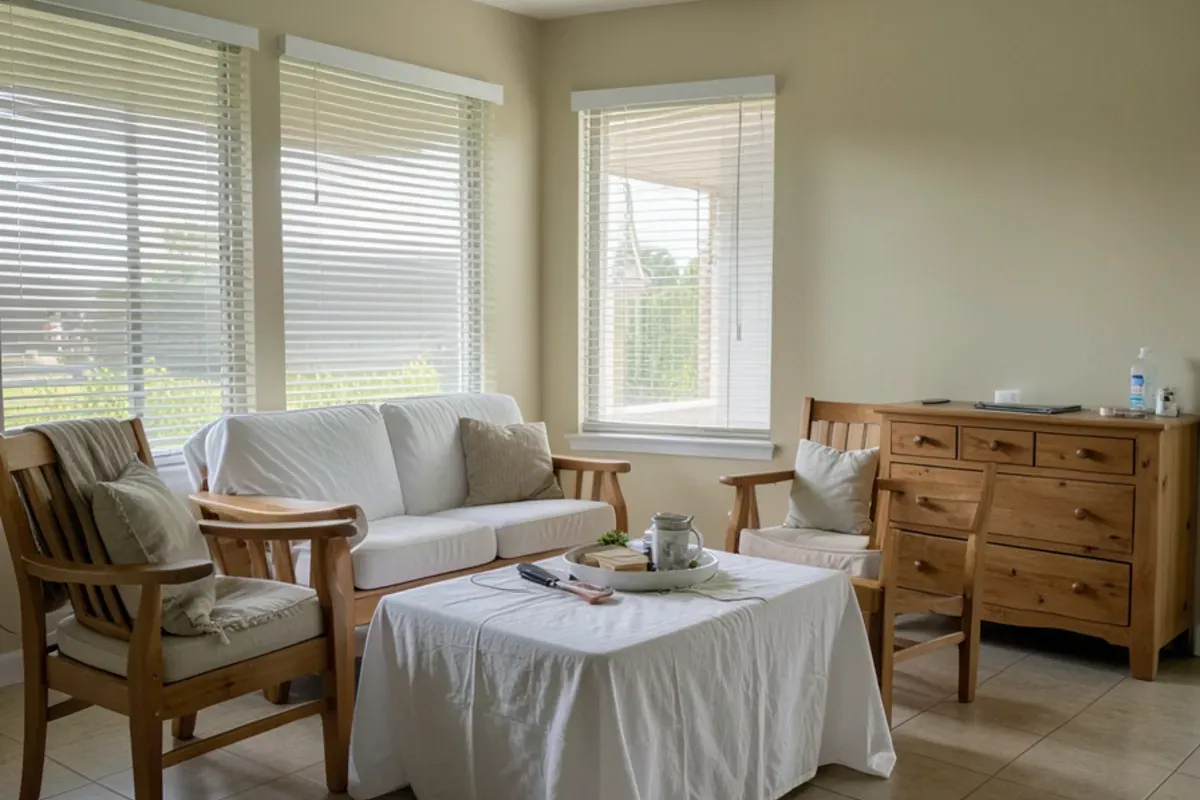
- Close blinds or sheers on west and south windows before you leave.
- Pull furniture a few inches off exterior walls so air can circulate behind it.
- Leave drawers and cabinet doors slightly open in closed-up rooms.
- Cover pieces with breathable cotton sheets, never plastic, which traps moisture.
As a target, the U.S. Environmental Protection Agency's guide to mold and moisture puts the upper limit for indoor relative humidity at 60 percent and prefers a reading between 30 and 50. That advice is written to prevent mold, but holding the air in that band also keeps furniture from swelling and shrinking through the summer. A small humidity meter on a bookshelf, the kind the EPA notes is sold at many hardware stores, lets whoever checks on the unit see at a glance whether the system is keeping up.
What should you do about mildew found after a closed-up summer?
A closed unit after a power outage or a failed air handler can greet you with a gray bloom on chair backs, drawer sides and the undersides of tables. Most of it wipes off a sound finish, but the order of operations matters.
- Fix the moisture first. The EPA's mold guidance is plain that mold returns if the water source stays, so restore the AC, find any leak and dry the room before cleaning.
- Take the pieces into a dry, air-conditioned space, and open drawers and doors so their insides can air out.
- On finished surfaces, dust off loose growth, then use the National Park Service method: a mild soap solution on a well-wrung cloth, followed by a clean damp cloth.
- Dry each surface completely as you go, with extra care on veneer and inlay.
- Skip routine bleach. The EPA does not recommend it for everyday mold cleanup, and it warns never to mix bleach with ammonia-based cleaners.
- Check unfinished drawer bottoms and case backs, where growth can soak into bare wood and leave stains that need a finisher.
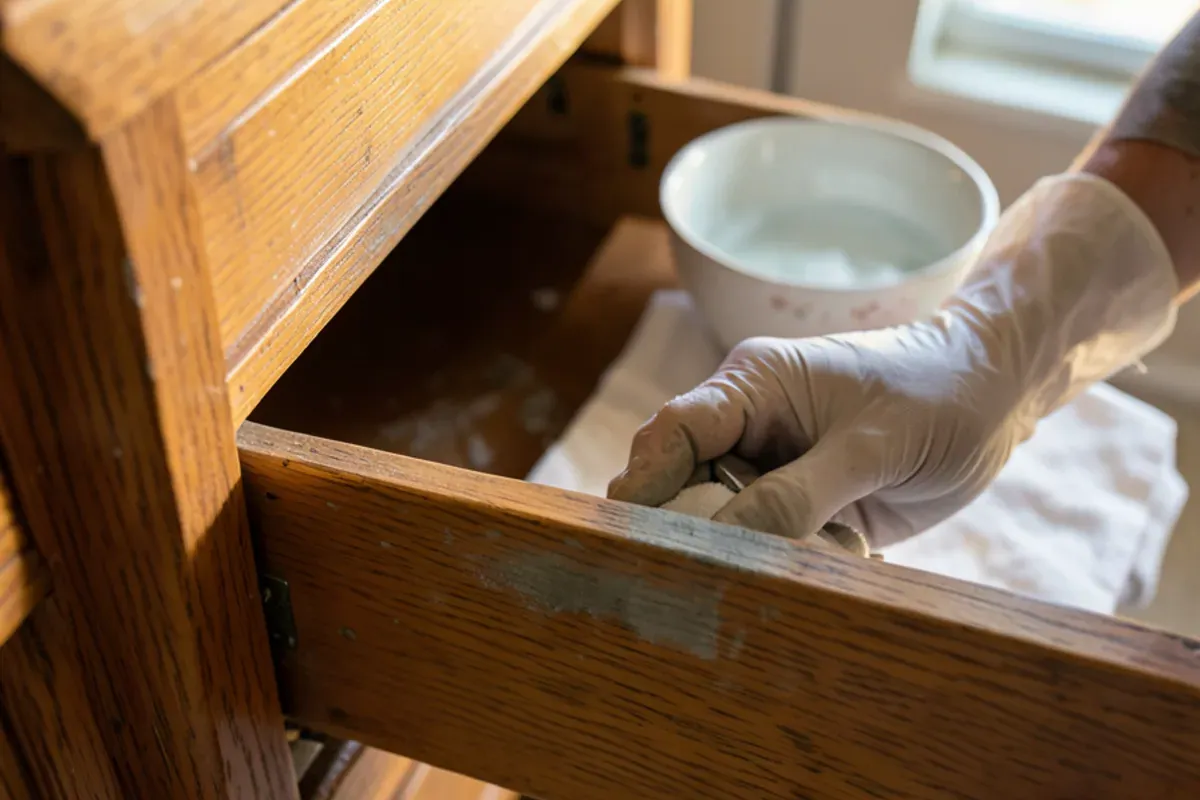
If the finish has turned cloudy, the veneer has lifted, or a musty smell stays in a drawer after cleaning, the piece is due for more than a wipe-down. Those are signs that moisture got past the finish rather than sitting on top of it.
Rentals, lanais and when routine care is not enough
Vacation rentals on Holmes Beach see wet swimsuits, sunscreen and sand on every chair. Washable seat pads, plenty of coasters and a quick weekly wipe-down by the cleaning crew go a long way. Outdoor teak and lanai pieces have needs of their own; our teak furniture refinishing page explains how those sets are cleaned and sealed.
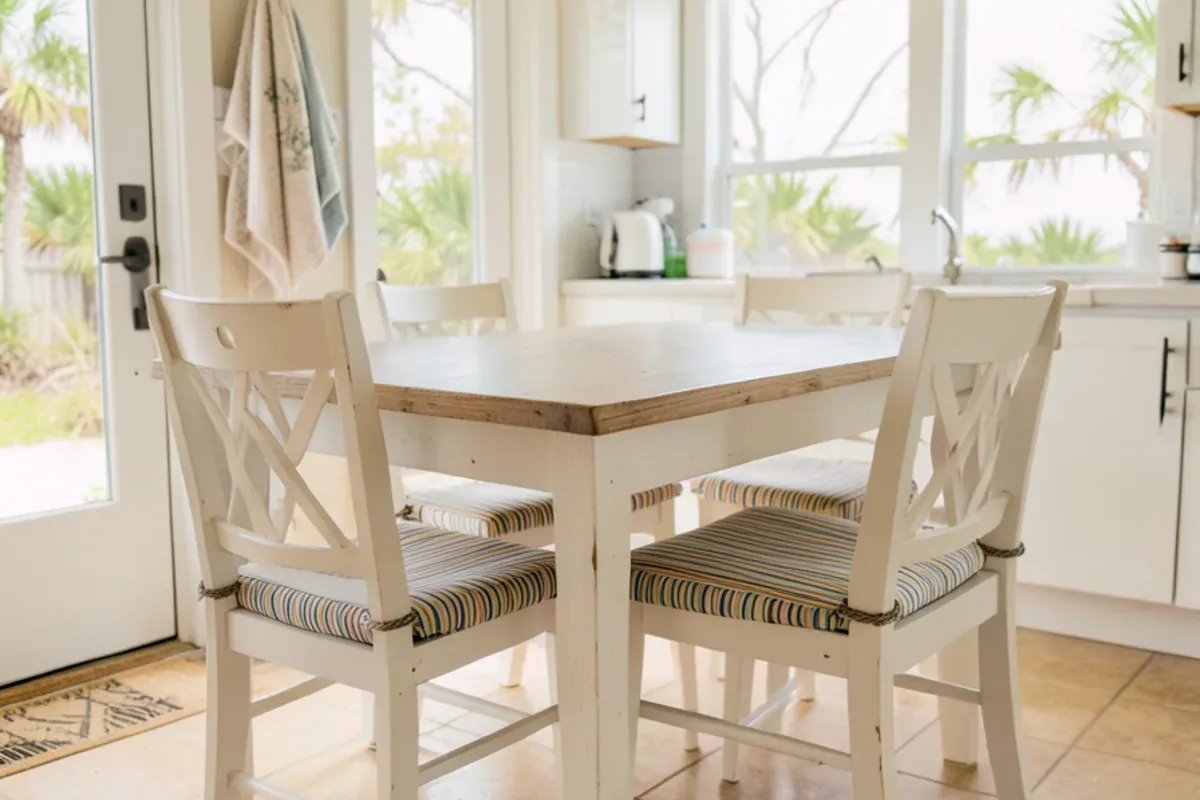
Call a finisher when you see finish worn through on edges, white or dark rings that will not lift, veneer bubbling or chipping, or joints that move when you rock a chair. Our furniture refinishing and restoration work happens in the Lewis Ave shop in Sarasota; drop off smaller pieces, and ask about pickup for heavy ones, where a fee may apply.
The bottom line
Wood furniture near the water lasts when it is dusted often, kept out of direct sun, and kept at steady humidity, with metal hardware watched for corrosion. Those habits cost little and save a refinish. When a piece is already past what care can fix, call the shop or bring it by appointment, and we will tell you what it needs.
Sources
- National Park Service — Conserve O Gram 7/1, Cleaning Wood Furniture (1993)
- USDA Forest Products Laboratory — Wood Handbook: Wood as an Engineering Material, FPL-GTR-282 (2021), Chapters 4 and 16
- U.S. Environmental Protection Agency — A Brief Guide to Mold, Moisture and Your Home
- USDA Forest Products Laboratory — Iron Stain on Wood, Mark Knaebe, FinishLine (revised 2013)