A TV wall with fireplace works when three questions are answered in order: how much heat reaches the screen, how high the screen ends up relative to your eyes, and where the power and signal cables run. The fireplace manual and the TV manual settle the first, the seating plan settles the second, and a licensed electrician handles the third.
Get those right and the cabinetry becomes the easy part. Below is how we work through a fireplace media wall at our Lewis Ave shop in Sarasota, from layout choices to the flanking cabinets that hide everything else.
TV wall with fireplace: should the screen go above or beside it?
Most people start with the screen centered over the firebox because it looks tidy in a builder's rendering. It is one of four common arrangements, and each trades something away.
| Layout | What works | What to watch |
|---|---|---|
| Screen above the mantel | Symmetry; the room has one focal point | Heat rising off the firebox; screen often ends up high for seated viewing |
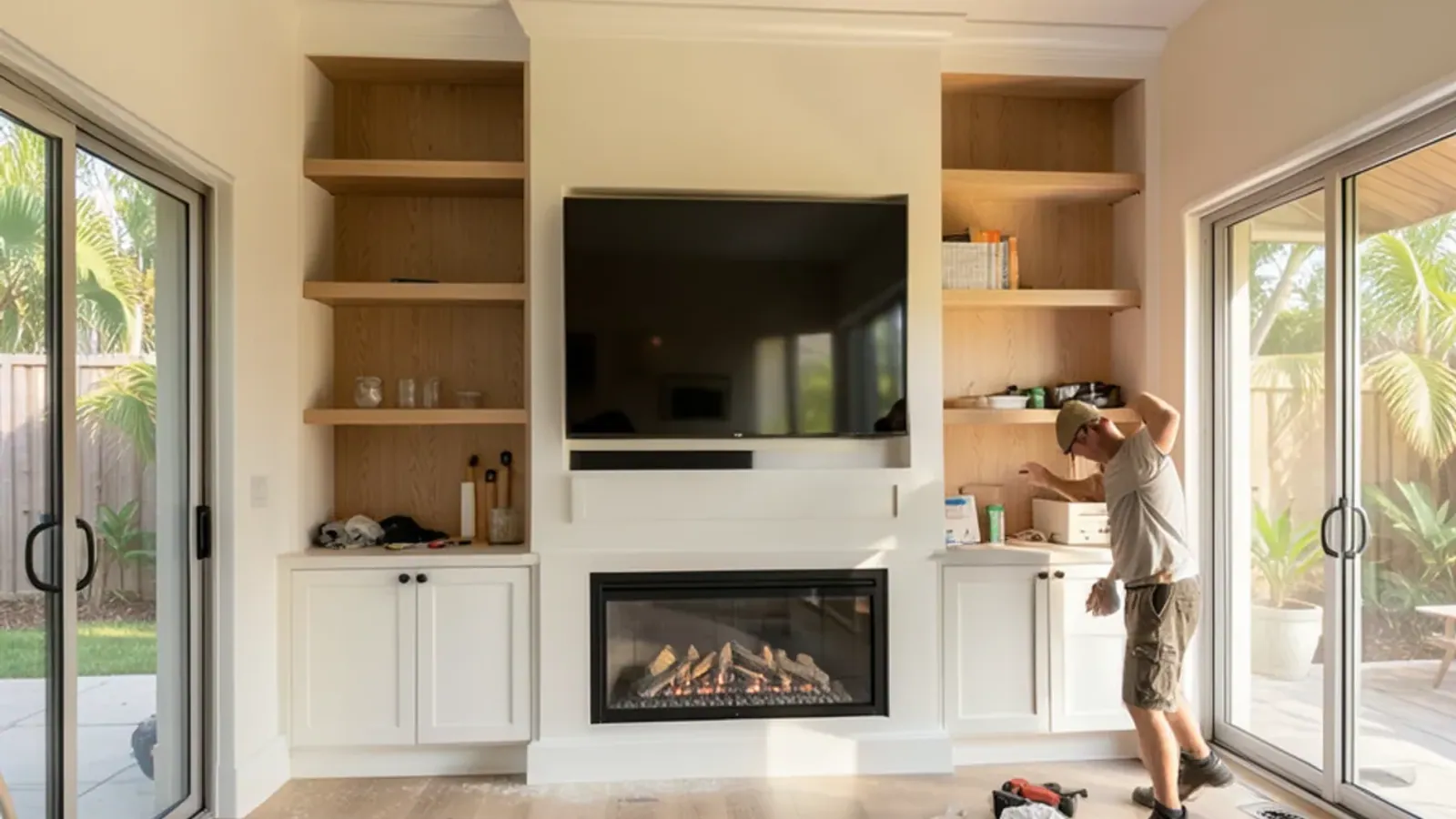
| Screen recessed in a niche above the firebox | Flush look; cables vanish into the wall cavity | Niche depth, ventilation behind the set and the fireplace maker's clearance rules for the wall above |
| Screen on one side, fireplace on the other | Comfortable viewing height; no heat on the electronics | Wall must be wide enough to keep the composition balanced |
| Screen on a pull-down mount | Lowers to eye level for movies, lifts out of the way otherwise | Mantel depth and hood projection must clear the mount's travel path |
In many great rooms around Lakewood Ranch, the fireplace sits on the long wall opposite the sofa, so stacking the two is tempting. If the wall is wide and the seating sits further back, a side-by-side layout often gives a better result for everyday watching.
Heat clearance: let the manuals set the numbers
We do not guess at clearances, and you should be wary of anyone who quotes a single figure for every fireplace. The fireplace manufacturer's installation manual lists the required distances to combustible materials, including wood mantels, shelves and any cabinet faces above or beside the opening. Those figures vary by model and by whether the unit is gas, electric or wood-burning.
The television manual is the second document. Screen makers publish an operating temperature range and usually warn against mounting directly above heat sources. If the two documents leave no room for a screen above the firebox, the TV moves; the mantel does not get closer. For wood-burning masonry fireplaces, NFPA 211 is the standard that governs chimneys and fireplaces, and your local building department applies the code in force.
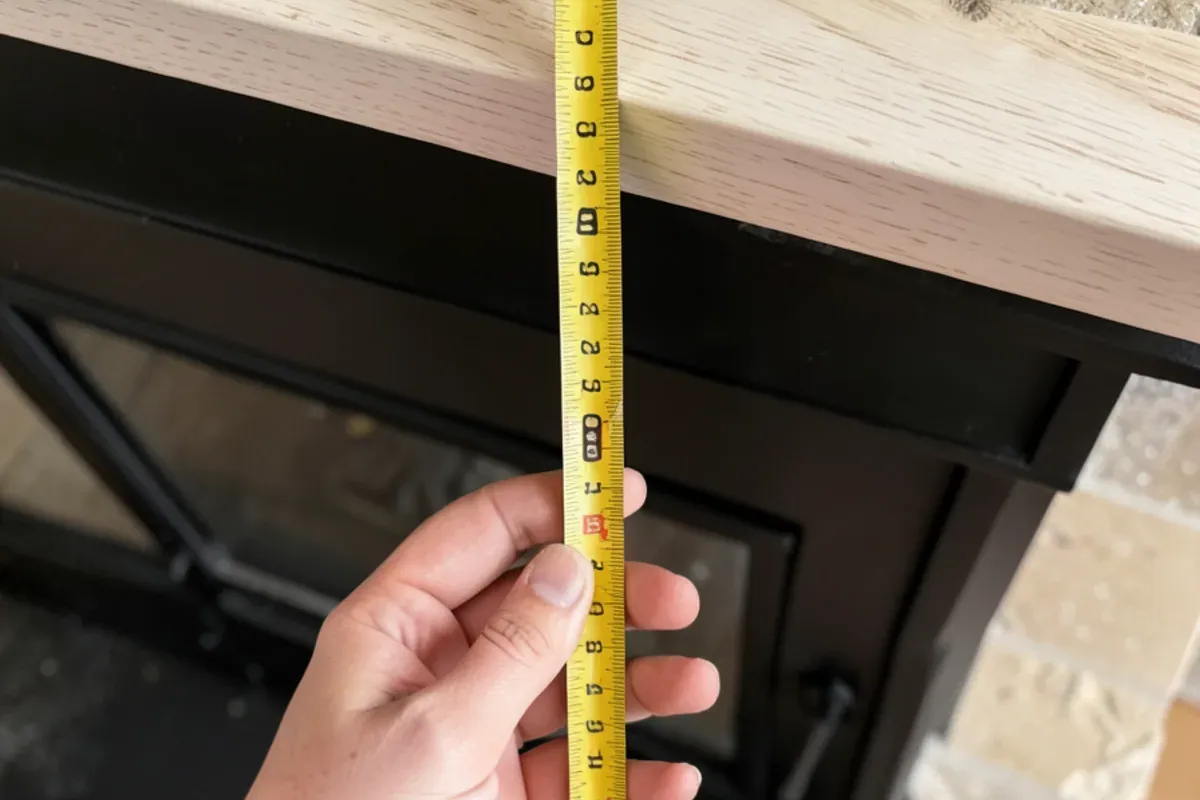
One practical test helps when the screen will go above an existing unit: run the fireplace on high for an hour and check how warm the wall feels where the TV would hang. Warm to the hand is a warning, even if the numbers on paper look fine.
Factory-built or masonry: which rules apply?
A gas or wood unit that arrived as a manufactured firebox and sits in a framed chase is a factory-built fireplace. The Florida Building Code, Residential (section R1004.1) requires those units to be listed and labeled, tested to UL 127, and installed in accordance with the conditions of their listing. In practice, the clearances printed in that unit's manual are the code, and a cabinet face or shelf that ignores them is a code problem, not just a design one.
A site-built masonry fireplace follows the code's own numbers. Section R1001.11 lets a wood mantel or trim sit on the masonry front, but never within 6 inches of the opening, and anything within 12 inches of the opening may project no more than 1/8 inch for each inch of distance. So a trim piece projecting 1 inch must sit at least 8 inches from the opening, and a deeper mantel shelf has to clear the 12-inch zone altogether, which often pushes a screen higher than people expect.
How high should the screen be on a fireplace wall?
Comfortable viewing puts the middle of the screen close to the eye level of a seated viewer, so you look straight ahead rather than up. A firebox plus a mantel almost always lifts the screen above that line, which is why people complain of stiff necks after a long film.
- Sit in your usual spot and have someone mark your eye height on the wall with painter's tape.
- Measure the firebox opening, hearth and the mantel height required by the fireplace manual.
- Add the TV's own dimensions and the bezel gap to see where its center actually lands.
- If the center sits well above your tape line, consider a lower mantel profile, a recessed niche, a pull-down mount or moving the screen beside the fireplace.
We build the 3D model with your sofa position and screen size in it, so you can see the sightline before anything is cut. Screen sizes grow each time a set is replaced, so we size niches for the next TV as well as the current one.
Power, low-voltage cable and the licensed electrician
Hiding wires is the reason most people want a built-in media wall, and it is also where the trades meet. New outlets behind the screen, recessed power boxes and dedicated circuits are electrical work. Florida's contracting law, Chapter 489, assigns it to a licensed electrician, and the county or city may want a permit for it.
Our role is to leave the right paths. We plan a conduit or open chase from the screen location down to the equipment cabinet, cut grommets where the cable needs to pass, and give the electrician a drawing that shows where each box should land before the cabinets go up.
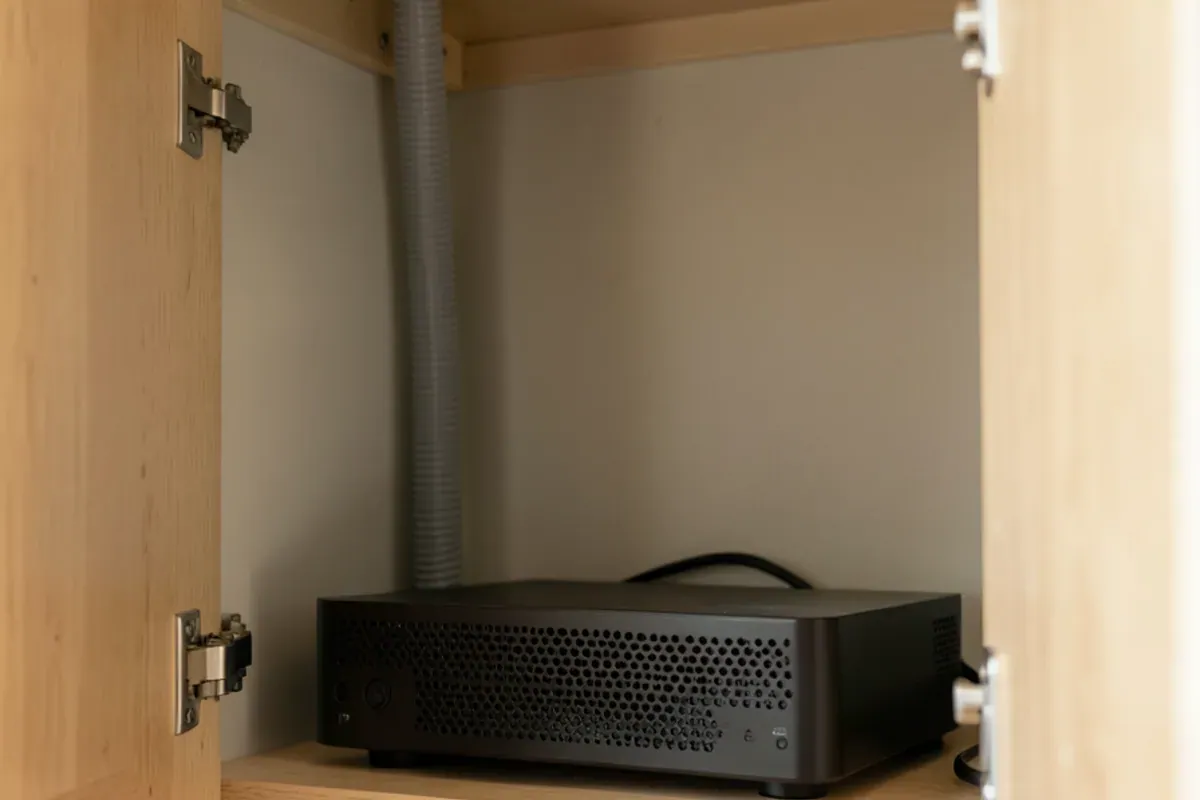
- Receivers and game consoles need air: perforated back panels, open shelf fronts or a quiet fan keep them from overheating behind closed doors.
- Infrared remotes need line of sight, so solid doors may call for an IR repeater or a remote that uses radio signals.
- Soundbars sit cleanly on a shelf or bracket designed around the bar's exact dimensions, not squeezed onto a mantel ledge.
- A removable panel at the back of the equipment bay makes the next upgrade a ten-minute job.
What should be settled before the cabinet drawings start?
A fireplace media wall is drawn around a short list of fixed objects. When those are known on the first visit, the 3D model is accurate the first time and the drawings do not have to be redone when a new soundbar arrives. This is what we ask homeowners to gather:
- The fireplace make, model number and fuel type, so we can pull the installation manual and its clearance table.
- The TV you own or plan to buy: screen size, weight, depth and the mounting-hole pattern on its back.
- The mount you prefer: flat, tilting, articulating or pull-down. Each needs a different niche depth and backing.
- Every component that will live in the cabinet, including receivers, streaming boxes, game consoles and a subwoofer.
- Where you sit and how far the sofa is from the wall, measured, not estimated.
- Whether the fireplace wall is concrete block, a framed chase or interior partition, since that changes how the mount and cabinets fasten.
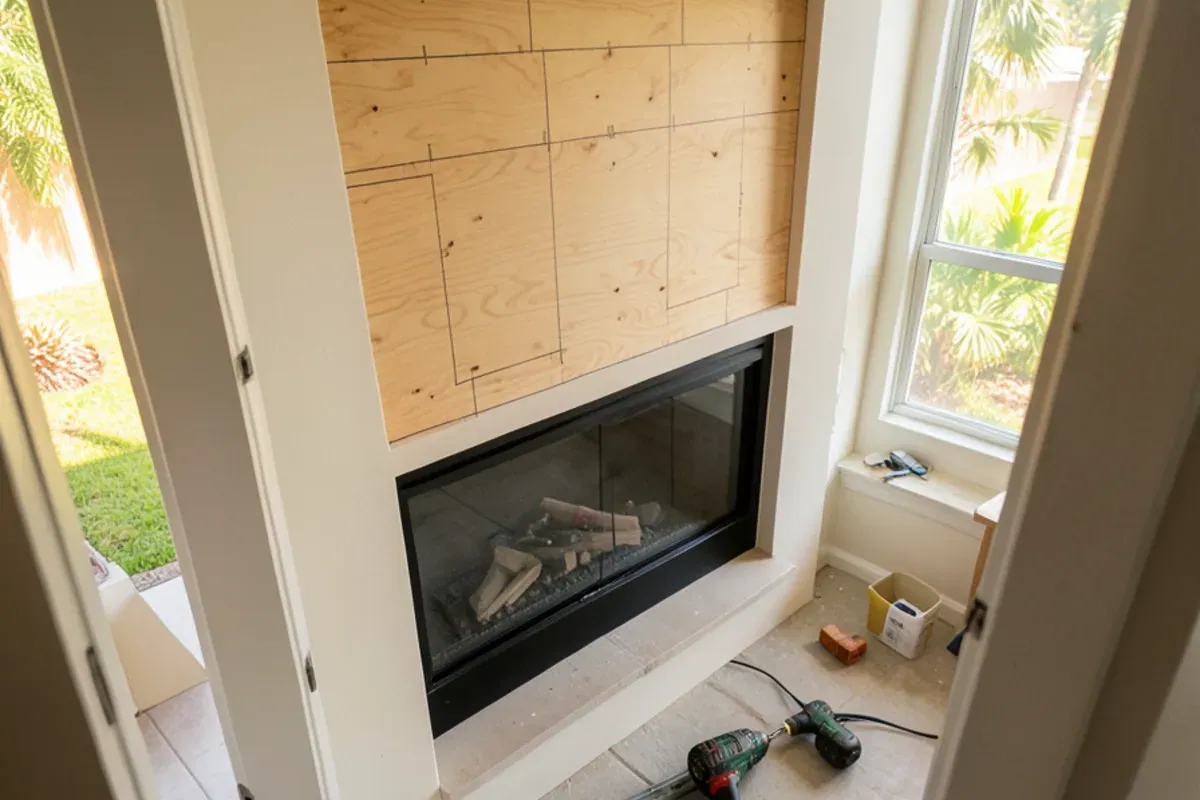
Wall construction matters more than most people think. Exterior walls in many Sarasota homes are concrete block, which takes masonry anchors, while a framed fireplace chase may have no stud where the TV bracket wants to land. In a recessed niche we build in a solid backer panel sized to the mount, so the bracket bolts into wood we placed on purpose rather than hunting for framing behind drywall.
Flanking cabinets that balance the wall
The cabinets on either side of the firebox carry most of the storage and most of the visual weight. Lower doors hide equipment and board games; upper shelves hold books and objects. On a symmetrical wall, matching towers frame the fireplace. Where the firebox is off center, which is common in homes around Palmer Ranch, we often run a longer bank of lower cabinets on one side to rebalance the composition.
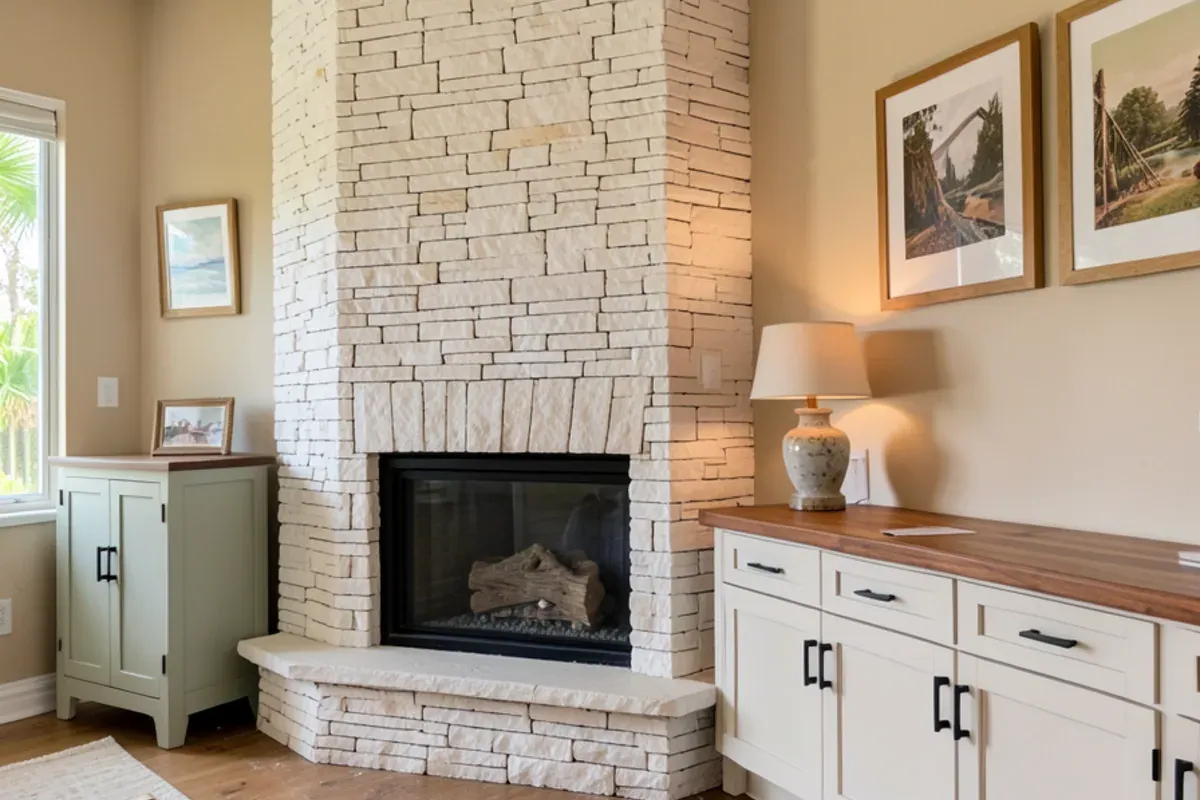
If the mantel itself needs replacing, it can be designed alongside the TV wall so the profiles match; our fireplace mantels and surrounds page covers that part of the job. The full range of wall units, closets and bars we make sits under custom built-ins, and dedicated custom entertainment centers go into more detail on media storage.
The bottom line
A fireplace TV wall comes together when the heat rules, the viewing height and the wiring are settled first and the cabinetry follows. Have the fireplace model number, the screen size and a wall photo handy, then phone the shop or send a note from our contact page and we will start the drawings.