Whether to restore or replace antique furniture depends on four things: what the piece is worth as it stands, what it means to your family, whether the structure is sound, and what the work will cost against what a replacement would. Solid wood pieces with loose joints, worn finish or lifting veneer are nearly always worth restoring.
Particleboard furniture swollen by water usually is not. There is one trap to avoid before any of that: refinishing a genuinely valuable antique can lower its market value. Here is how we walk customers through the decision in our Sarasota shop, starting with the question of value.
Could refinishing lower what your antique is worth?
Yes, and sometimes sharply. Collectors and dealers prize original finish and the patina built up over generations of use. National Park Service guidance on wood furniture treats that patina, the mix of aged finish, wax and wear, as part of a piece's character and history. It cautions that cleaning beyond dusting is not always desirable on historic furniture and points owners to a furniture conservator when questions arise.
So if a piece might be valuable, get an appraisal before anyone sands it. The American Society of Appraisers lists antique furniture as a personal property specialty, and its members follow the Uniform Standards of Professional Appraisal Practice. For museum-quality pieces, the American Institute for Conservation runs a directory of conservators. We restore furniture; we do not appraise it, and we would rather you know the number first.
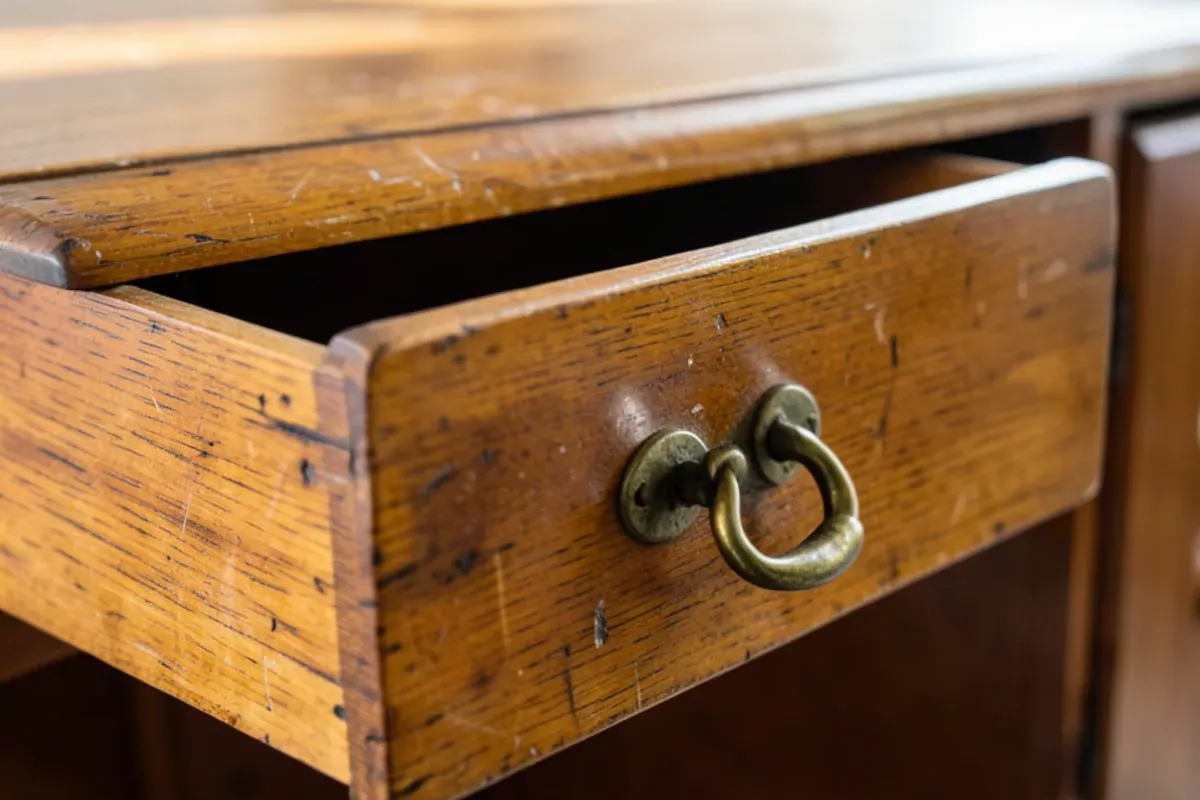
Is the structure worth saving?
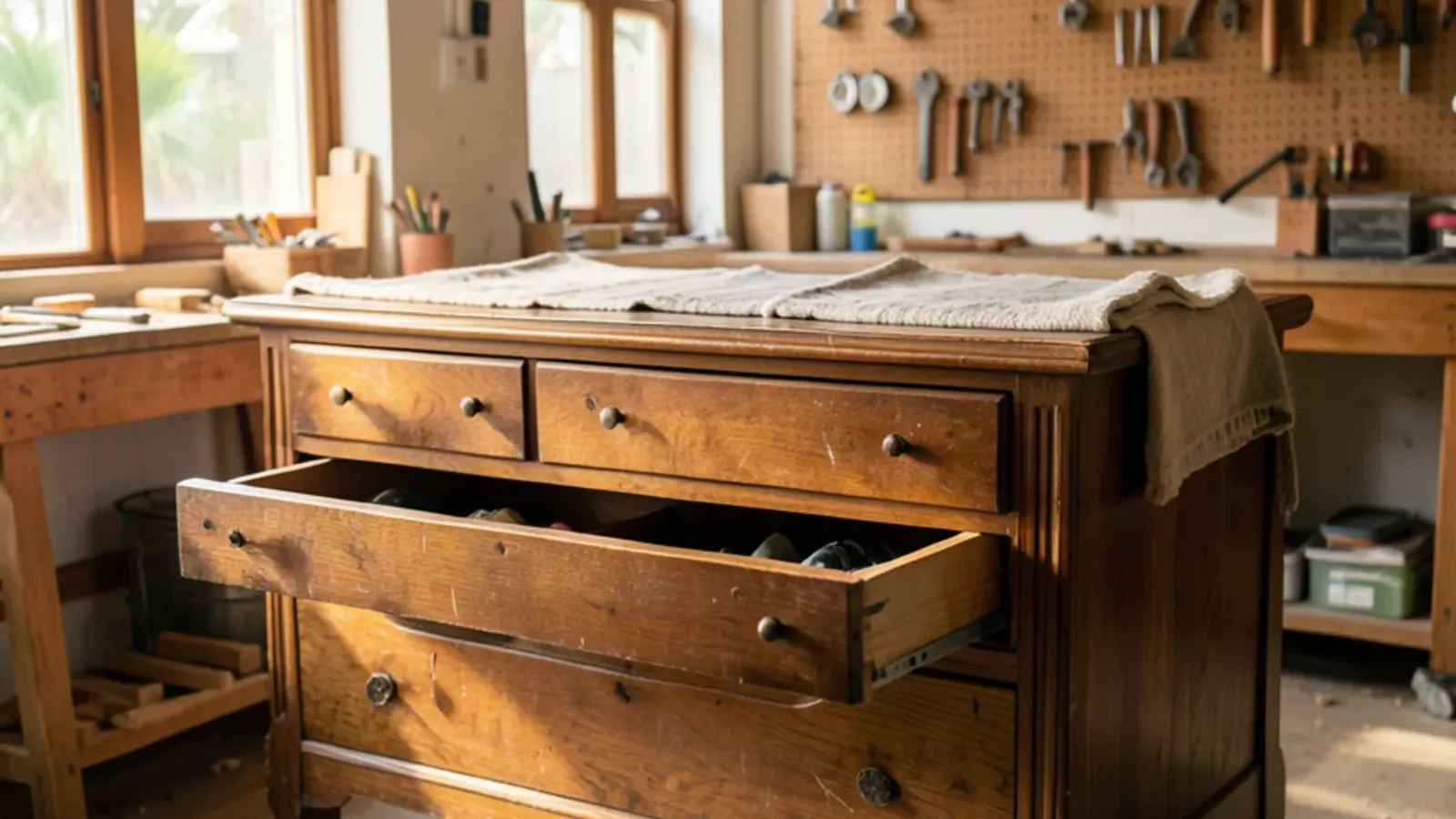
Pull out the drawers, turn the piece over and look at how it was built. These signs point toward restoration:
- Solid hardwood sides, tops and drawer fronts, or veneer laid over a solid wood core
- Hand-cut or machine dovetails at the drawer corners
- Joints that are loose but intact, which can be taken apart, cleaned and re-glued
- Veneer that is lifting or chipped in places rather than missing over large areas
- Missing knobs, feet or moldings that can be remade to match the originals
These signs lean toward replacement: particleboard or fiberboard cores that have swollen or crumbled, active insect damage through structural parts, or a piece so heavily altered that little original material remains.
Many older pieces were put together with animal hide glue. Warmth and a little water release it, and fresh hide glue grips the old residue. That makes period repairs reversible, and we keep it that way on the antique furniture restoration work we do.
Could an old piece be hiding termites or lead paint?
Two checks belong before any decision about finish, because both change what is safe to do next.
Drywood termites
Unlike the subterranean kind, drywood termites need no soil contact and can live in dry wood, which is why furniture carries them so easily. University of Tennessee Extension entomologist Karen Vail reports that most infestations sent to her lab were traced to wooden furniture or other wood from Florida and the Gulf Coast. The giveaway is frass: tiny fecal pellets, about a millimeter long, concave and six-sided, piling up beneath small kick-out holes. If you find little heaps of them under a chest or inside a drawer, have a pest control professional identify and treat the piece before it moves into another room or to any shop.
Old paint
Federal rules under 16 CFR Part 1303 ban lead-containing paint on furniture for consumer use, but only for pieces manufactured after February 27, 1978. A painted heirloom older than that may carry lead in one of its layers. Test the paint before anyone sands or scrapes it, since dry sanding turns old paint into fine dust, and plan on a chemical strip with careful cleanup if lead turns up.
Matching the treatment to the piece
Restoration is not one job. It is a range, from a careful cleaning to a full strip and refinish, and the right level depends on value and how the piece will be used.
| Level | What it involves | Effect on originality |
|---|---|---|
| Clean and wax | Remove grime, renew paste wax | Keeps everything original |
| Revive the finish | Dissolve and re-level old shellac or lacquer, blend scratches | Keeps the original finish, refreshed |
| Structural repair only | Re-glue joints, lay down veneer, replace broken parts | Keeps finish; adds matched new parts |
| Partial refinish | Refinish a damaged top while leaving the case untouched | Mixes original and new finish |
| Full strip and refinish | Remove all old finish, recolor, apply new finish | Removes the original surface entirely |
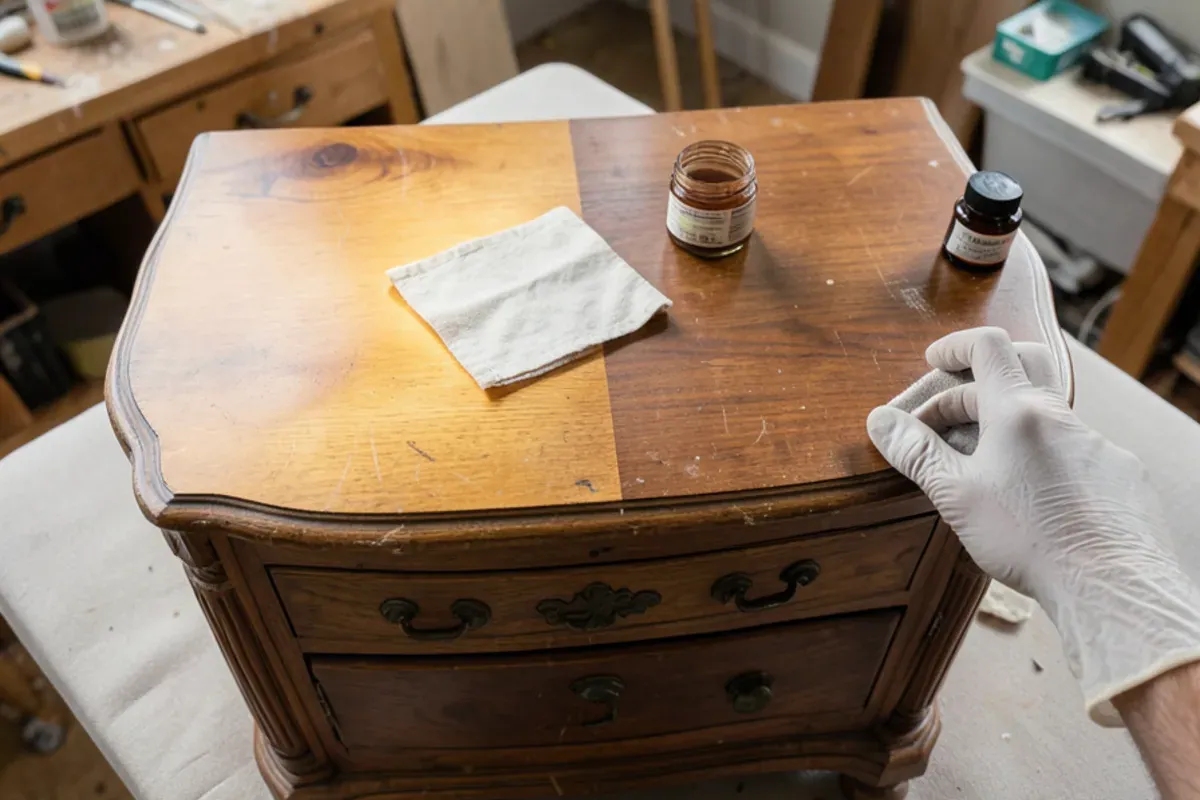
A grandmother's dining table that will host every holiday may justify a durable new finish. A signed chest with its original surface should probably get the gentlest level that stabilizes it.
Five questions to answer before you choose a level
- Is there a maker's label, stamp, signature or retailer's tag on the back, under a drawer or inside the case? Photograph it before any work.
- Has a qualified appraiser seen it, and does the value depend on the surface staying original?
- Will the piece be used every day, or kept mostly for display?
- Are the problems structural, cosmetic, or both? Loose joints and broken parts go to furniture repair whatever level of finish work follows.
- Which original parts must stay with it? Keep old hardware, brasses and any loose veneer in a labeled bag, even if replacements are made.
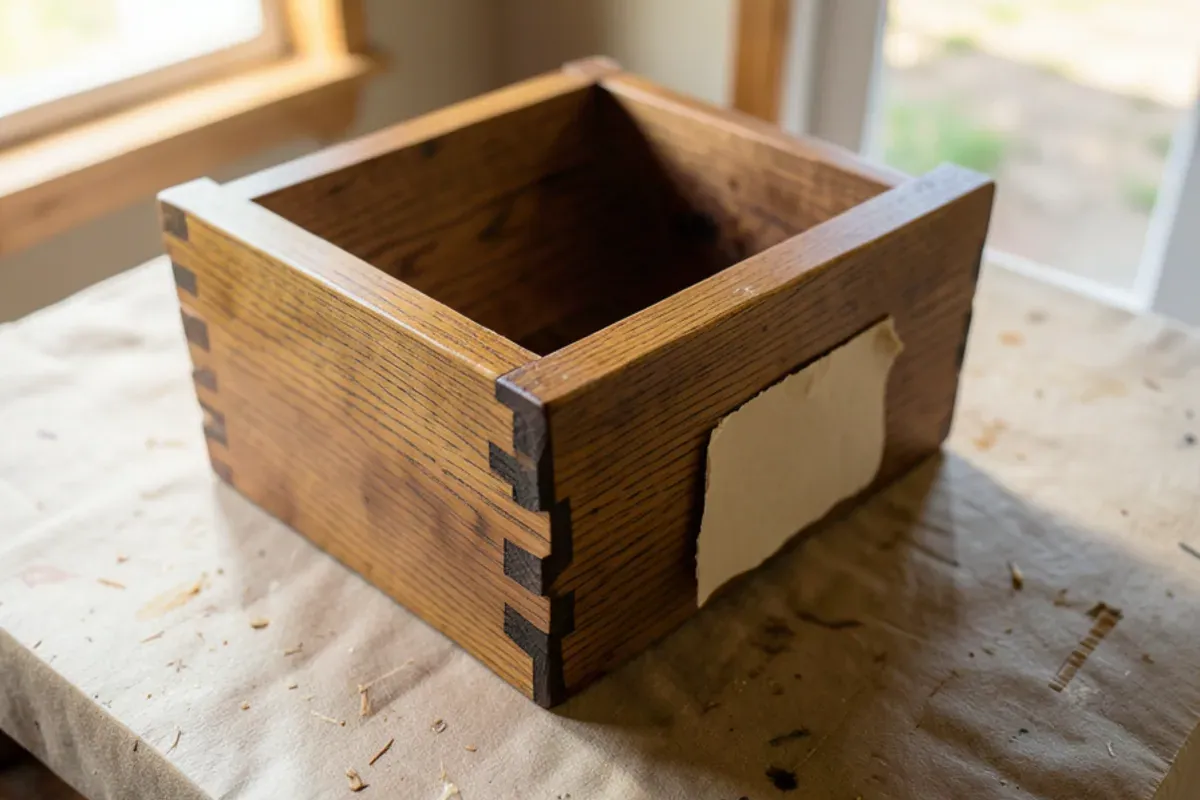
When replacing makes more sense
Some pieces carry memories but not much else. A mass-produced dresser with a particleboard case, swollen from a flood or a leak, rarely holds up after repair because the core itself has failed. In that case replacing it, or having a new piece built that echoes the old one, is the honest advice.
Cost is the other side of the scale. Rebuilding drawers, remaking a top and refinishing a full case takes real bench hours. When the total approaches the price of a well-made new piece and there is no family story attached, replacement is reasonable. When the story is the point, most families decide the hours are worth it.
Bringing an heirloom to the Lewis Ave shop
Most restorations start with photos and a conversation, then the piece rides over to 1121 Lewis Ave on a dolly or in the back of your car. We take restoration work from Bradenton, about 25 minutes north with its older bungalow neighborhoods, and from Venice to the south; if a chest or table is too heavy for that, ask whether we can fetch it and bring it home again; a fee may apply.
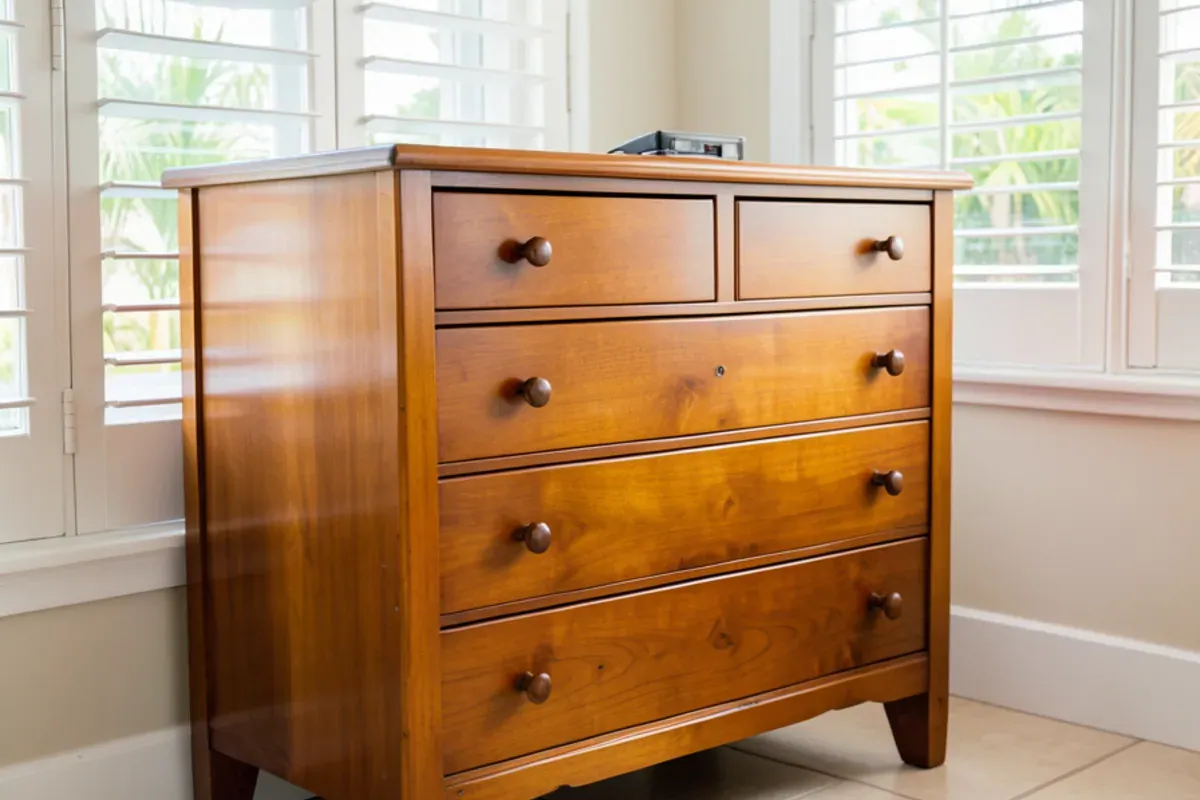
Replacement parts are drawn before they are cut and made from hardwood chosen to match the original. Our wider furniture refinishing and restoration services cover everyday pieces as well as heirlooms. Shop visits are by appointment.
The bottom line
Restore an heirloom when the structure is sound and the piece matters to you; replace it when the core has failed and nothing ties you to it. Either way, if there is any chance it is valuable, get the appraisal before the sandpaper. When you are ready to talk about a chest, table or dresser, phone us or email a few pictures, and we will help you weigh the options.
Sources
- American Society of Appraisers — About Personal Property
- American Institute for Conservation — Find a Professional
- National Park Service — Conserve O Gram 7/1, Cleaning Wood Furniture (1993)
- University of Tennessee Extension — Drywood Termites in Tennessee, Karen Vail, Insec(tc)ure newsletter, E&PP Info #841 (March 2022)
- Code of Federal Regulations — 16 CFR 1303.1, Ban of lead-containing paint and certain consumer products bearing lead-containing paint