Custom bathroom vanity cost is set mostly by four choices: overall size, wood species and finish, the ratio of drawers to doors, and the countertop and sink. Install work adds to it, and any change to the drain or supply lines brings in a licensed plumber.
Stock vanities cost less because they come in fixed widths and cheaper box materials; a custom piece costs more because every inch is drawn and built for your wall. This guide sets out what each tier buys, explains the line items behind a custom quote, gives one national survey figure for perspective, and lists ways to keep the price sensible without settling for a weaker cabinet.
Stock, semi-custom or custom: what does the price buy?
The three tiers differ less in looks than in construction and fit. A stock vanity off a showroom floor can look fine on day one; the questions are how it handles steam for a decade and how much wall it leaves unused.
| Stock | Semi-custom | Custom | |
|---|---|---|---|
| Sizes | Fixed widths, often in 6-inch steps | Some width and depth options | Built to the inch |
| Box material | Commonly particleboard or MDF | Varies by line | Solid hardwood and hardwood plywood in our shop |
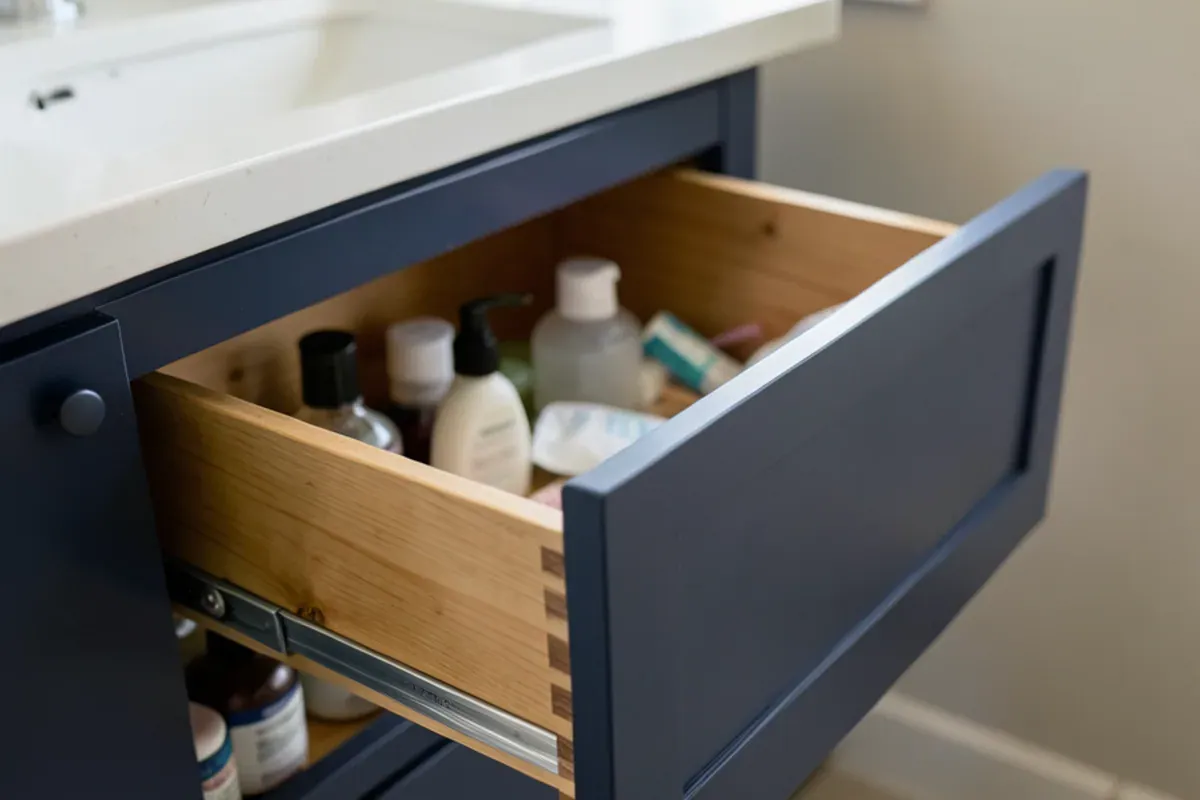
| Drawers | Stapled or glued boxes | Better lines offer dovetails | Dovetailed hardwood boxes |
| Layout around plumbing | Take it or leave it | Limited changes | Drawers shaped around the trap |
| Finish choices | A short list | A longer list | Any stain or sprayed paint |
| Lead time | Often in stock | Weeks | Drawings, approval, then shop build |
In a dry room any of these can work. Bathrooms are not dry rooms, and that is where the box material earns its cost.
What drives custom bathroom vanity cost?
Width and configuration
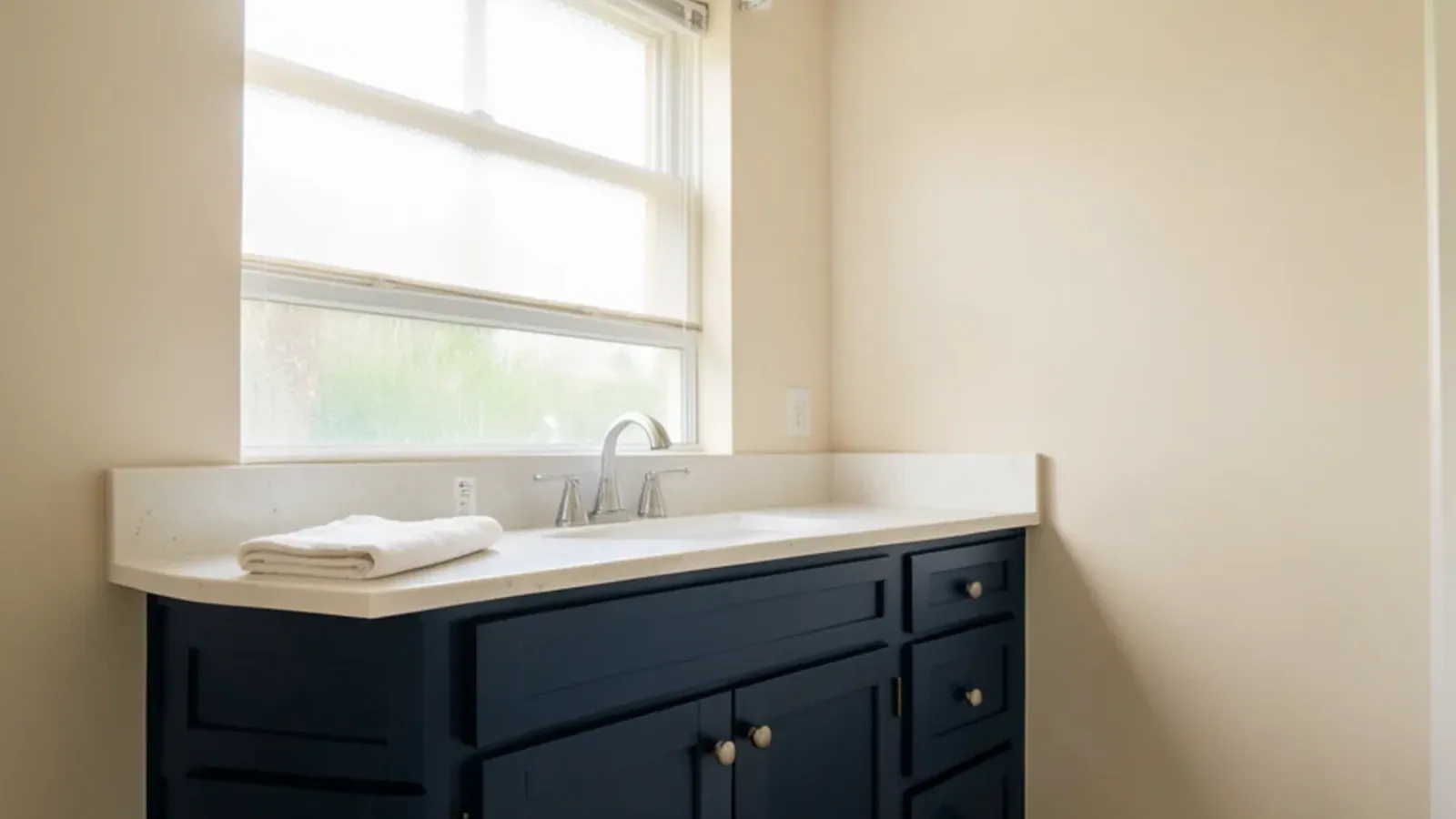
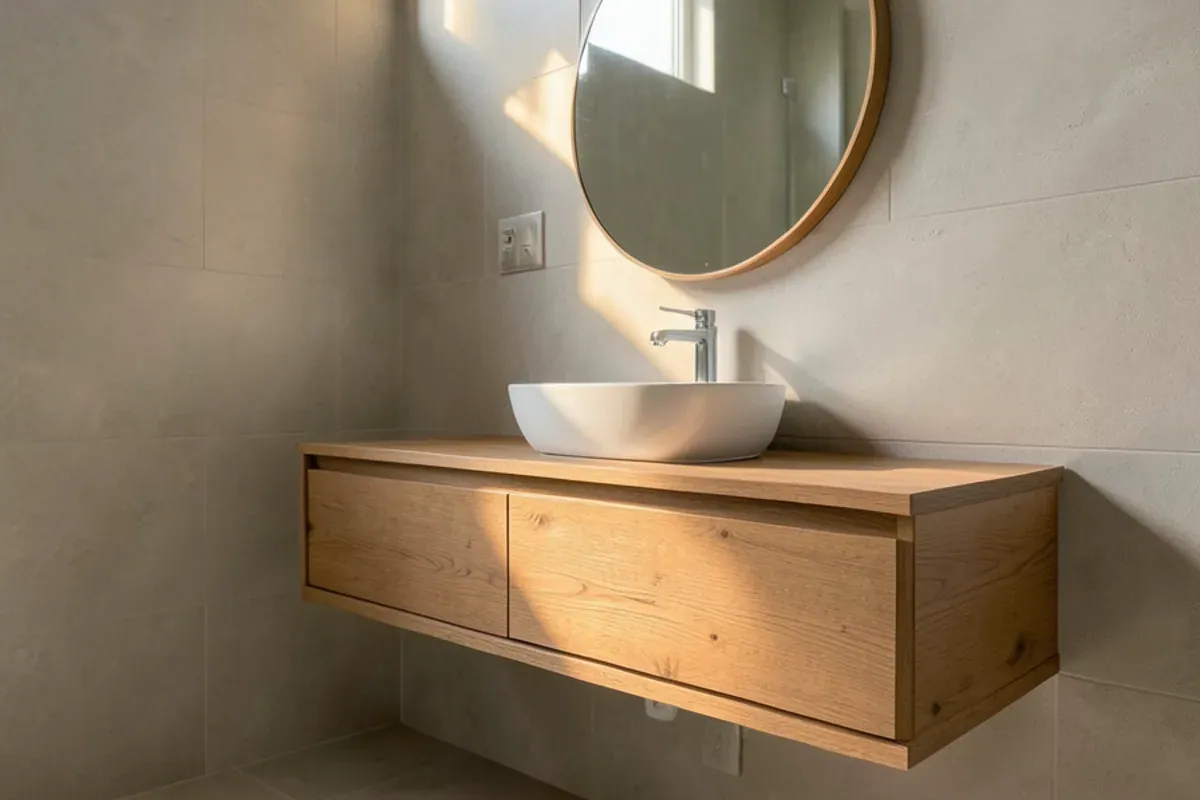
A 36-inch single vanity and a 72-inch double are different projects, but width alone is not the whole story. A floating vanity needs blocking in the wall and a stronger back rail. A furniture-style piece with turned legs or a shaped apron adds bench time.
Wood and finish
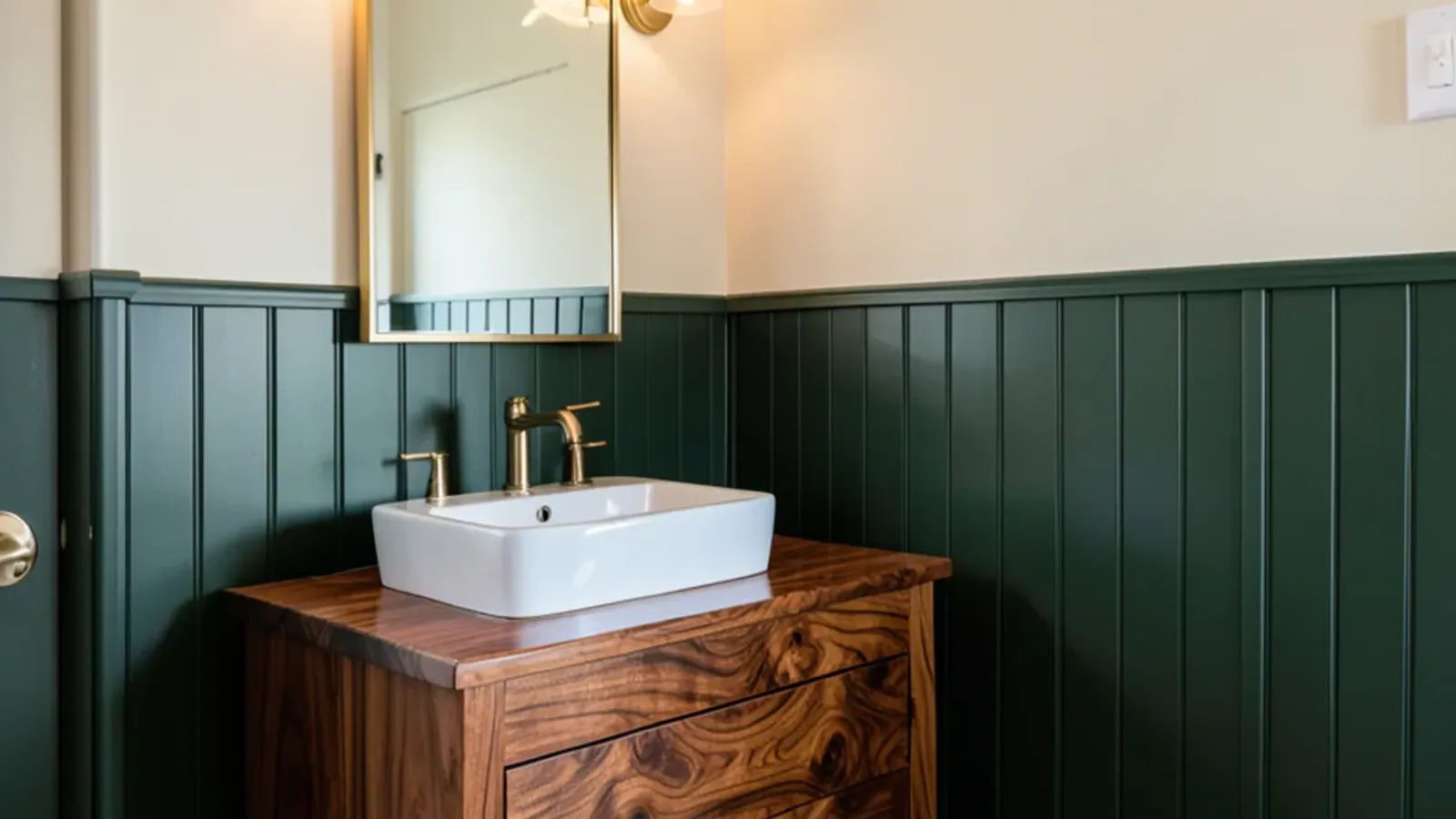
Paint-grade maple is economical; rift white oak, walnut and figured cherry cost more per board foot and take more care to match across drawer fronts. A sprayed, catalyzed topcoat on every face, inside and out, adds labor but is what keeps steam out of the wood.
Drawers versus doors
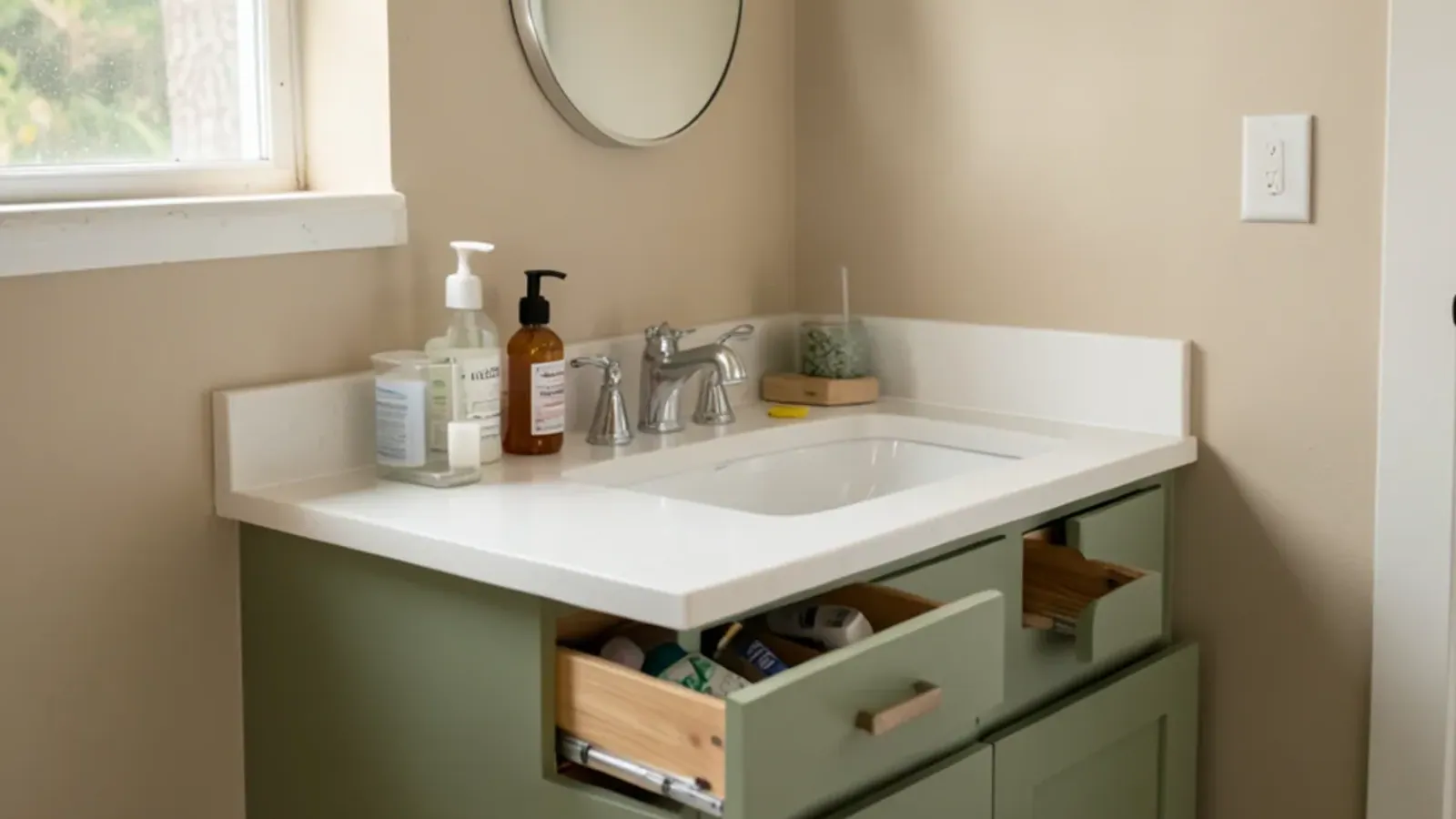
Each drawer means a dovetailed box, a pair of full-extension slides and a front. A vanity with eight drawers costs noticeably more than one with two doors, and most people find the drawers worth it once they use them.
Top, sink and faucet
A wood top we build ourselves, a stone top templated by a fabricator after the cabinet is set, an undermount or vessel sink: each carries its own price and lead time.
Where does a vanity sit in a bathroom budget?
For context, the Journal of Light Construction's Cost vs. Value 2025 report put a midrange bathroom remodel at a national average job cost of $26,138, with an estimated resale value of $20,915. That figure covers a whole bathroom, from fixtures and tile to lighting, and the vanity is only one part of it. It is a national survey number, not our price and not a Sarasota quote.
The same report does publish a Sarasota row, and it is worth seeing next to the national one. Local job costs sit close to the national averages, while estimated resale value runs lower here for both bathroom projects.
| Project | Sarasota job cost | Sarasota resale value | Sarasota cost recouped | National cost recouped |
|---|---|---|---|---|
| Bath remodel, midrange | $26,113 | $19,282 | 73.8% | 80% |
| Bath remodel, upscale | $80,449 | $30,706 | 38.2% | 41.7% |
Read the gap between the two rows as a caution about scope, not about quality. JLC's upscale project grows a 35-square-foot bath to 100 square feet and relocates every fixture, while its midrange project replaces the fixtures in a 5-by-7-foot bath without moving them. Buyers in the survey valued the expansion at well under its cost. A custom vanity set over the existing drain sits much closer to the midrange end.
What the comparison shows is proportion. When the shower, tile and plumbing stay put, the vanity, top and mirror become most of the visible change, and money spent there goes further than in a full gut. That is why many of the bathroom remodeling projects we take on begin with the vanity and work outward.
Is a double vanity worth the extra cost?
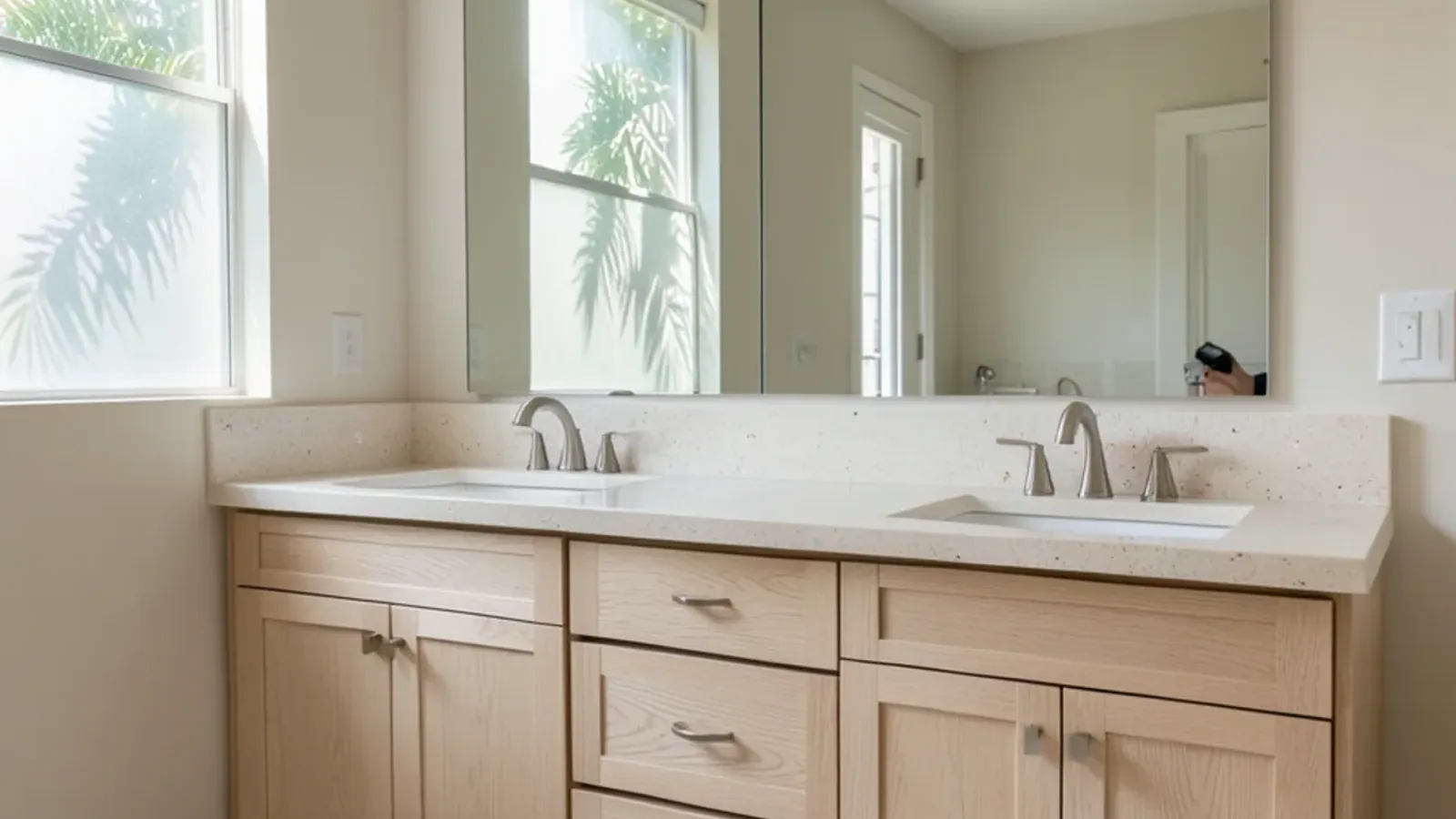
Two sinks are the most common upgrade request in a primary bathroom remodel, and the one most often regretted when the room is narrow. The cabinet itself is only part of the added cost. A second sink brings its own set of line items:
- A second drain and pair of supply lines, roughed in by a licensed plumber unless the wall already has them.
- A second faucet and sink, usually supplied by the homeowner.
- A larger stone top with two cut-outs, or a longer wood top built in the shop.
- More vanity lighting, often a second fixture wired by a licensed electrician.
- Two mirrors or one long one, framed to match the cabinet.
What you give up is counter space between the bowls, and in a vanity under about five feet that loss is real. Two people who rarely use the bathroom at the same time are often better served by one sink, a long run of drawers and a tall linen tower. Where two sinks do earn their place, a shared bank of drawers between them gives each person their own storage without crowding the faucets.
We draw both versions on the 3D model when the choice is close, because seeing the counter space between two bowls settles most debates faster than a price difference does.
Costs that sit outside the cabinet
A vanity quote from a cabinet shop covers the cabinet, its install and often the top. Several related costs belong to other trades, and it helps to know about them early.
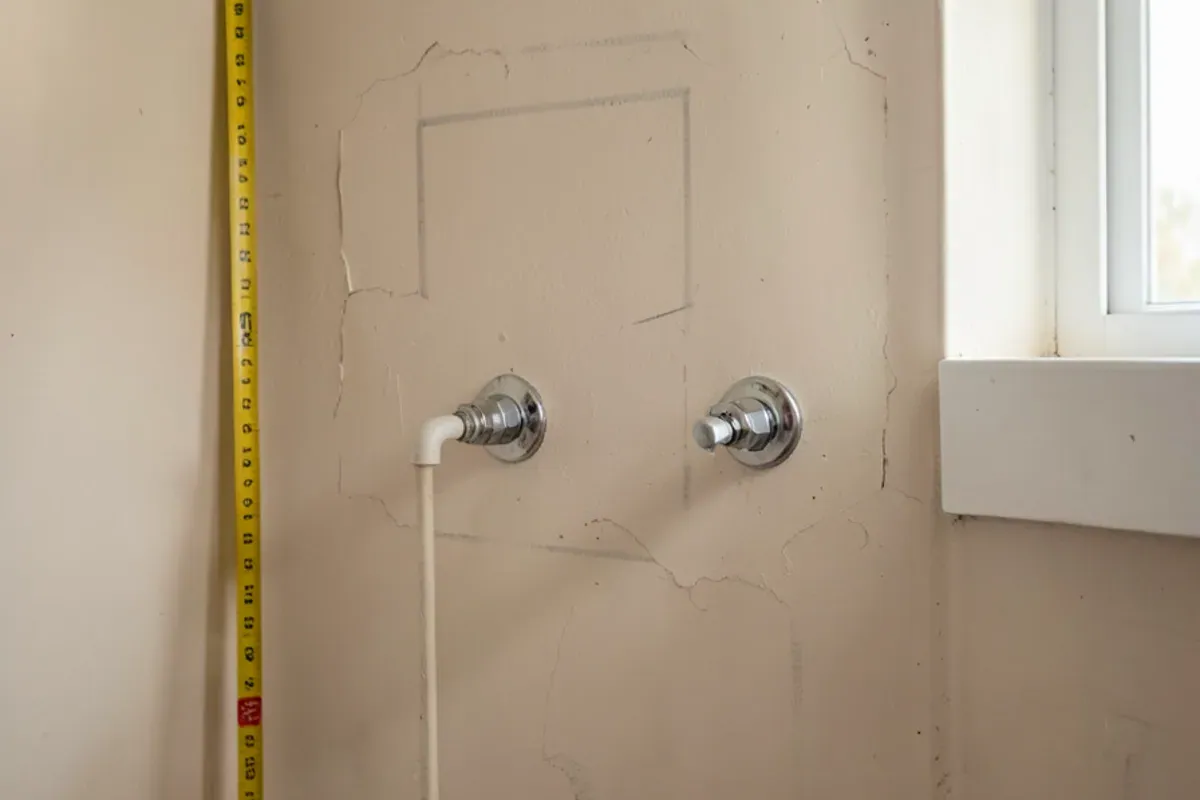
Moving a drain or supply line, adding a second sink or relocating a toilet is plumbing work. Chapter 489 of the Florida Statutes governs construction contracting, including plumbing contractors, so that part goes to a licensed plumber, and the city or county building office decides whether that work needs a permit. Adding outlets or vanity lighting means a licensed electrician. Patching drywall and tile where an old, smaller vanity stood is easy to forget until the old one comes out.
Keeping the price sensible without a weaker vanity
- Keep the sink centered over the existing drain so no plumbing moves.
- Choose a paint-grade species for a painted vanity rather than paying for figure nobody will see.
- Put drawers where they matter most, beside the sink, and use a door at the plumbing.
- Pick a remnant stone slab for a single vanity; small tops often fit leftover material.
- Combine the vanity with a matching linen cabinet in one build to share setup and finishing time.
We design and build vanities for homes across Sarasota and the villa communities along Bee Ridge Road. Our custom bathroom vanities page shows the styles and construction in more detail.
The bottom line
A custom vanity costs more than a stock one for clear reasons: it is sized to your room, built from wood that tolerates a steamy bathroom and laid out around your plumbing rather than in spite of it. Keep plumbing where it is and spend on drawers and finish, and the money goes where you will notice it. To talk through a vanity for your bathroom, call us or reach out on the contact page, and bring those three measurements along.
Sources
- Journal of Light Construction — Cost vs. Value 2025 (national averages)
- Journal of Light Construction — Cost vs. Value 2025, Sarasota, FL
- Journal of Light Construction — Bath Remodel, Midrange (2025 project description)
- Journal of Light Construction — Bath Remodel, Upscale (2025 project description)
- The Florida Senate — Chapter 489, 2025 Florida Statutes (Contracting)