
Finish Carpentry & Millwork
Staircase Millwork in Sarasota, FL
Hardwood treads, handrails, balusters, newel posts and under-stair storage, drawn to code and built in our Sarasota shop.
- Built in our Sarasota shop since 2011
- 4.4★ from 52 Google reviews
- 3D model before anything is built
- Solid-wood boxes, dovetail drawers
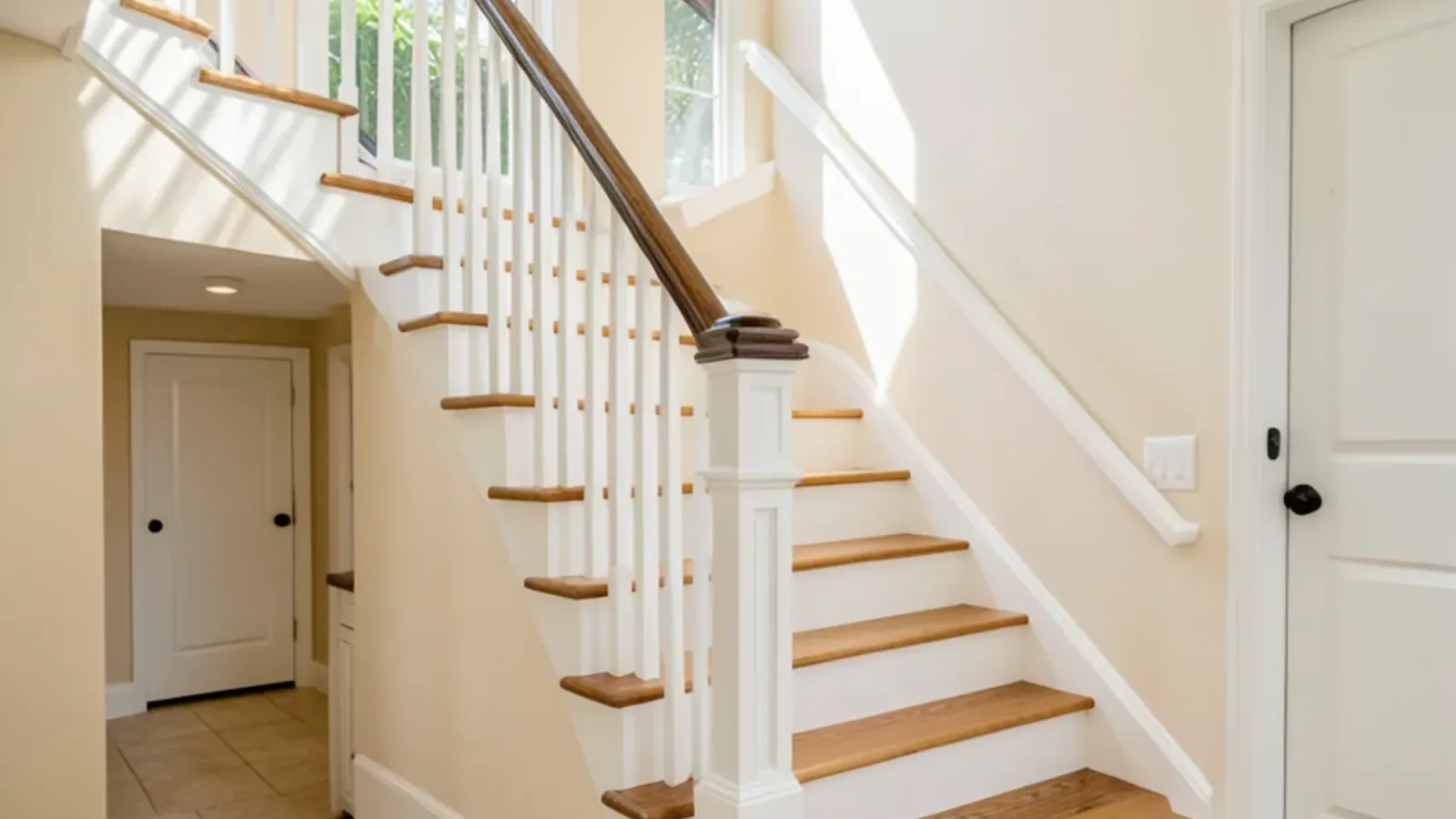
Stairs get used more than any other piece of woodwork in a house, and they show wear first. Our staircase millwork in Sarasota covers the parts you touch and see: hardwood treads and risers, handrails, balusters, newel posts, skirt boards and storage built into the space below. Every stair is measured, drawn and modeled to Florida code before we build.
This work belongs to our wider finish carpentry and millwork services. Around Sarasota, stairs mostly mean two-story homes and townhouses built from the 1980s on, where builder carpet and painted pine railings are ready for something more lasting.
Can Carpeted Stairs Become Wood Stairs?
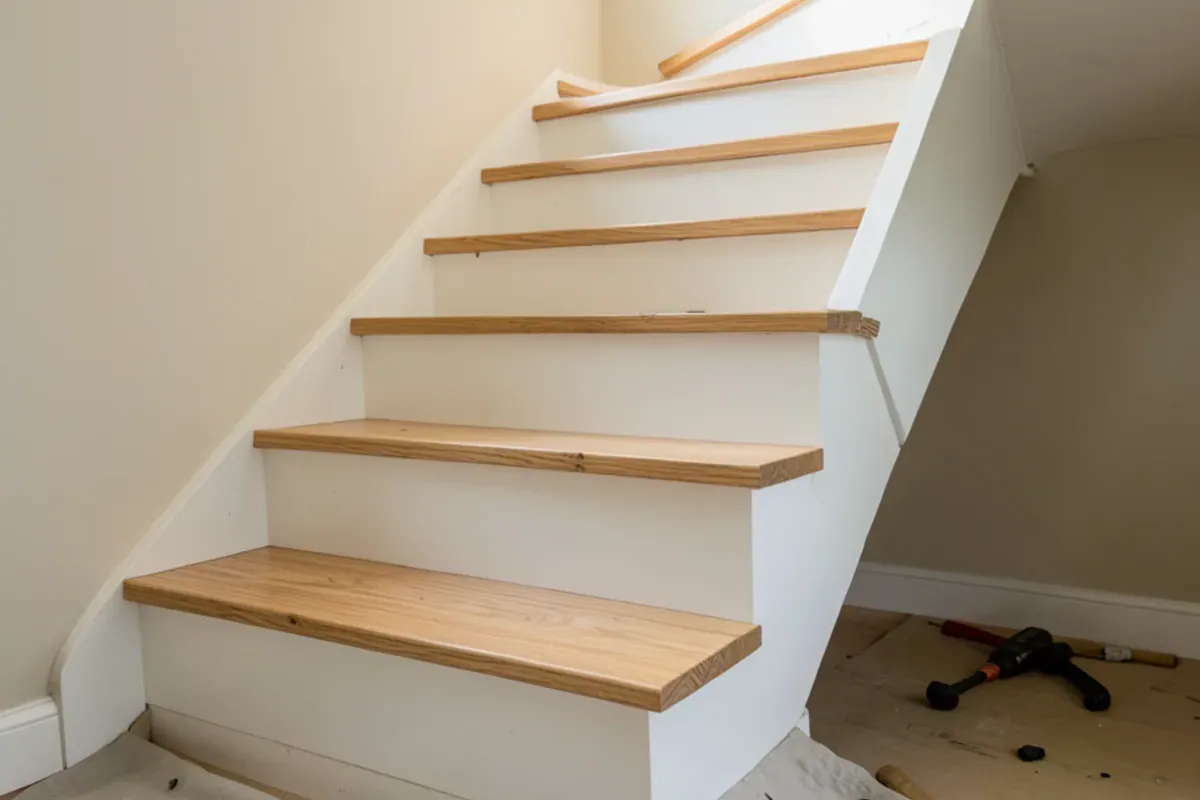
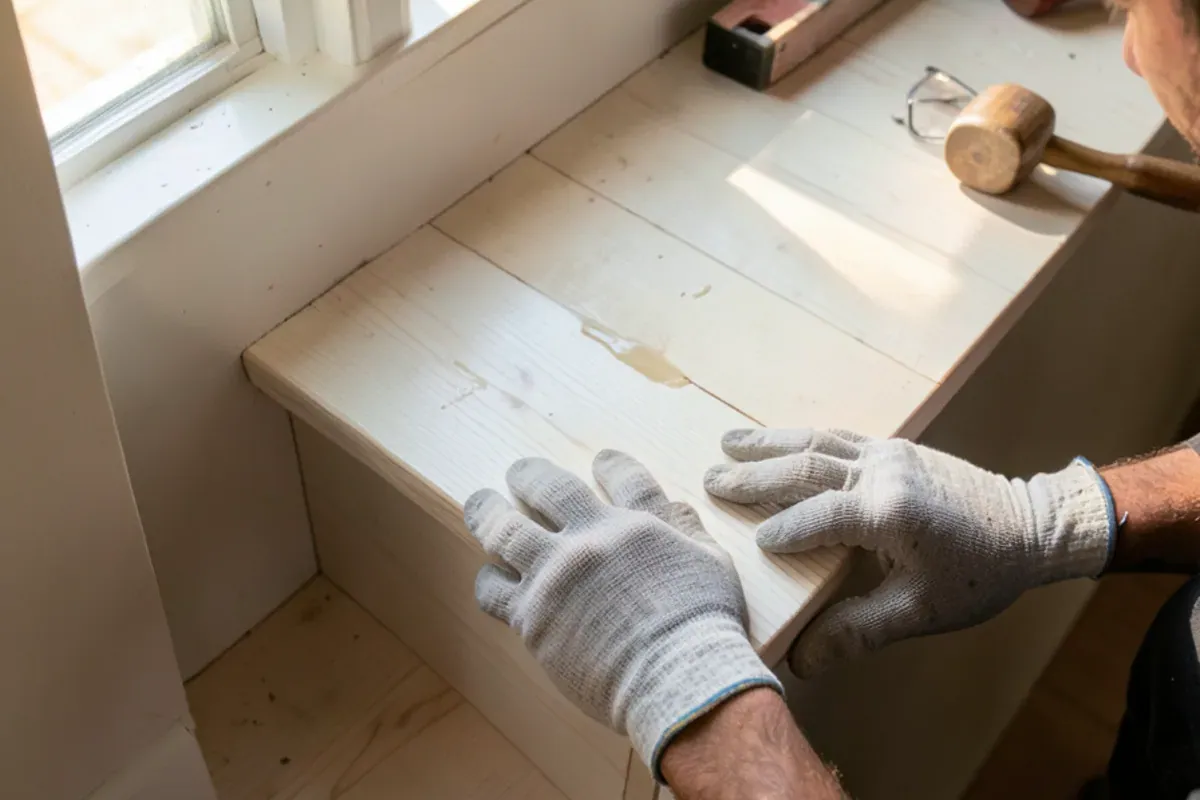
Yes. Under builder carpet there is usually a plywood or OSB tread with a rounded front edge. We remove the carpet and pad, trim back the old nosing, and fit solid hardwood treads and new risers over the existing structure.
The catch is height. Adding a new tread raises each step slightly, and the top and bottom steps change differently from the rest. The Florida Building Code limits how much riser heights can vary within one flight, so we measure every step, then plan tread thickness so the flight stays uniform from the floor to the landing.
Stair Railing, Balusters and Newel Posts
Handrails
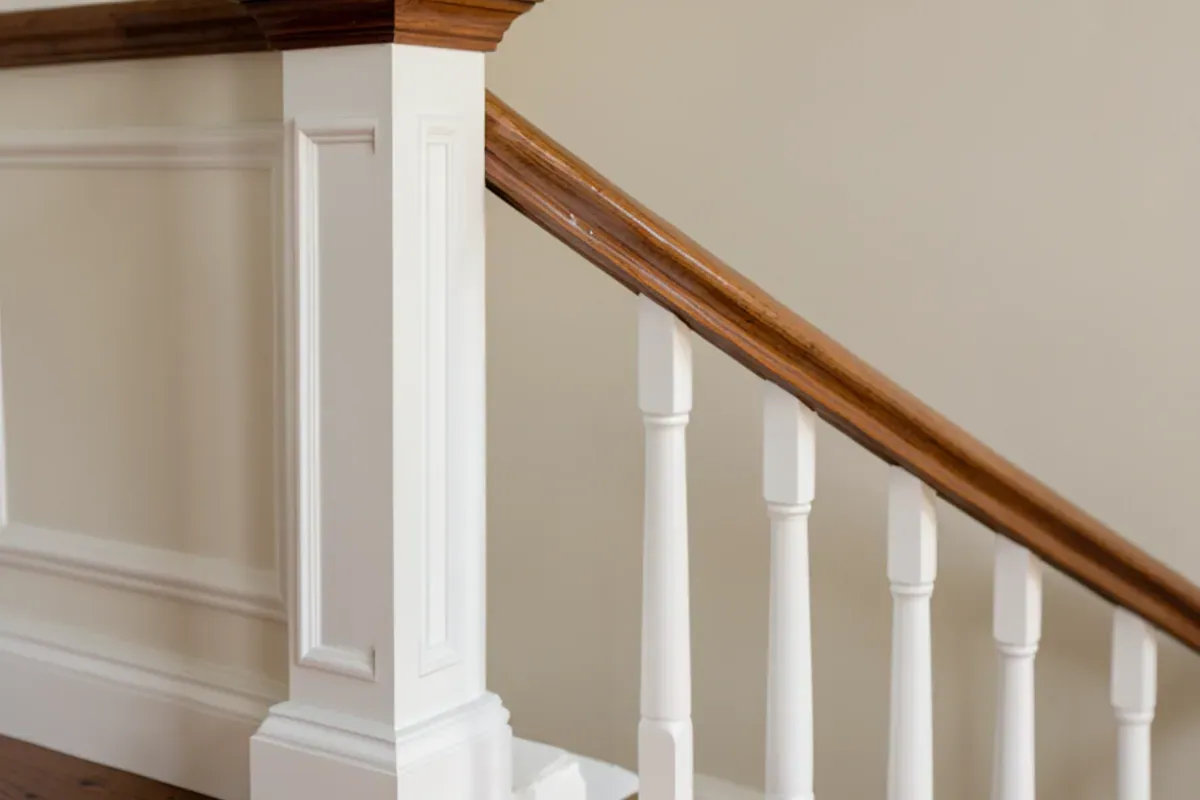
A good rail fills the hand. We shape rails in oak, mahogany or walnut and join long runs with bolted joints so they stay tight through humid summers.
Balusters
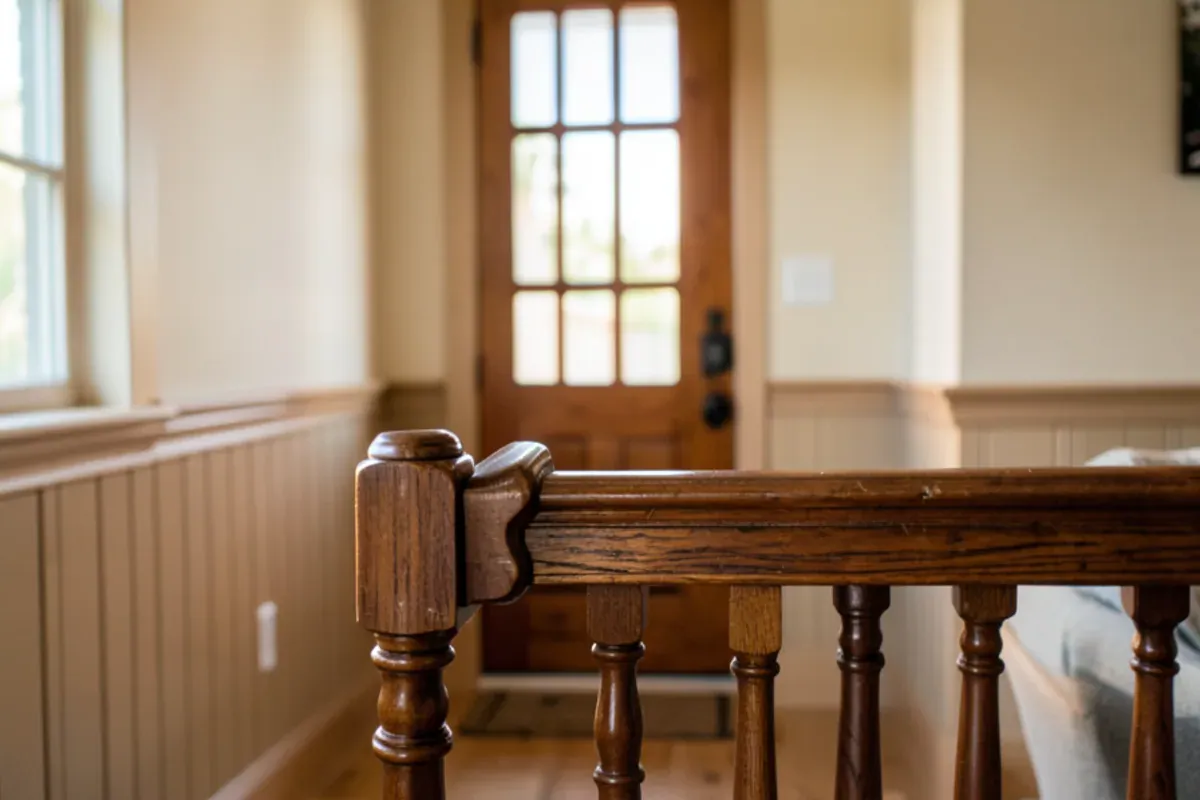
Square, turned or flat-sawn wood balusters, painted or stained, set into the tread and rail. Changing balusters alone is a quick way to update a dated railing without replacing the rail.
Newel posts
The newel at the bottom anchors the whole railing. We build box newels with paneled faces and caps, sized to the stair, and anchor them through the floor or to the stringer so they do not wobble.
Treads, skirt boards and landing nosings
The finish parts at the edges decide whether a stair looks built or assembled. Skirt boards are scribed to the wall and the stringer, open sides get returned nosings so end grain never shows, and a landing gets a flush nosing that matches the treads below.
What Tells You a Staircase Needs Work?
Stairs rarely fail all at once. These are the signs we look for at a measure, along with what usually causes them in homes around here:
- Squeaks and give underfoot: builder treads of plywood or OSB, fastened with staples or a few nails, loosen over the years; solid treads glued and screwed to the stringers end it.
- A newel that moves when you grab it: some 1980s-2000s builder posts were only nailed to the bottom step, and they loosen with every pull.
- Carpet worn through at the nosing: beach sand and grit wear the front edge of each step first, which is why carpet on stairs near the coast looks tired fast.
- Balusters set wide apart: stairs built under older codes can have openings larger than today's Florida Building Code allows, worth correcting when the railing is replaced.
- Chipped paint-grade rails: soft pine handrails dent and show bare wood where hands and rings hit them every day.
Railing Rules From the Florida Building Code
Replacing a guard or railing may require a permit, depending on the scope and the jurisdiction. We tell you what we know at the measure and suggest a call to your building department when it is unclear. Any change to the stair's structure, such as stringers or framing, is work for a licensed contractor.
Which office you call depends on the address: Sarasota County Planning and Development Services for unincorporated homes, the City of Sarasota inside its limits, and Manatee County for the Lakewood Ranch neighborhoods north of the county line. Florida's DBPR issues the Chapter 489 licenses held by the contractors who repair stringers or framing, and a licensed electrician wires any new stair or landing lights.
Can You Build Storage Into the Stairs?
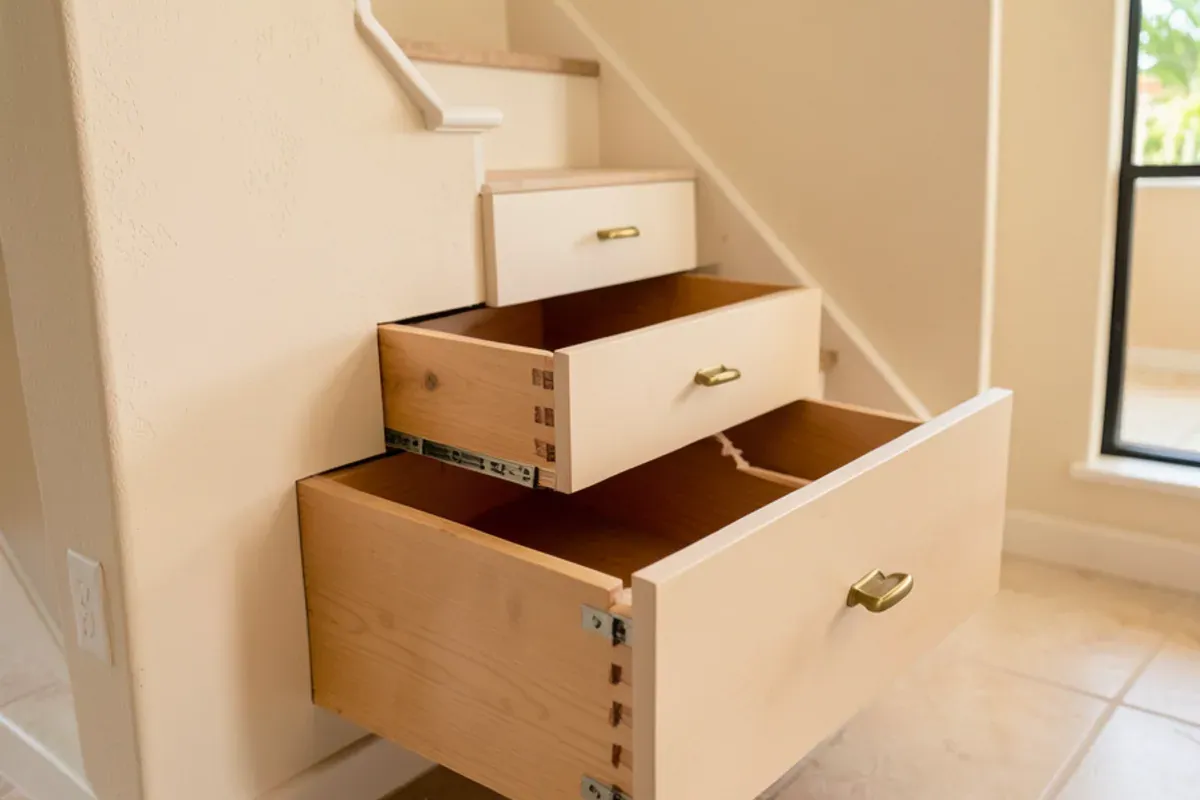
The triangle under a stair is often wasted. Depending on what is behind the stringer, we can turn it into:
- Pull-out drawers in the lower risers or along the side of the stair
- A cabinet bank or bookshelf under the run, built like our cabinetry with dovetail drawers
- A small closet with a door matched to the rest of the house
- A reading nook or desk where the headroom allows
We open a small inspection hole first to check for ductwork, plumbing or wiring. If any of those need moving, licensed trades do that before the storage goes in.
Stair Remodel Steps, From Measure to Finish
Measure each step
We record every riser height and tread depth, the landing, and the condition of the stringers and existing railing.
Design the stair
Drawings and a 3D model show tread species, nosing shape, newels and balusters, along with the railing heights the code requires.
Build in the shop
Treads, risers, rails and newels are made and pre-finished at the Lewis Ave shop where possible.
Tear out and install
Carpet and old parts come out, then treads, risers, skirt boards and railing go in. The stair stays usable at points during the work.
Final finish
Exposed edges are filled and touched up, and a durable floor-grade finish protects the treads.
What Sets the Cost of a Staircase Remodel?
- Number of steps, landings and winders
- Open or closed stair: open sides need returned nosings and more railing
- Wood species for treads, rails and newels
- Keeping the existing railing versus replacing it entirely
- Custom-turned or paneled newels versus simpler square posts
- Storage built into the space below
Local house types shape the scope. Two-story subdivision homes from the 1980s on usually have an open side with a long guard, elevated homes on the islands can have long flights with landings, and townhouses with association rules may limit work hours. Because most houses have only one stair, the install is sequenced around daily use. A written estimate follows the approved drawings, and later changes are handled as change orders.
Staircase Millwork and the Look of the Entry
A staircase usually rises from an entry hall, so it is seen alongside the front door and the doors along the upstairs landing. Matching wood and panel profiles ties them together; see our custom wood doors page for how we reproduce existing doors.
Some of the same skills, such as fitting steps to curved and sloping hulls, come from boat work. Our marine woodworking page describes that side of the shop's history.
Why SRQ Woodworks
Why homeowners choose us for staircase millwork
Every step measured
We measure each riser and tread so the finished flight stays uniform, rather than assuming a staircase is even.
Drawn to code
Drawings follow the Florida Building Code's railing requirements, and the 3D model shows you the stair before demolition.
Shop-made parts
Treads, rails and newels come from our Lewis Ave benches in oak, mahogany, walnut and other hardwoods.
Storage with cabinet joinery
Under-stair drawers get the same dovetail construction as our cabinets.
One owner, one shop since 2011
Stairs are measured, drawn and built under Graham Custer, who has run the Lewis Ave shop since 2011; shop visits are open by appointment.
Request a quote
Start your staircase millwork project
Call first if you can: a quick conversation about the room, the timing and what you have in mind is the fastest way to a measure and drawings. Or send the form and the shop will call you back.
Where we work
Two-story homes and townhouses are where stair projects happen, and we travel to them across the region: newer subdivisions in Lakewood Ranch and Fruitville, established neighborhoods in Bee Ridge, and two-story homes on the mainland side of Nokomis.
- Staircase Millwork in Lakewood Ranch, FLMany two-story homes still have builder carpet over plywood treads, and white oak treads planned to keep risers even replace it.
- Staircase Millwork in Fruitville, FL1980s-2000s two-story houses off Fruitville Road often have nailed-on newels and painted pine rails that loosen and chip with age.
- Staircase Millwork in Palmer Ranch, FLGated homes south of Clark Road have open-sided entry stairs, where returned nosings and a paneled box newel set the tone of the foyer.
- Staircase Millwork in Anna Maria, FLNewer elevated rentals mean long interior flights that see sandy feet daily, so hard white oak treads and a floor-grade finish matter.
- Staircase Millwork in Tierra Verde, FLWaterfront homes rebuilt or raised after Helene's 2024 surge often need new stair parts matched to the rest of the restored interior.
- Staircase Millwork in Ruskin, FLNew subdivisions off US 41 and I-75 put carpeted two-story stairs in young homes whose owners want hardwood from the start.
- Staircase Millwork in Bloomingdale, FL1980s-90s family subdivisions now on their second round of updates, where a wobbly railing and worn carpet are usually the first complaints.
- Staircase Millwork in Valrico, FLLarger-lot 1980s-2000s homes with grand entry stairs suit custom newels, stained rails and drawers built into the space below.
- Staircase Millwork in Oldsmar, FLMostly 1980s-2000s subdivisions with first-generation builder stairs, where balusters set wider than current code allows get corrected.
FAQ
Staircase Millwork questions
Can you replace carpeted stairs with wood treads?
Yes. We remove the carpet, trim the old nosings and fit solid hardwood treads and risers over the existing stair. The key is keeping step heights even, which the Florida Building Code regulates, so we measure each step first. Many Lakewood Ranch and Fruitville homes still have builder carpet on the stairs, so this question comes up often.
Can you build storage into the stairs?
Often. The space under a stair can hold pull-out drawers, cabinets, shelves or a small closet. We check what is behind the stringer through a small inspection opening, because ducts, pipes or wires sometimes run there. Those drawers get dovetailed corners, just like the boxes in our kitchens.
Do you make custom newel posts and railings?
Yes. We build box newels, shape handrails and supply balusters in oak, mahogany, walnut or paint-grade wood, designed in a 3D model with the rest of the stair. Railings are drawn to the Florida Building Code's height and opening requirements, and newels are anchored solidly so they stay firm.
Can I keep my railing and only change the treads?
Usually. If the existing railing is solid and meets code, we work around it, fitting treads to the baluster positions and refinishing or painting the rail to match. Sometimes balusters must be removed and reset to fit new treads, which we account for in the plan. Loose or undersized railings are worth replacing at the same time.
Which wood holds up for stair treads?
White oak is our usual pick because it is hard and wears evenly. Hickory and maple are harder still; mahogany and walnut look rich but dent more easily. Whatever the species, a floor-grade finish matters more than the wood for daily wear, especially in homes near the beach where sand gets tracked in.
How long will the stairs be out of use?
Less than you might expect, since treads and rails show up pre-finished and ready to fit. We sequence the install so the stair can be used carefully at points during the work, and we give you a day-by-day plan once materials are ready. Homes with only one stair need that planning most.
Living Well Crafted
Planning staircase millwork? Talk it through with the shop.
- Built in our Sarasota shop since 2011
- 4.4★ from 52 Google reviews
- 3D model before anything is built
- Solid-wood boxes, dovetail drawers