
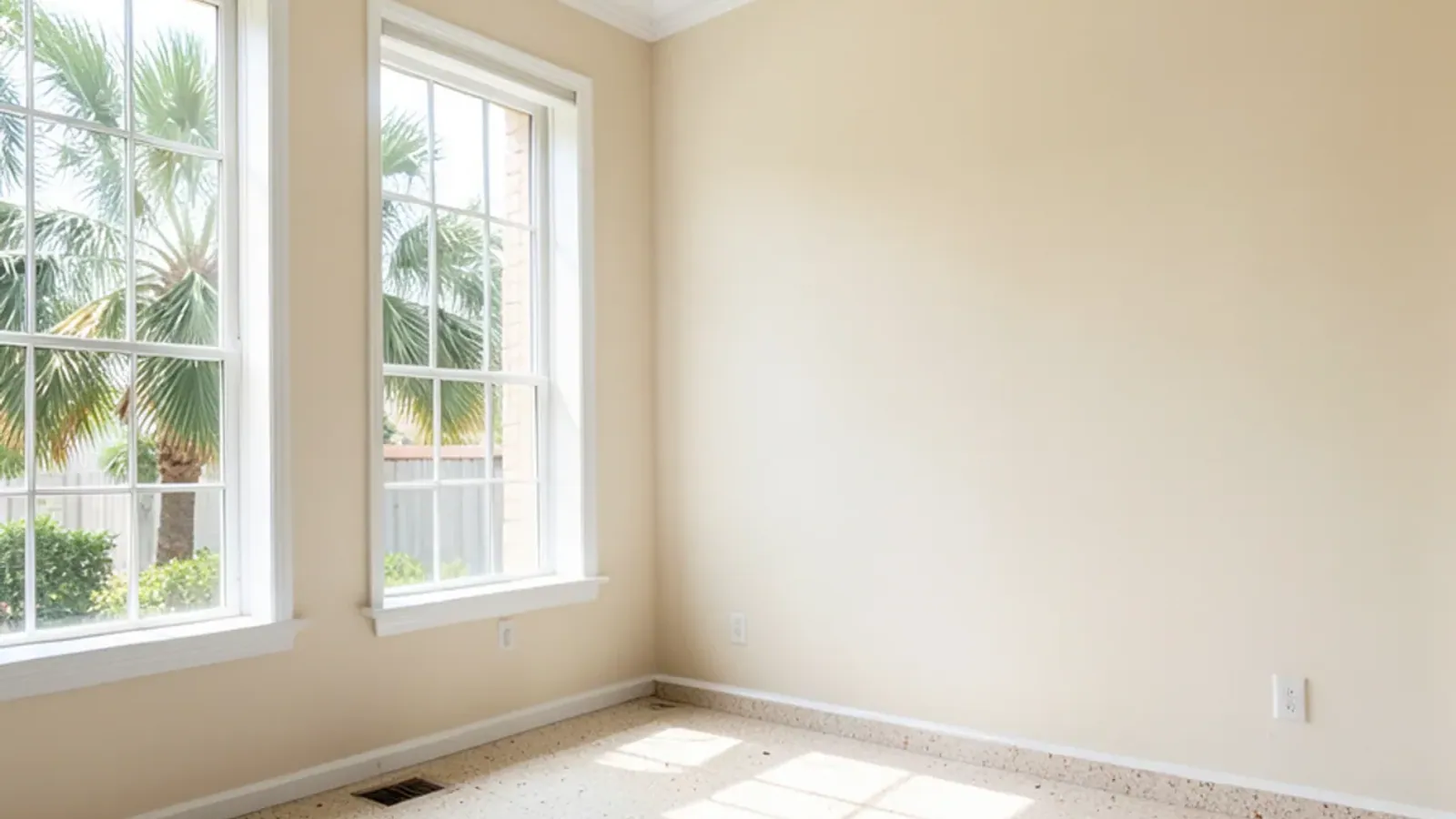
Finish Carpentry & Millwork
Crown Molding & Trim Carpentry in Sarasota, FL
Crown, baseboard, casings and chair rail scaled to your ceilings, coped tight at the corners and finished ready for paint or stain.
- Built in our Sarasota shop since 2011
- 4.4★ from 52 Google reviews
- 3D model before anything is built
- Solid-wood boxes, dovetail drawers
Good crown molding installation in Sarasota starts with the ceiling, not the molding. We measure ceiling height, check how flat the ceiling runs, which in older plaster-over-block homes it rarely does, then size a profile that suits the room and can be scribed to its real surface. The result is trim that looks like it was always there.
Crown and trim sit inside our broader finish carpentry and millwork service. We handle single rooms and whole houses, from compact crown in a 1960s ranch to layered, built-up cornices in newer homes with tall ceilings, along with baseboards, window and door casings and chair rail.
Crown Molding Installation: One Piece or Built Up
Crown comes in two broad forms, and choosing between them is mostly a question of ceiling height and the character of the house.
Single-piece crown
One profile sprung between wall and ceiling. It is the right call for most eight-foot rooms and for mid-century homes where a heavy cornice would look out of place. A flat or cove profile suits Sarasota School houses with their clean lines.
Built-up crown
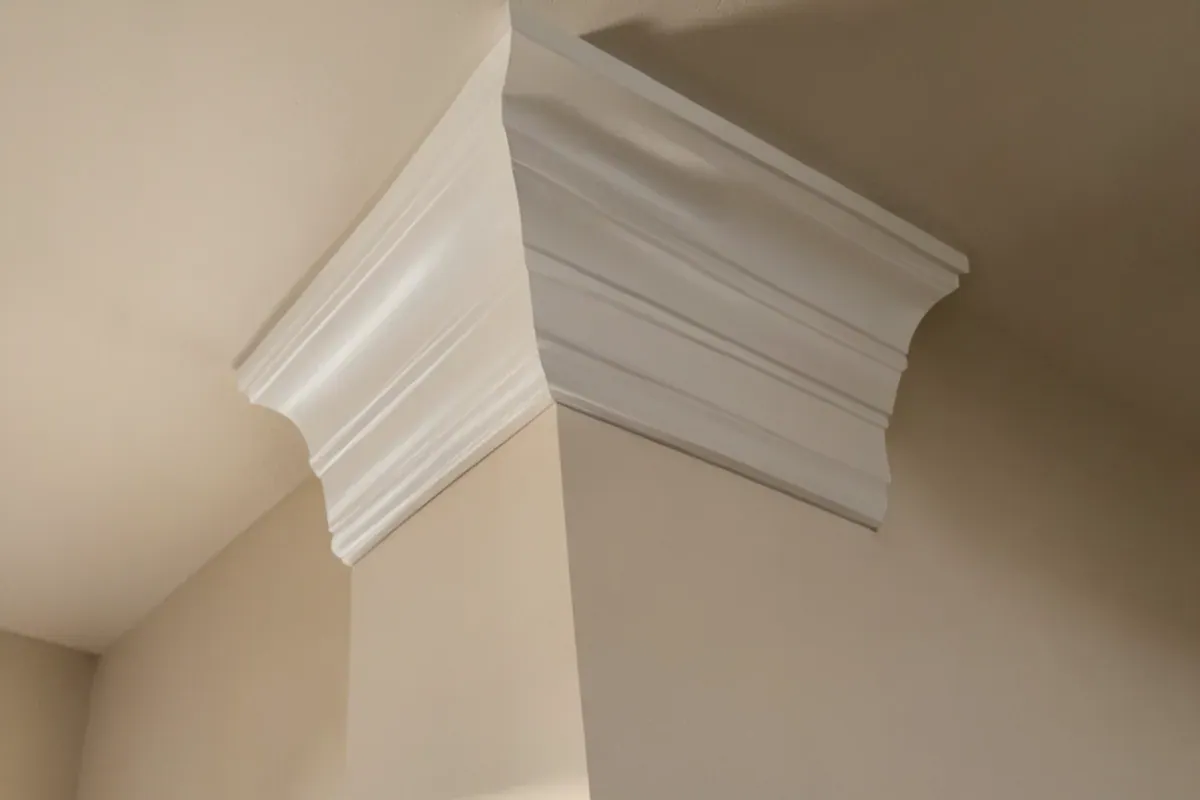
Two to four pieces stacked: a frieze board on the wall, a crown above it, sometimes a small bed mold or dentil. Built-up crown gives a room with ten-foot or taller ceilings real presence, and it lets us reach sizes no single stock piece offers.
Crown inside ceiling features
Tray ceilings and coffers usually carry a small crown inside each recess. That work is covered on our coffered ceilings page.
Can a Ranch Home With Low Ceilings Take Crown?
Yes, with the right proportion. Much of Sarasota's 1950s to 1970s housing has eight-foot ceilings and plaster over concrete block. A compact crown, kept shallow in projection, adds finish without making the ceiling feel lower. Painting the crown the ceiling color, rather than the wall color, makes the room feel taller still.
Old plaster ceilings in these homes are rarely flat. We scribe the top edge of the crown to follow gentle dips, or add a thin flat band that hides the gap, instead of leaving a thick bead of caulk that cracks within a season. Our post on adding crown molding to a ranch home shows profile sizes that work.
Baseboard Installation, Casings and Chair Rail
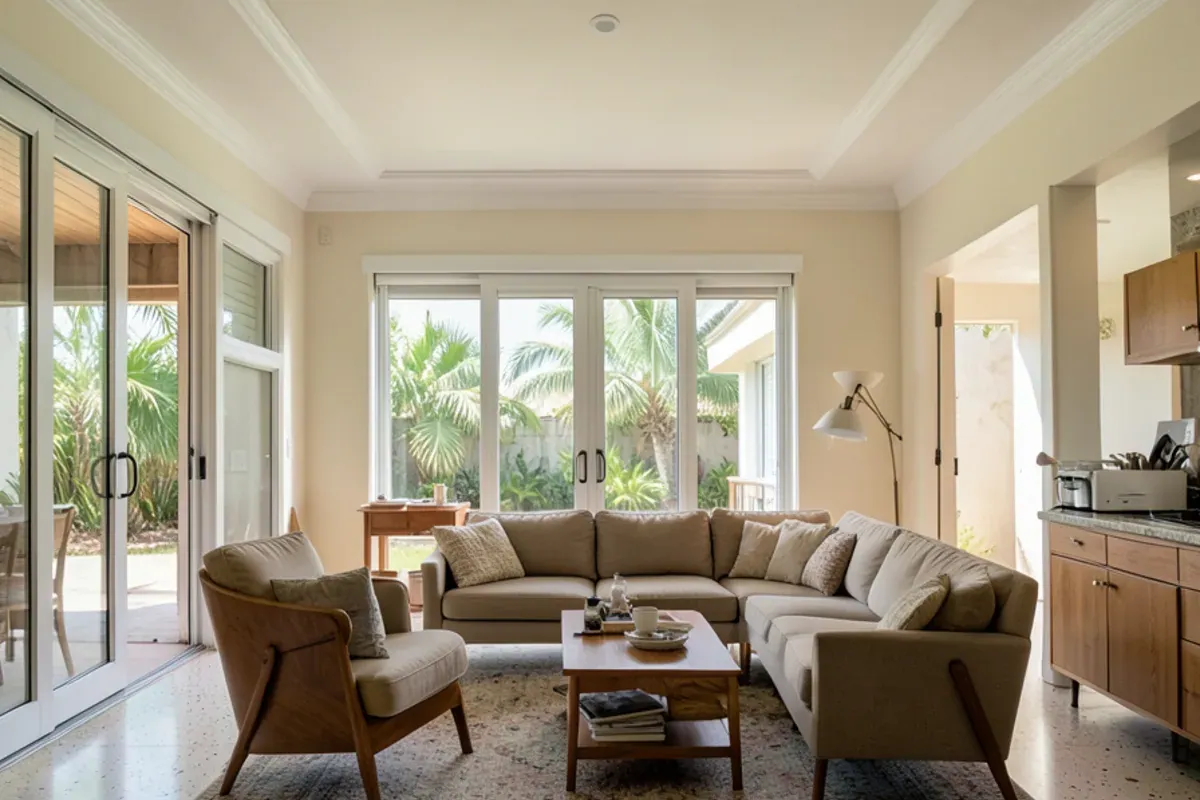
Crown gets the attention, but base and casings do most of the work in a room. They meet the floor, frame every window and door, and take daily knocks from vacuums and furniture.
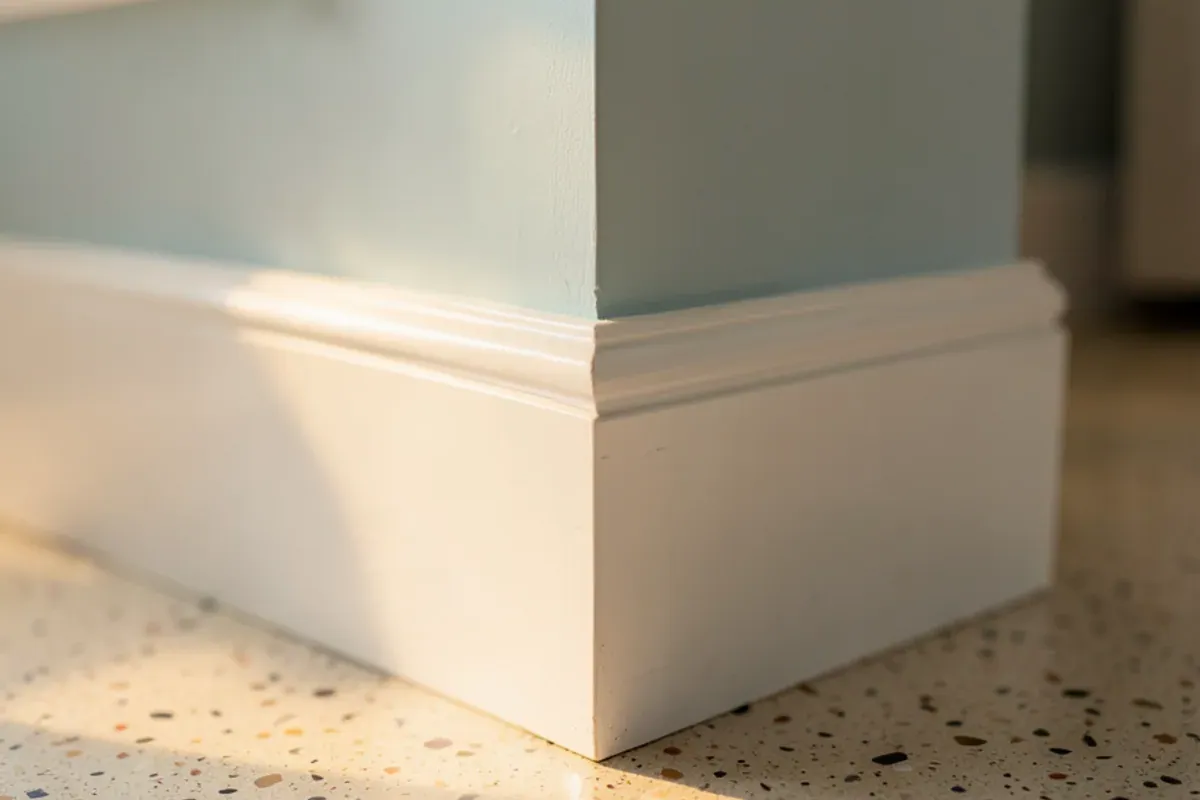
- Baseboards: a taller base balances crown; we cope inside corners and scribe to tile or terrazzo floors that are rarely level.
- Window and door casing: flat, beaded or backbanded casings, with plinth blocks where tall base meets the casing.
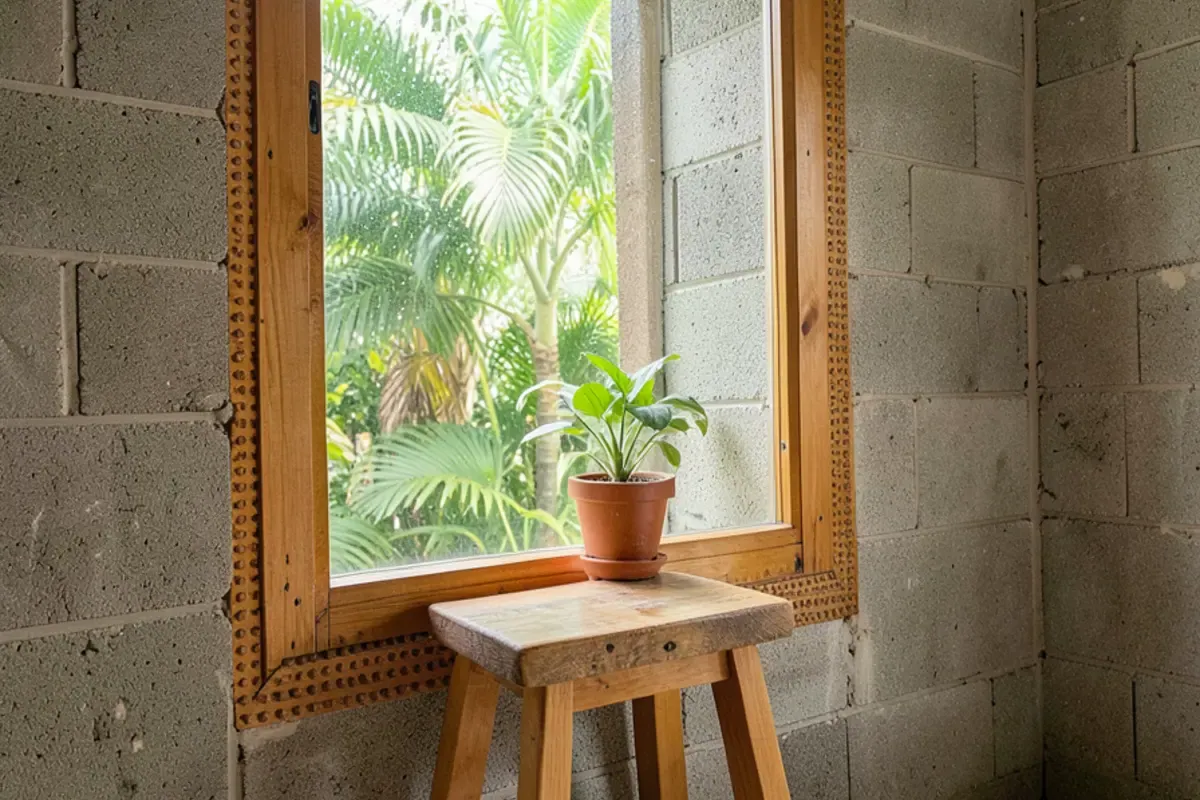
- Window stools and aprons: deep sills on block walls get a proper stool and apron instead of drywall returns.
- Chair rail: a protective rail at chair height in dining rooms, often paired with paneling below; see wainscoting and wall paneling.
When Should Old Trim Come Off?
Not every tired room needs new trim; some needs only caulk and paint. These conditions usually mean the old pieces should come off, and most trace back to how houses here were built:
- Base that no longer meets the floor: pulling carpet in a mid-century home often uncovers terrazzo, leaving a gap under base that was set for padding.
- Thin clamshell casing and base: the flat, rounded profile in many 1970s-90s builder homes dents easily and looks undersized beside new doors or crown.
- Rot along lanai sliders: water that gets past a slider sill wicks into the base and casing inside, and soft wood that is painted over keeps failing.
- A patchwork after a remodel: a wall removed or a window moved leaves two or three mismatched profiles in one room, which only a full rerun can unify.
Paint-Grade or Stain-Grade Trim: Which Do You Need?
Paint-grade trim is usually made from poplar or maple. Joints are filled and sanded, so the focus is on smooth surfaces and crisp profiles. It is the common choice in coastal homes, where white or soft-colored trim suits the light.
Stain-grade trim shows its wood, which means every board has to be chosen for color and grain, and joints must close without filler. White oak, mahogany, cherry and cypress are typical. It costs more in both material and labor, and it suits libraries, studies and older homes with original stained woodwork.
Our Trim Carpentry Sequence
Survey the room
A laser line shows how far ceilings and walls stray, which sets the profile size and how much scribing the job needs.
Approve the profile
You see the crown, base and casing together in drawings and a 3D model, at the room's real scale.
Prepare stock
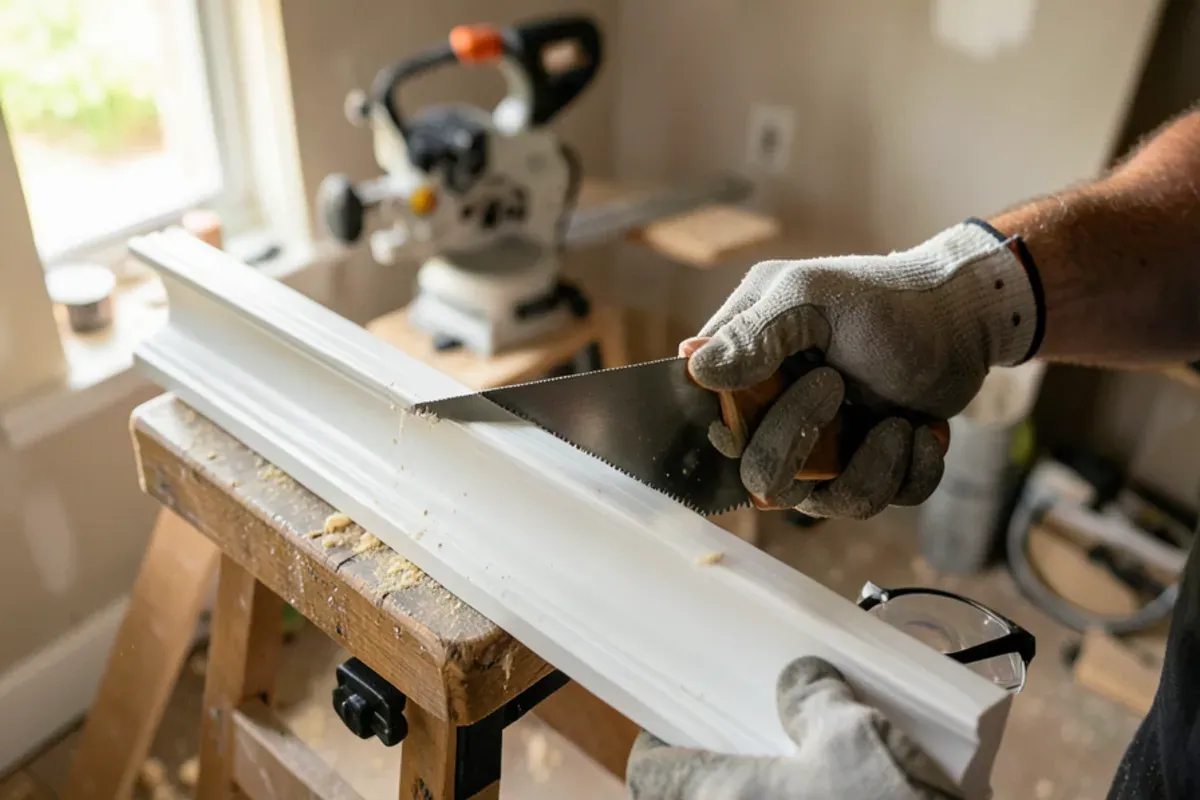
Trim is acclimated, back-primed where it will be painted and cut to rough lengths at the Lewis Ave shop.
Install and cope
We cope inside corners, glue and pin outside miters, and land scarf joints over framing or blocking.
Fill and finish
Nail holes are filled, joints sanded and caulk kept to hairline gaps, then paint or stain goes on.
What Changes the Price of a Trim Job?
- Linear footage and the number of inside and outside corners
- Single-piece versus built-up crown
- Ceiling height and whether scaffolding is needed
- Condition of walls and ceilings, which drives scribing time
- Removing old trim and repairing plaster or drywall behind it
- Matching a discontinued profile versus a stock profile
- Whether we paint or stain, or hand off to your painter
Around Sarasota, the house type predicts most of the number. A 1960s block ranch with plaster ceilings takes more scribing per foot, a newer home in Lakewood Ranch or a Venice golf community takes taller stock and scaffolding, and a condo adds association hours and elevator time. You receive a written estimate after the drawings, and changes after approval become change orders.
After Install: Caulk Lines and Seasonal Movement
Wood trim moves a little with Florida's swing from dry winter air to humid summers. A hairline at a caulked joint in the first year is normal, and a quick re-caulk and touch-up before painting the room again usually solves it for good.
Leave the AC on a steady setting through the off-season, even with nobody home. Long stretches of shut-down AC let humidity climb, and that is when miters open and paint lines crack.
Why SRQ Woodworks
Why homeowners choose us for crown molding & trim
Profiles drawn to scale
A scaled 3D model lets you judge crown size against your real ceiling height before anything is installed.
Hardwood trim from our shop
Paint-grade and stain-grade stock is cut and prepped at Lewis Ave from hardwoods we pick board by board.
Old-house patience
We work around original plaster and matched profiles in homes built decades before today's stock trim existed.
One shop for the whole room
Crown, paneling, doors and built-ins can come from the same shop, so every profile in a room agrees.
Owner-led since 2011
Graham Custer has run the Lewis Ave shop since 2011, so the trim in your house is measured, drawn and installed under the owner who answers for it.
Request a quote
Start your crown molding & trim project
Call first if you can: a quick conversation about the room, the timing and what you have in mind is the fastest way to a measure and drawings. Or send the form and the shop will call you back.
Where we work
Ranch homes with eight-foot ceilings make up much of our trim work. We install crown and base in Gulf Gate and Southgate houses from the 1950s to 1970s, older bungalows in Gulfport, and taller-ceiling homes in Venice and its golf communities.
- Crown Molding & Trim in Gulf Gate, FLRanch homes off Gulf Gate Drive from the 1960s and 70s have eight-foot plaster ceilings that suit compact crown scribed to their dips.
- Crown Molding & Trim in Kensington Park, FLSingle-story ranch houses under two miles from our shop, where a taller base and backbanded casing give plain openings real weight.
- Crown Molding & Trim in Bayshore Gardens, FL1950s-60s block homes near Sarasota Bay, where pulling carpet often exposes terrazzo that new baseboard has to be scribed to.
- Crown Molding & Trim in Fruitville, FL1980s-2000s builder homes with plant shelves and thin clamshell trim, ready for proper crown and a taller base.
- Crown Molding & Trim in Bee Ridge, FLVilla communities along Bee Ridge Road need association sign-off, so trim is cut and primed in the shop to shorten days on site.
- Crown Molding & Trim in Sun City Center, FLSingle-level 55+ villas, where chair rail and sturdy hardwood base protect walls from walkers and wheelchair footrests.
- Crown Molding & Trim in West Bradenton, FLLarger 1950s-70s homes toward Palma Sola Bay often keep original profiles that we reproduce when a wall is opened up.
- Crown Molding & Trim in Venice Gardens, FL1960s-70s block ranches east of the Venice island, where crown painted the ceiling color makes low rooms feel taller.
- Crown Molding & Trim in Largo, FL1960s-80s Pinellas ranch homes, where a whole-house trim package replaces dated casings and base room by room.
FAQ
Crown Molding & Trim questions
Can crown molding go on a ranch home with low ceilings?
Yes. Eight-foot ceilings suit a compact crown with modest projection, painted to match the ceiling so the room reads taller. Many 1960s Gulf Gate and Southgate homes have uneven plaster ceilings, so we scribe the crown to the surface rather than relying on caulk to fill gaps.
Paint-grade or stain-grade trim: what is the difference?
Paint-grade trim, usually poplar or maple, is filled and sanded smooth because paint hides the wood. Stain-grade trim is chosen board by board for matching grain and color, and every joint must close cleanly without filler. Stain-grade costs more and takes longer, and it fits studies, libraries and homes with original wood trim.
Can you match a discontinued trim profile?
In most cases. We take a short piece from a closet or behind an appliance, trace it at full size and make a matching profile in a similar hardwood. This comes up often in older Sarasota homes where a remodel removed one wall of trim and the original profile has not been sold for decades.
Do you remove the old trim first?
We do, carefully, especially where it is nailed into old plaster. Removing base and casings exposes gaps at the floor and walls that new trim must cover, so we look at that during the measure. If we plan to keep and refinish good original trim instead, we label each piece so it goes back where it came from.
Is it safe to install crown on a popcorn ceiling?
Test before touching it. Textured ceilings in homes built before the 1980s can contain asbestos, and federal guidance is to have the material tested before it is disturbed. If it tests positive, a licensed asbestos abatement company handles removal before our crown goes up. Smooth ceilings also give crown a far cleaner line.
How long does trim for a whole house take?
It depends on the number of rooms, corners and openings, but most of the time goes into installation and finishing rather than cutting. We map the order room by room so the house stays usable, and we give you a realistic schedule once the drawings are approved and the trim is in the Lewis Ave shop.
Living Well Crafted
Planning crown molding & trim? Talk it through with the shop.
- Built in our Sarasota shop since 2011
- 4.4★ from 52 Google reviews
- 3D model before anything is built
- Solid-wood boxes, dovetail drawers