Custom dining table cost is set by five choices: the wood species, whether the top is a single slab or glued-up boards, the size, the base, and the finish. Labor follows those choices, because a harder, wider or more complex table takes more hours to flatten, join and finish.
That is why we price each table from its drawing rather than from a list. We do not publish a price sheet, and we would be wary of any number quoted without a design behind it. What we can do is explain which decisions push the price up or down, so you can walk into a conversation with a clear sense of where your money goes.
What drives custom dining table cost?
Think of the price as materials plus shop hours. Materials vary with species and how much lumber a design consumes, including the waste from cutting around knots and checks. Shop hours vary with size, joinery and finish. The table below shows how each choice tends to move the total.
| Choice | Toward the lower end | Toward the higher end |
|---|---|---|
| Species | Domestic hardwoods such as maple, ash or red oak | Walnut, figured cherry, quartersawn white oak or exotic hardwoods |
| Top | Glued-up boards from standard lumber | A matched pair or single wide slab |
| Thickness | Standard thickness for the length | Extra-thick tops that need heavier stock |
| Size | Seats four to six | Seats ten or more, or very wide tops |
| Base | Four legs and an apron | Trestle with wedged tenons, pedestal, or a custom steel base |
| Extras | Fixed top | Extension leaves, breadboard ends, matching benches |
| Finish | Penetrating oil or hardwax oil | Multi-coat sprayed finish, color matching or distressing |
How much does the wood species change the price?
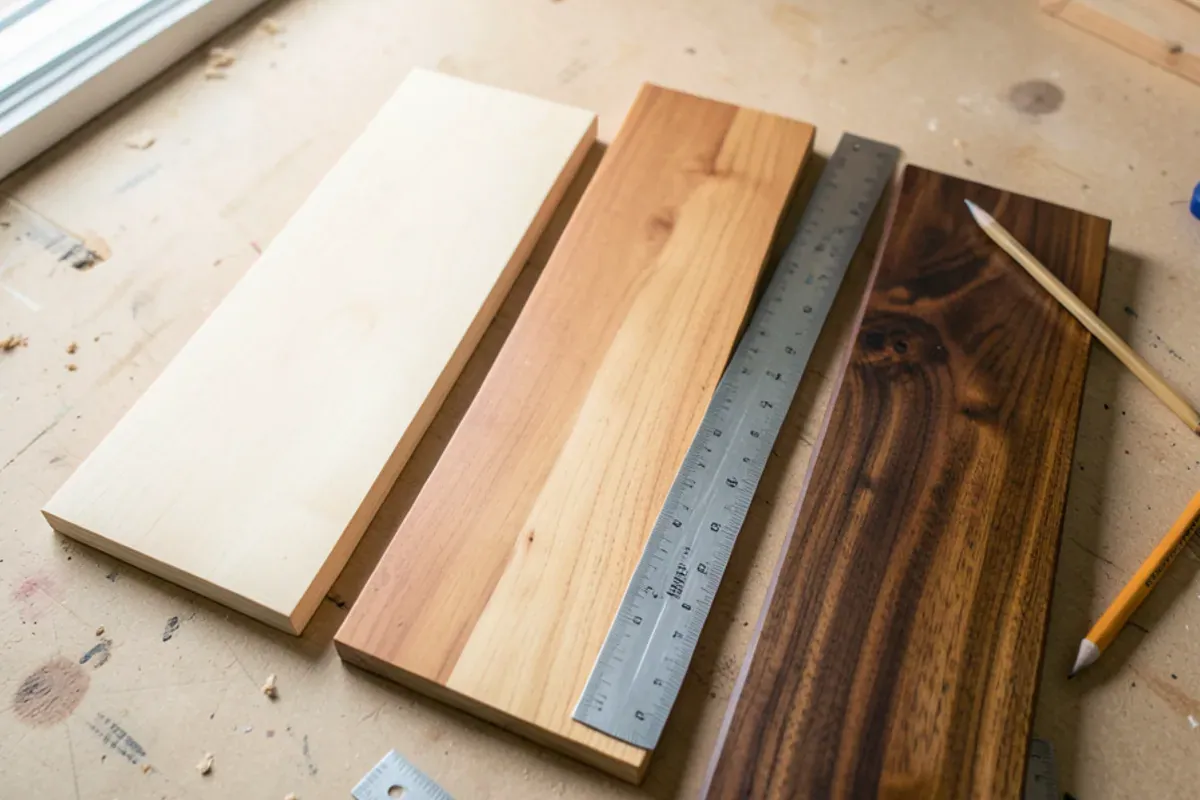
Species is usually the largest single lever. Lumber yards charge noticeably more for walnut and figured cherry than for ash or maple, and exotic imports climb higher still. Wider, clearer boards in any species carry a premium because fewer of them come out of each log. We build tables from domestic and exotic hardwoods but never from endangered species, a rule that also keeps availability and paperwork predictable.
Species also affects labor. Harder woods take longer to plane and sand, and woods with interlocked or wild grain need slower, more careful passes to avoid tear-out. A walnut table and a maple table of the same design can therefore differ in shop hours as well as in lumber.
Hardwood is sold by the board foot, a volume of 1 inch by 12 inches by 1 foot, so a top twice as thick uses twice the lumber before any waste. Thick stock also costs more to produce. The Forest Products Laboratory's guide to drying hardwood lumber notes that 8/4 lumber, two inches thick, needs about three times the drying time of 4/4 boards, and that quartersawn lumber dries more slowly than flatsawn, though with less cup. Both show up in what the yard charges for a thick, quartersawn white oak top.
| Species | Side hardness (lbf) | What it means at the table |
|---|---|---|
| Black cherry | 950 | Softer; shows dents from dropped cutlery sooner, darkens richly with age |
| Black walnut | 1,010 | Moderate; dark color hides small marks well |
| Northern red oak | 1,290 | Hard and open-grained; holds up to daily family use |
| White ash | 1,320 | Hard with pronounced grain; a common stand-in for oak |
| White oak | 1,360 | Hard and dense; quartersawn stock shows ray fleck |
| Sugar (hard) maple | 1,450 | Hardest of this group; fine grain, takes longer to plane and sand |
Slab tops versus glued-up boards
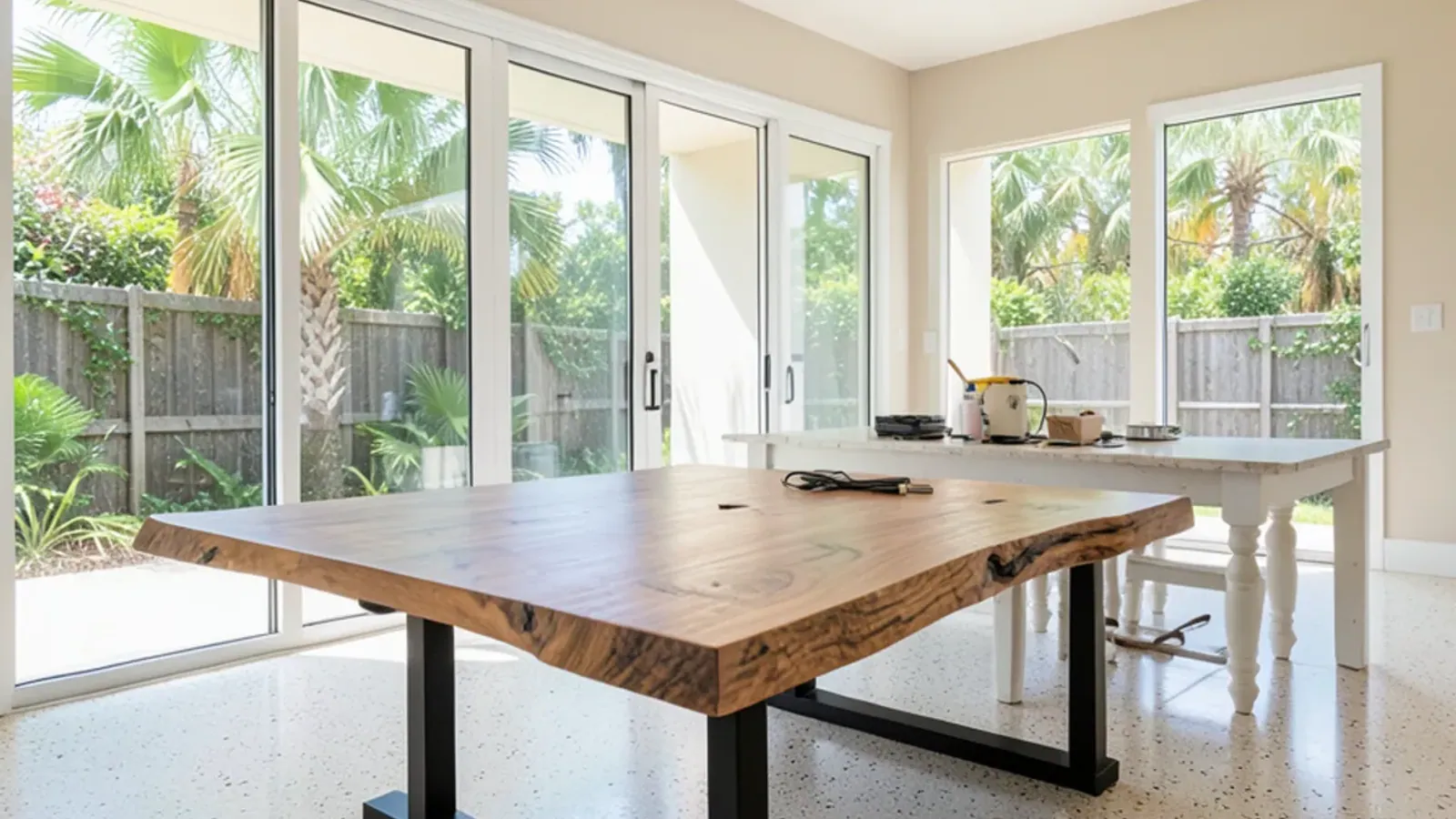
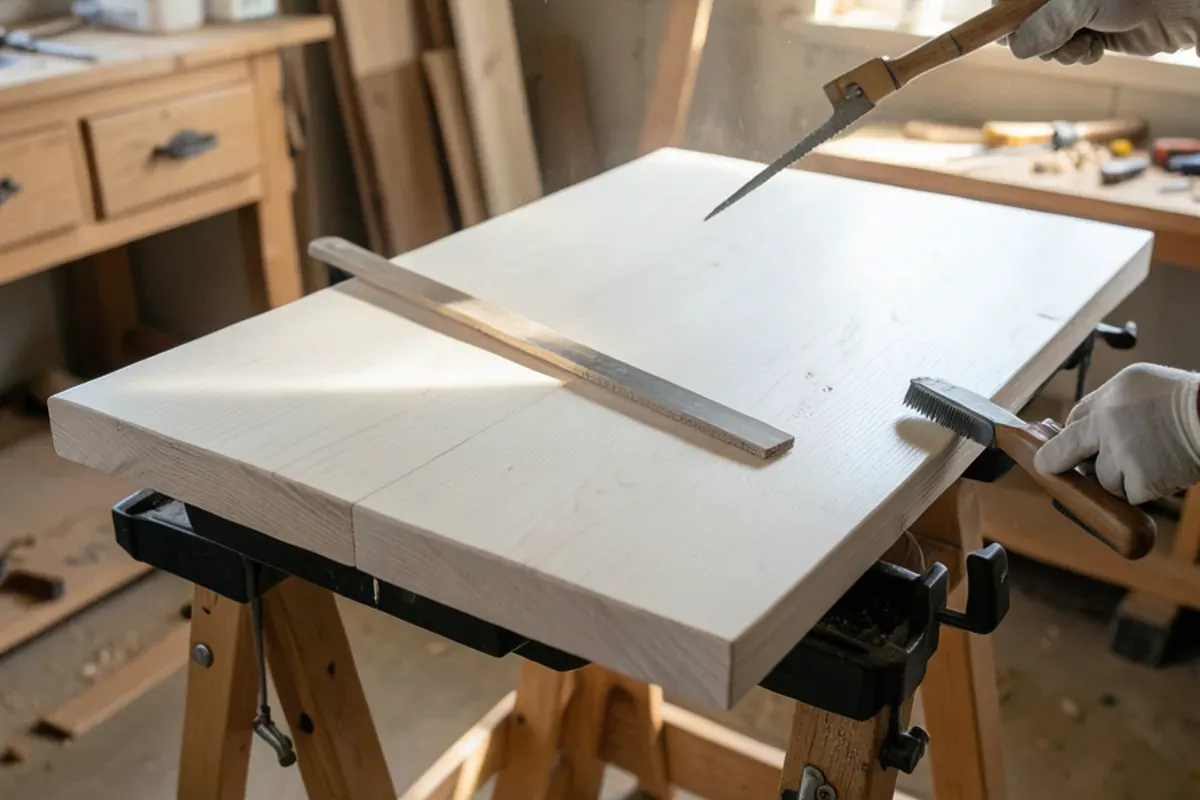
A top made from several boards glued edge to edge uses lumber that is easier to find and dry. A single slab or a book-matched pair has to be sourced whole, dried slowly, flattened on a large router sled and often stabilized with butterfly keys or filled checks. That extra handling is why slab tables sit higher on the scale. Our page on live edge tables covers that process in detail.
Glued-up tops are not a lesser option. With careful board selection and grain matching, they give a calm, uniform surface and tend to stay flatter, because narrower boards move less individually than one wide piece.
Size, base and leaves
Length and width drive material, but they also drive handling. Large tops need more clamps, more flattening and more finishing time, and a long table may need to come apart for delivery through a condo hallway or a downtown Sarasota elevator.
- Leg-and-apron bases are efficient to build and very strong.
- Trestle bases free up legroom at the ends but need substantial joinery and stretchers.
- Pedestals suit round tables and add turning or shaping time.
- Steel bases add a metalwork step, either fabricated or sourced, and must be designed to let the wood move.
- Extension leaves add slides, alignment pins and matched leaf boards that must age alongside the top.
Benches, matching chairs and serving pieces add cost but can share lumber and setup with the table, which is more efficient than ordering them separately later.
Finish, and how we put a quote together
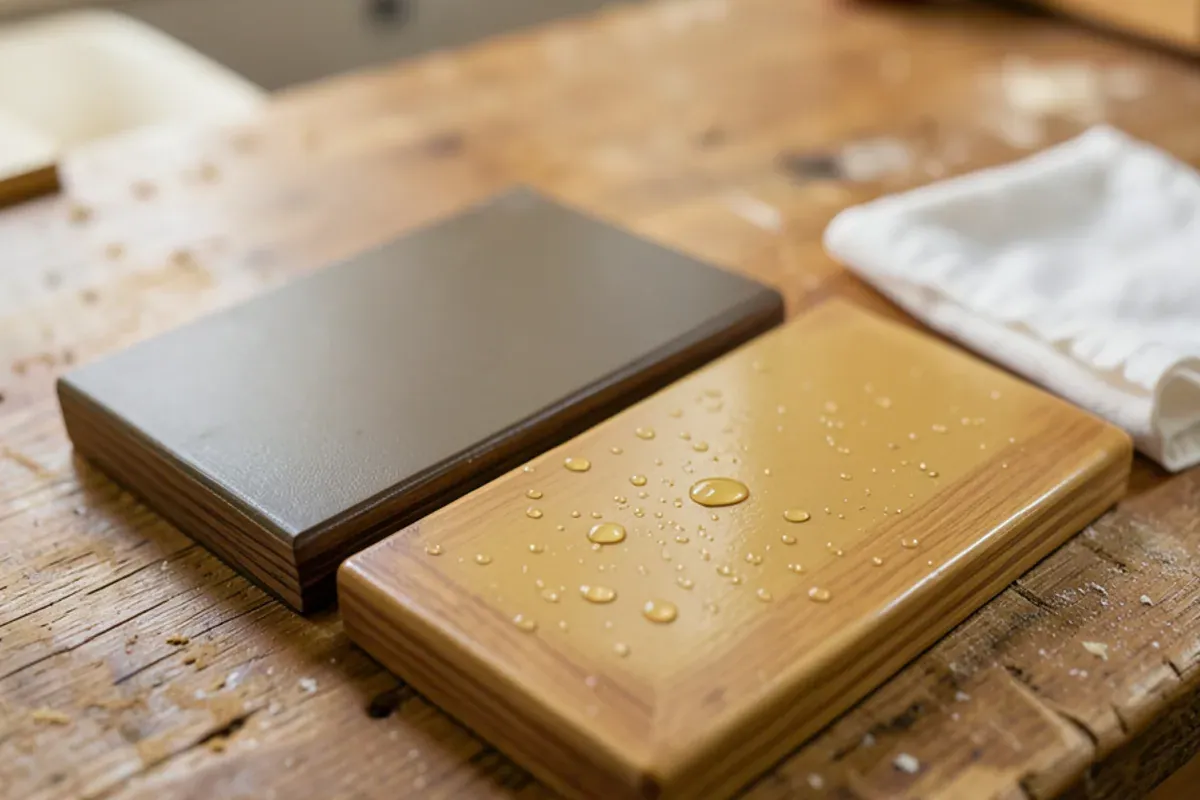
An oil or hardwax oil finish goes on quickly and is easy to refresh at home, though it needs more care around water rings. Multi-coat sprayed finishes take longer to apply and cure but resist spills and heat better under daily family use. Matching an existing stain or creating a distressed look adds sample boards and extra steps.
The full range of tables we build, from farmhouse styles to refined walnut, is on our custom dining tables page, and the rest of what we make sits under custom furniture.
How long does a custom dining table take, and what happens when?
Cost and schedule come from the same decisions, so it helps to see the sequence. A typical table moves through these stages, and the length of each one depends on the species, the top and the finish you choose.
First conversation
Seating count, room size, the look you want and how the table will be used. Photos of the room and of tables you like are enough to start.
Drawing and 3D model
We draw the table to scale and model it in the room, so proportions, leg position and overhang are settled before a quote is written.
Quote and revisions
The quote follows the drawing. If it needs to come down, we revise the design and requote rather than cutting corners in the build.
Lumber selection
Boards or slabs are chosen for color and grain, then left to acclimate in the shop before milling. Slabs that need flattening and keys add time here.
Build and finish
Joinery, glue-up, flattening and sanding come first; then the finish goes on in coats, with curing time between them that cannot be rushed.
Delivery and setup
We plan the route into the house, including elevators and stairs, and attach a detachable base on site where the table will not fit through in one piece.
Sprayed multi-coat finishes need the longest cure, and a thick top in a dense species spends longer at the planer and the sanding table. Those are the same choices that move the price, which is why a quote and a schedule usually arrive together.
Ways to keep the price in check
- Choose a domestic species with the look you want; ash can stand in for oak and cherry darkens beautifully over time.
- Go with a glued-up top unless a slab is the point of the table.
- Size the table for everyday seating and add a leaf for holidays rather than building it long.
- Keep the base simple and let the top carry the character.
- Pick an oil-based finish if you are comfortable with occasional upkeep.
Clients from Lakewood Ranch and other newer communities often bring a photo of a store table they like and ask for it in solid wood at the right size. That is a sensible starting point and gives us something concrete to price.
The bottom line
A handmade table's price is the sum of choices you control: wood, top style, size, base and finish. Knowing which ones matter most lets you spend where it shows. When you are ready to see real numbers, call our Sarasota shop or send your room size and seating count through the contact page.
Sources
- USDA Forest Service, Forest Products Laboratory — Wood Handbook: Wood as an Engineering Material
- CITES — Appendices I, II and III
- USDA Forest Products Laboratory — Wood Handbook, Chapter 5: Mechanical Properties of Wood (Table 5-3b, side hardness)
- USDA Forest Products Laboratory — Drying Hardwood Lumber, FPL-GTR-118 (Denig, Wengert and Simpson, 2000)